
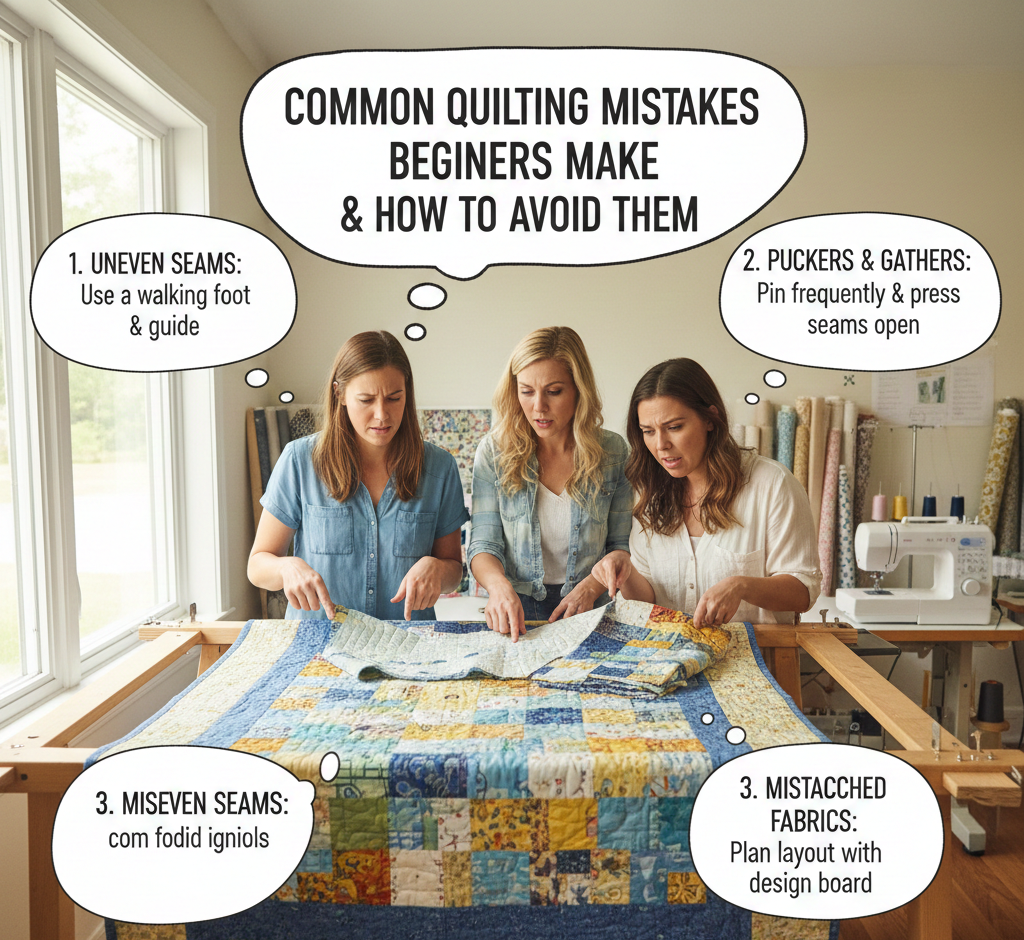
Learning how to quilt is an exciting and creative journey, but like any new skill, it comes with a learning curve. Many beginners feel discouraged when their first quilt doesn’t turn out exactly as planned. The truth is, making mistakes is a natural and valuable part of learning to quilt.
Understanding the most common quilting mistakes beginners make—and knowing how to avoid them—can save time, fabric, and frustration. This guide will help you identify frequent beginner errors and offer practical, beginner-friendly solutions so you can quilt with more confidence and enjoyment.
1. Skipping Fabric Preparation
The Mistake
One of the most common beginner quilting mistakes is skipping fabric preparation. Many beginners cut and sew fabric straight from the store without washing or pressing it first.
Why It’s a Problem
Unwashed fabric can shrink or bleed color after your quilt is finished, leading to puckering or discoloration.
How to Avoid It
- Wash and dry all fabrics before cutting
- Use color catcher sheets for dark or bright fabrics
- Press fabric flat before measuring and cutting
Taking time to prepare your fabric sets the foundation for a successful quilt.
2. Inaccurate Cutting
The Mistake
Beginners often rush through cutting fabric or use dull scissors, resulting in uneven pieces.
Why It’s a Problem
Quilting relies on precision. Even small cutting errors can add up and cause blocks not to align properly.
How to Avoid It
- Use a rotary cutter, ruler, and cutting mat
- Cut slowly and carefully
- Double-check measurements before cutting
Starting with larger blocks, such as 5-inch or 10-inch squares, can make cutting easier for beginners.
3. Not Maintaining a Consistent Seam Allowance
The Mistake
Inconsistent seam allowances are one of the biggest causes of quilt blocks that don’t fit together.
Why It’s a Problem
Most quilt patterns require a consistent ¼-inch seam allowance. Variations can distort the final size of blocks.
How to Avoid It
- Practice sewing a ¼-inch seam before starting
- Use a ¼-inch presser foot if available
- Sew slowly and steadily
Consistency matters more than speed when quilting.
4. Skipping Pressing (or Pressing Incorrectly)
The Mistake
Many beginners confuse pressing with ironing or skip pressing altogether.
Why It’s a Problem
Poor pressing causes bulky seams and uneven quilt tops.
How to Avoid It
- Press seams flat after each step
- Lift and press the iron instead of sliding it
- Choose a consistent direction for seam pressing
Proper pressing helps your quilt look polished and professional.
5. Choosing the Wrong Fabric Types
The Mistake
Using stretchy, slippery, or mixed fabric types can make quilting difficult for beginners.
Why It’s a Problem
Different fabrics behave differently and can distort your quilt top.
How to Avoid It
- Stick to 100% cotton quilting fabric
- Avoid knits, silk, or satin for your first quilts
- Use pre-cut quilting fabric bundles when possible
Cotton is forgiving and easy to work with, making it ideal for beginners.
6. Ignoring Quilt Size Planning
The Mistake
Starting a quilt without deciding the final size is a common beginner error.
Why It’s a Problem
You may run out of fabric or end up with a quilt that doesn’t fit its intended purpose.
How to Avoid It
- Decide the quilt size before cutting
- Sketch a simple layout
- Calculate fabric needs in advance
Beginner-friendly sizes include baby quilts and lap quilts.
7. Poor Basting Techniques
The Mistake
Inadequate basting leads to shifting layers and puckers during quilting.
Why It’s a Problem
If the quilt sandwich moves, your quilting stitches may look uneven.
How to Avoid It
- Use safety pins every 4–6 inches
- Smooth layers carefully before pinning
- Try spray basting for small projects
Good basting makes quilting smoother and more enjoyable.
8. Quilting Too Densely Too Soon
The Mistake
Beginners often attempt complex quilting designs on their first project.
Why It’s a Problem
Dense quilting increases the chance of mistakes and frustration.
How to Avoid It
- Start with straight-line quilting
- Use a walking foot if available
- Quilt slowly and evenly
Simple quilting can look beautiful and builds confidence.
9. Rushing the Binding Process
The Mistake
Binding is often rushed because beginners are eager to finish their quilt.
Why It’s a Problem
Messy binding can distract from an otherwise well-made quilt.
How to Avoid It
- Take time to measure and cut binding strips accurately
- Practice on small projects
- Remember that binding improves with experience
Binding perfection comes with practice.
10. Expecting Perfection from the First Quilt
The Mistake
Many beginners feel discouraged when their quilt isn’t perfect.
Why It’s a Problem
Unrealistic expectations can lead to frustration or quitting too soon.
How to Avoid It
- Focus on learning, not perfection
- Celebrate progress
- Keep your first quilt as a reminder of how far you’ve come
Every experienced quilter started as a beginner.
Helpful Beginner Quilting Tips
- Read the entire pattern before starting
- Use quality thread
- Take breaks to avoid fatigue
- Keep your sewing machine clean
Small habits make a big difference.
Final Thoughts
Understanding common quilting mistakes beginners make and how to avoid them will help you grow faster and enjoy the process more. Quilting is not about perfection—it’s about creativity, patience, and learning with every stitch.
Your first quilt is the beginning of a lifelong skill. Mistakes are not failures; they are stepping stones toward becoming a confident quilter.