Choosing the right yarn is one of the most important — and confusing — steps in crochet, especially for beginners. Walk into any craft store or browse online, and you’re instantly faced with hundreds of yarn options: different weights, fibers, textures, and labels that seem written in another language.
Many beginners ask themselves:
“Which yarn should I use for this project?”
And often, the wrong choice leads to frustration, uneven stitches, or a finished project that looks nothing like the photo.
The good news? Choosing yarn doesn’t have to be complicated.
Once you understand a few basics, you’ll be able to pick the right yarn with confidence — and enjoy the crocheting process much more.
This guide will walk you step by step through how to choose the right yarn for crochet projects, using simple explanations and real-life examples that anyone can understand.
Why Choosing the Right Yarn Matters
Yarn affects everything in a crochet project:
- How easy it is to see stitches
- How the fabric feels
- How the finished project looks
- Whether the size turns out correct
Even if you follow a pattern perfectly, using the wrong yarn can result in:
- Stiff or floppy fabric
- Incorrect sizing
- Uneven texture
- A frustrating crochet experience
That’s why yarn choice is just as important as the hook and the pattern.
Understanding Yarn Weight (The Most Important Factor)
Yarn weight refers to the thickness of the yarn, not how much it weighs on a scale.
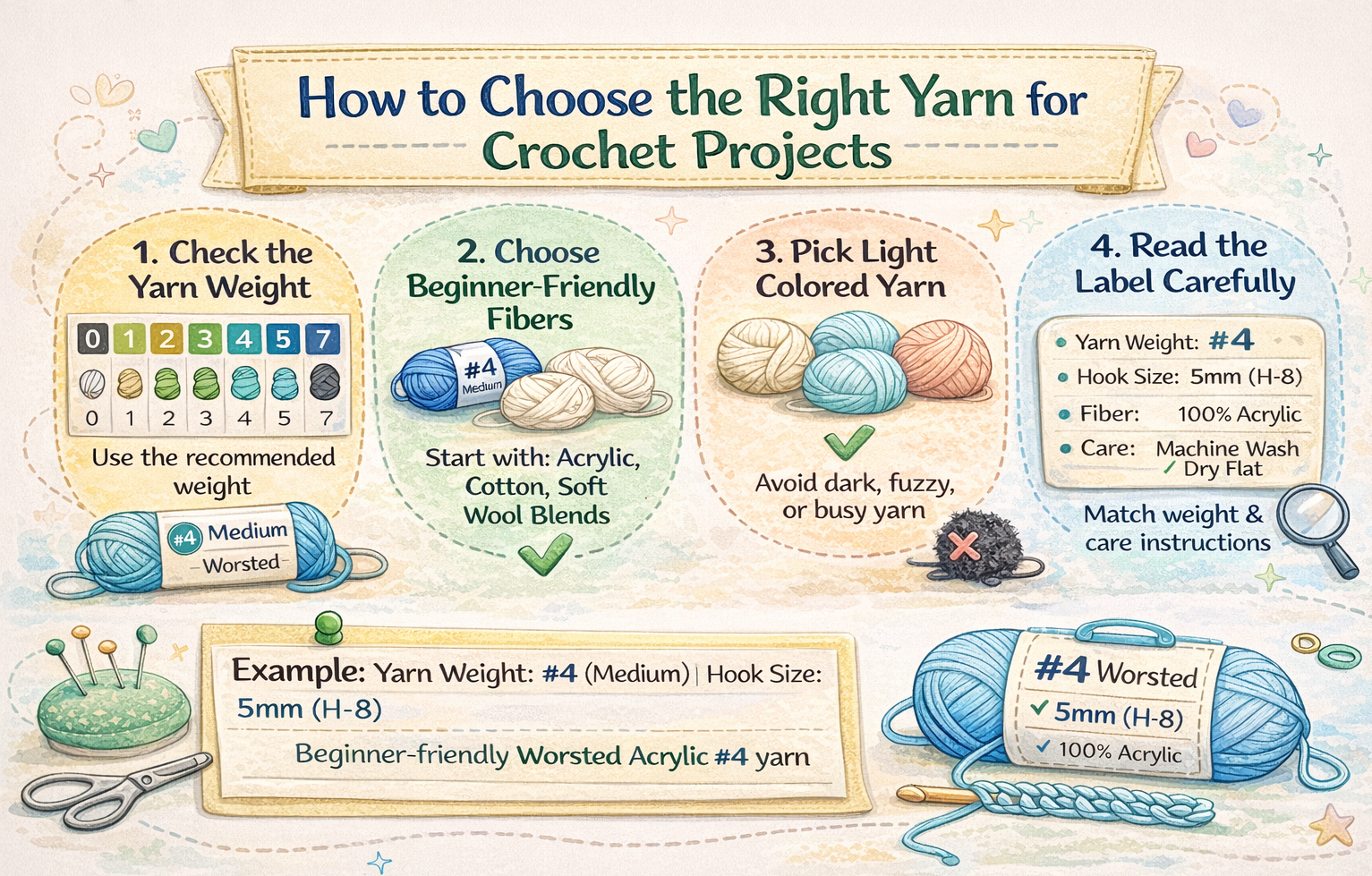
In the US, yarn weight is categorized by numbers from 0 to 7, according to the Craft Yarn Council.
Common Yarn Weights Explained Simply
- 0 – Lace: Very thin, used for delicate lace projects
- 1 – Super Fine: Lightweight yarn, often for baby items
- 2 – Fine: Used for light garments and accessories
- 3 – Light (DK): Great for sweaters and lightweight blankets
- 4 – Medium (Worsted): Most popular and beginner-friendly
- 5 – Bulky: Thick yarn for fast projects
- 6 – Super Bulky: Very thick, great for chunky blankets
- 7 – Jumbo: Extremely thick, often used with hands or big hooks
Best Yarn Weight for Beginners
Worsted weight (#4) is the best choice for beginners.
Why?
- Easy to see stitches
- Works with many patterns
- Widely available
- Forgiving if tension isn’t perfect
Understanding Yarn Fiber Types
Fiber refers to what the yarn is made of, and this affects softness, durability, stretch, and care.
Acrylic Yarn
Best for beginners
Pros:
- Affordable
- Easy to find
- Machine washable
- Great stitch definition
Cons:
- Can feel less breathable
Perfect for:
- Practice projects
- Blankets
- Scarves
Cotton Yarn
Pros:
- Natural fiber
- Strong and durable
- Great for household items
Cons:
- Less stretch
- Can feel stiff
Perfect for:
- Dishcloths
- Washcloths
- Bags
Wool Yarn
Pros:
- Warm
- Elastic
- Great stitch memory
Cons:
- Can be itchy
- Requires special care
Perfect for:
- Hats
- Sweaters
- Cold-weather accessories
Blended Yarns
Blends combine fibers (like acrylic + wool or cotton + acrylic).
Pros:
- Balance of softness and durability
- Often easier to care for
Blended yarns are a great option once you gain a little experience.
How to Read a Yarn Label (Without Stress)
Yarn labels look complicated, but they give you everything you need.
Key things to look for:
1. Yarn Weight Symbol
A small number (usually inside a yarn skein icon).
Example:
- #4 = Medium / Worsted
2. Recommended Hook Size
Tells you which crochet hook works best.
Example:
- 5.0 mm (H-8)
3. Fiber Content
Shows what the yarn is made of.
Example:
- 100% Acrylic
- 60% Cotton / 40% Acrylic
4. Care Instructions
Very important for finished projects.
Example:
- Machine washable
- Hand wash only
Matching Yarn to Your Crochet Project
Different projects need different yarns.
Scarves and Blankets
- Worsted or bulky yarn
- Acrylic or acrylic blends
Clothing (Sweaters, Tops)
- DK or worsted yarn
- Soft wool or blends
Dishcloths and Kitchen Items
- 100% cotton yarn
Amigurumi (Crochet Toys)
- Worsted weight cotton or acrylic
- Tight stitches for structure
Choosing the Right Yarn Color
Color affects how easy it is to crochet.
Best Colors for Beginners
- Light or medium solid colors
- Beige, gray, pastel tones
Colors to Avoid at First
- Black or very dark colors
- Variegated or multi-color yarn
- Highly textured yarn
Dark and busy yarns make stitches harder to see and count.
Texture Matters More Than You Think
Some yarns look beautiful but are hard to work with.
Avoid at the beginning:
- Fuzzy yarn
- Eyelash yarn
- Bouclé or novelty yarn
These hide stitches and make mistakes harder to fix.
Choose:
- Smooth yarn
- Even texture
Following the Pattern’s Yarn Recommendation
Patterns usually suggest:
- Yarn weight
- Fiber type
You don’t have to use the exact brand, but you should match:
- Weight
- Fiber as closely as possible
This ensures:
- Correct size
- Proper drape
- Best results
Common Beginner Yarn Mistakes (And How to Avoid Them)
Mistake 1: Choosing Yarn Only by Color
Fix: Check weight and fiber first.
Mistake 2: Using Thin Yarn Too Early
Fix: Start with worsted weight.
Mistake 3: Ignoring Care Instructions
Fix: Choose washable yarn for everyday items.
Mistake 4: Using Fuzzy Yarn to Learn
Fix: Stick to smooth yarn while learning.
How Yarn Choice Affects Tension and Stitch Definition
Different fibers behave differently:
- Acrylic: forgiving and consistent
- Cotton: shows mistakes clearly
- Wool: stretches and rebounds
If your stitches look uneven, the yarn — not your skill — may be the issue.
Budget-Friendly Yarn Tips
You don’t need expensive yarn to crochet well.
Smart tips:
- Buy beginner-friendly acrylic yarn
- Use store brands
- Watch for sales
Skill matters more than price.
Final Thoughts: Yarn Confidence Comes with Practice
Choosing yarn is a skill — just like crocheting itself.
At first, it may feel overwhelming, but with each project, it gets easier. Soon, you’ll walk into a yarn aisle and know exactly what to look for.
Remember:
- Start simple
- Follow the pattern
- Choose beginner-friendly yarn
- Be patient with yourself
The right yarn makes crochet more enjoyable, relaxing, and rewarding.
And most importantly — have fun with it