Learning how to crochet is an exciting journey, but choosing the right crochet hook can make all the difference between frustration and enjoyment. Many beginners struggle not because crochet is hard, but because they start with the wrong tools.
In this complete guide, you’ll learn everything a beginner needs to know about crochet hooks — from types and sizes to materials and practical tips. By the end, you’ll know exactly which crochet hook to choose for your first projects and why.
Why Choosing the Right Crochet Hook Matters
Crochet hooks may look similar at first glance, but each type serves a specific purpose. Using the wrong hook can cause:
- Uneven stitches
- Hand pain or fatigue
- Yarn splitting
- Projects that don’t match the pattern size
For beginners, the right hook improves stitch control, comfort, and confidence, making learning crochet much more enjoyable.
Main Types of Crochet Hooks for Beginners
Let’s break down the most common crochet hook types and how they are used.
1. Standard Crochet Hooks
These are the most commonly used hooks and the best choice for beginners.
Features:
- Straight shaft
- Smooth tip
- Easy yarn glide
Best for:
- Scarves
- Blankets
- Dishcloths
- Hats
If you’re just starting, this is the hook you should choose first.
2. Ergonomic Crochet Hooks
Ergonomic hooks have soft, padded handles designed to reduce hand strain.
Benefits:
- Better grip
- Less wrist and finger pain
- Ideal for long crochet sessions
Recommended for:
- Beginners with hand sensitivity
- People with arthritis
- Crocheting for long periods
Many beginners find ergonomic hooks more comfortable than traditional ones.
3. Tunisian Crochet Hooks
These hooks are longer and resemble knitting needles.
Used for:
- Tunisian crochet (a mix of crochet and knitting)
Not recommended for absolute beginners, but great once you master basic crochet stitches.
4. Double-Ended Crochet Hooks
These hooks have a hook on both ends, often in different sizes.
Best for:
- Advanced techniques
- Colorwork
- Special patterns
Beginners usually don’t need these right away.
Crochet Hook Materials: Which Is Best for Beginners?
Crochet hooks are made from different materials, and each affects how yarn moves.
Aluminum Crochet Hooks (BEST for Beginners)
✔ Smooth
✔ Lightweight
✔ Affordable
✔ Widely available
Aluminum hooks allow yarn to glide easily, helping beginners maintain even stitches.
Plastic Crochet Hooks
✔ Lightweight
✔ Good for chunky yarn
❌ Can feel slippery
❌ Less durable
Good for practice but not always the most comfortable long-term.
Bamboo or Wooden Crochet Hooks
✔ Warm feel
✔ Good grip
✔ Natural look
❌ Yarn doesn’t glide as smoothly
Great for slippery yarns, but some beginners find them slower to work with.
Steel Crochet Hooks
Used mainly for thread crochet, lace, and doilies.
Not recommended for beginners.
Understanding Crochet Hook Sizes (US System)
Hook size affects how tight or loose your stitches will be.
Best Crochet Hook Size for Beginners
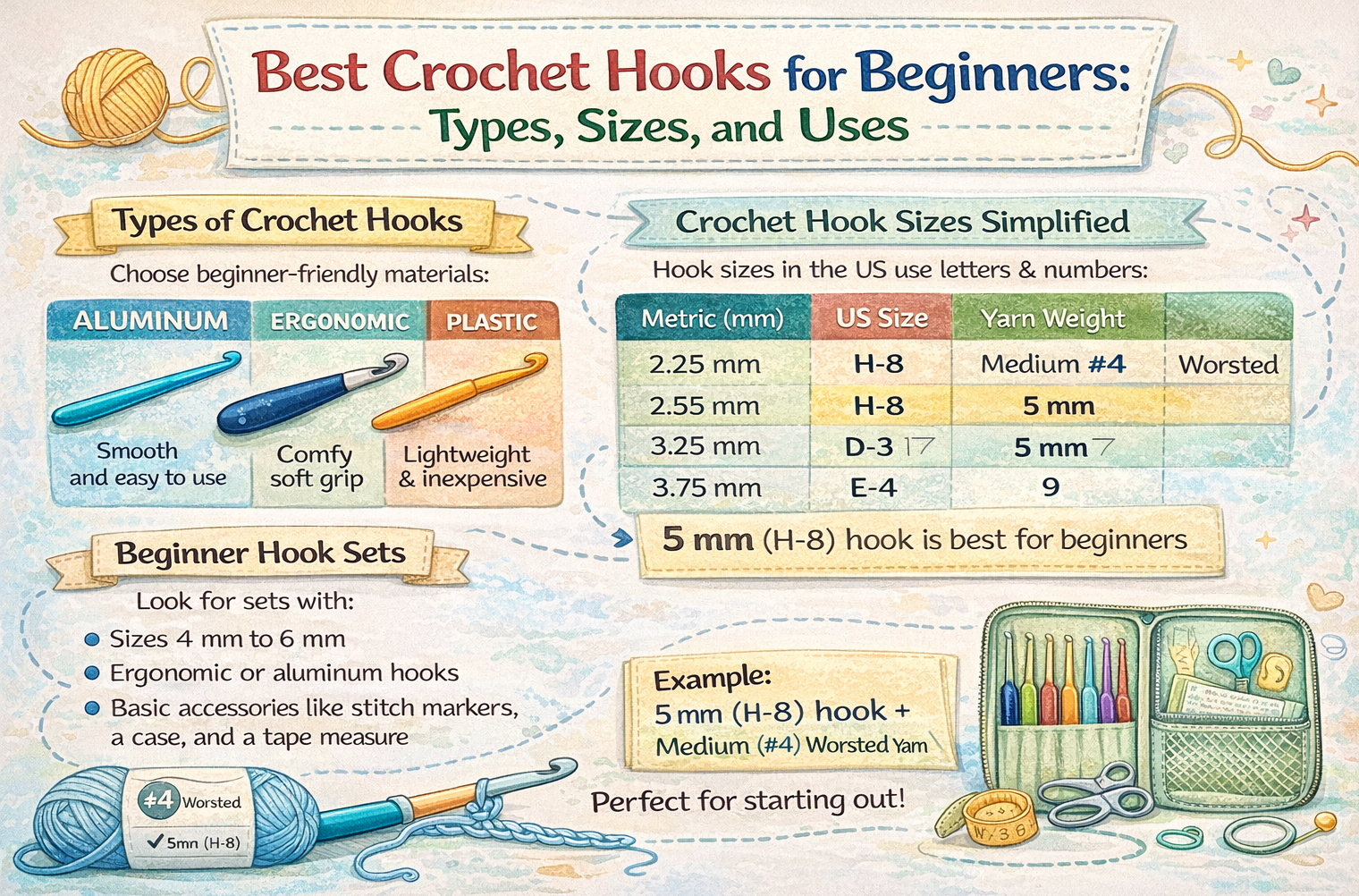
Size H/8 (5.0 mm) is the most recommended beginner hook.
Why?
- Works with medium-weight yarn
- Easy to control
- Ideal for learning basic stitches
Common US Crochet Hook Sizes
| US Size | Metric (mm) | Best Use |
|---|---|---|
| G/6 | 4.0 mm | Light projects |
| H/8 | 5.0 mm | Beginners (BEST) |
| I/9 | 5.5 mm | Loose stitches |
| J/10 | 6.0 mm | Chunky yarn |
Matching Yarn and Hook Size
For beginners, always follow this rule:
Medium-weight yarn (Worsted Weight #4) + H/8 (5.0 mm) hook
This combination makes stitches easier to see, count, and correct.
Best Crochet Hooks for Beginners (Quick Recommendations)
Here are the top beginner-friendly options:
- Aluminum hook (Size H/8 – 5.0 mm)
- Ergonomic hook set (multiple sizes)
- Bamboo hook (for slippery yarn control)
If possible, start with one hook, then invest in a set once you know your preference.
Common Crochet Hook Mistakes Beginners Make
Choosing a hook too small
→ Causes tight stitches and hand pain
Starting with steel hooks
→ Makes learning much harder
Ignoring comfort
→ Leads to fatigue and frustration
Using the wrong yarn weight
→ Stitches look uneven
How to Hold a Crochet Hook (Beginner Tips)
There are two popular methods:
1. Pencil Grip
- Held like a pencil
- Good for precision
2. Knife Grip
- Held like a knife
- Offers more power
There’s no wrong way — choose what feels comfortable.
How Many Crochet Hooks Does a Beginner Need?
You only need:
✔ One hook (H/8 – 5.0 mm)
✔ One skein of medium-weight yarn
That’s it. Keep it simple.
When to Upgrade Your Crochet Hooks
Once you feel comfortable:
- Try ergonomic hooks
- Experiment with different materials
- Buy a full hook set
This helps you adapt to different yarns and patterns.
Frequently Asked Questions (FAQ)
What is the best crochet hook for absolute beginners?
An aluminum crochet hook, size H/8 (5.0 mm), is the best choice.
Are ergonomic crochet hooks worth it?
Yes, especially if you crochet for long periods or experience hand pain.
Can I crochet with any hook size?
Technically yes, but following pattern recommendations ensures correct sizing.
Should beginners use bamboo or aluminum hooks?
Aluminum hooks are easier for beginners because yarn slides more smoothly.
Final Thoughts
Choosing the right crochet hook is the foundation of learning crochet successfully. When beginners start with the correct type, size, and material, they learn faster, enjoy the process more, and stay motivated.
Start simple, stay comfortable, and remember: every expert crocheter was once a beginner