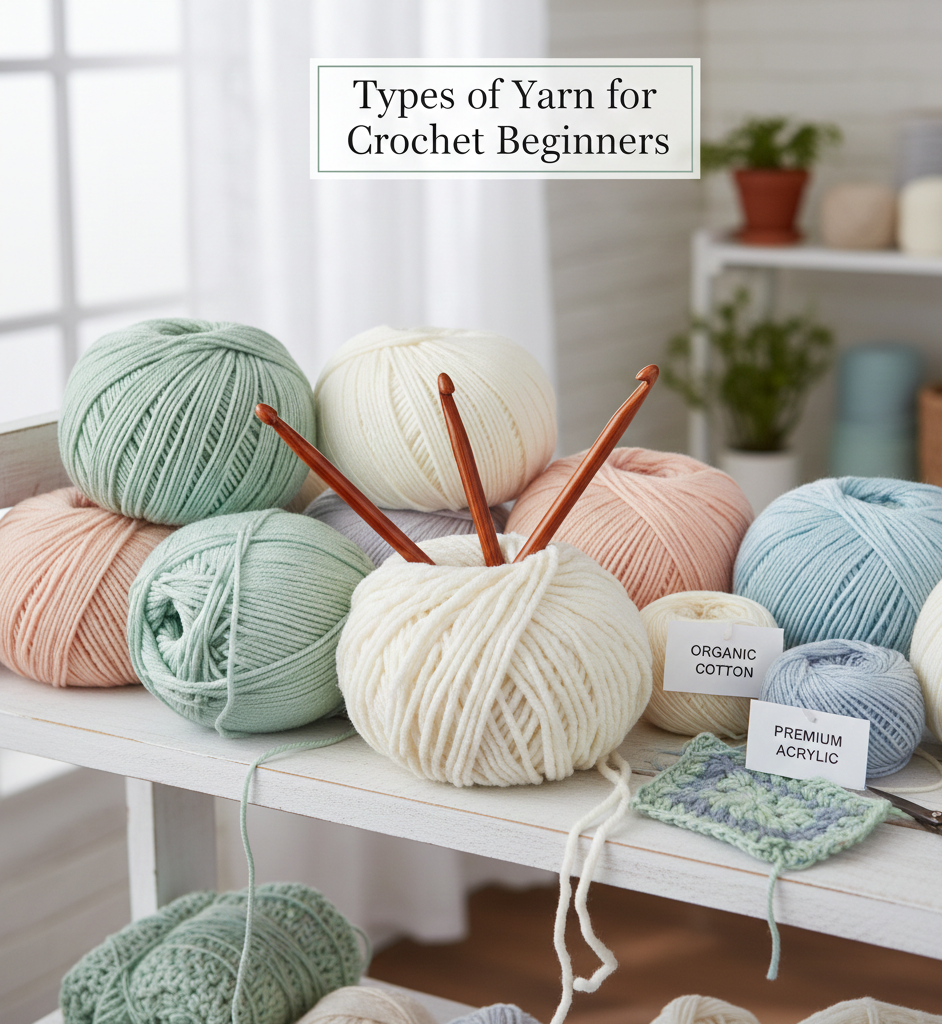
If you’ve ever walked into a craft store and felt completely overwhelmed by the wall of yarn options staring back at you, you’re not alone. With hundreds of colors, textures, weights, and fiber types to choose from, picking the right yarn for your first crochet project can feel more confusing than actually learning to crochet.
Here’s the good news: You don’t need to understand every single type of yarn to get started. In fact, knowing just a few basics about yarn fibers, weights, and textures will set you up for success from your very first stitch.
In this comprehensive guide, we’ll break down everything you need to know about yarn types in plain, simple language. By the end, you’ll be able to walk into any store (or browse online) with confidence, knowing exactly what to look for and why it matters for your project.
Why Does Yarn Type Matter?
Before we dive into the different types of yarn, let’s talk about why this even matters. Can’t you just pick any pretty color and start crocheting?
Technically, yes – but choosing the wrong yarn can turn a fun hobby into a frustrating experience. The yarn you select affects:
- How easy or difficult it is to see your stitches (crucial when you’re learning)
- How your finished project looks and feels
- How well your project holds up after washing and wearing
- How comfortable the crocheting process is for your hands
- Whether your project is appropriate for its intended use
For example, making a potholder with acrylic yarn might seem fine until it melts the first time it touches a hot pan. Or creating a summer top with thick wool yarn will leave you sweating instead of comfortable. Understanding yarn types helps you avoid these mishaps.
The Three Main Yarn Fiber Categories
All yarn falls into three basic categories based on what it’s made from: animal fibers, plant fibers, and synthetic fibers. Let’s break down each one.
Animal Fibers: Warm, Elastic, and Cozy
Animal fibers come from, well, animals – primarily sheep, but also alpacas, goats, rabbits, and even silkworms. These are natural fibers that have been used for thousands of years.
Common Animal Fibers:
Wool is the most popular animal fiber and comes from sheep. It’s incredibly warm, naturally elastic (which means it bounces back to shape), and breathable. Wool yarn is perfect for winter accessories like hats, scarves, mittens, and cozy blankets.
Modern wool yarns have come a long way from the scratchy sweaters your grandmother might have made. Many wool yarns today are labeled “superwash,” which means they’ve been treated to be softer and machine-washable. Merino wool, in particular, is known for being exceptionally soft and comfortable against skin.
Recent environmental research published in Sustainability (2024) highlights that wool is biodegradable and has lower environmental impact than synthetic alternatives, as it doesn’t generate microplastics that pollute water and soil. This makes wool an environmentally responsible choice for conscious crafters.
Alpaca fiber comes from alpacas (relatives of llamas) and is even softer and warmer than regular sheep’s wool. It’s hypoallergenic, which makes it a great option if regular wool irritates your skin. Alpaca is perfect for luxury scarves, shawls, and sweaters.
Cashmere is the luxury option in the animal fiber world. It comes from the soft undercoat of cashmere goats and is incredibly soft, lightweight, and warm. It’s also expensive, so it’s not typically recommended for beginners who are still practicing their stitches.
Mohair comes from Angora goats and creates a fuzzy, halo effect in finished projects. It’s warm and lustrous but can be tricky for beginners to work with because the fuzzy texture makes it harder to see individual stitches.
Silk is produced by silkworms and is valued for its incredible softness, natural sheen, and beautiful drape. Silk yarn is often blended with other fibers to add a touch of luxury and shine.
Benefits of Animal Fibers:
- Naturally warm and insulating
- Elastic and flexible (helps stitches look even)
- Breathable (doesn’t trap moisture)
- Biodegradable and environmentally friendly
- Beautiful drape and texture
Disadvantages:
- Can be irritating to sensitive skin
- More expensive than synthetic options
- Usually require hand washing and special care
- Some people have wool allergies
- Less readily available in big box craft stores
Best For: Winter accessories, cozy blankets, sweaters, and garments where warmth and natural texture matter.
Plant Fibers: Cool, Strong, and Absorbent
Plant fibers come from various plants and have been used in textiles for centuries. These natural fibers have very different properties from animal fibers.
Common Plant Fibers:
Cotton is by far the most popular plant fiber for crochet. It’s soft, strong, breathable, and shows stitch definition beautifully. Cotton is naturally absorbent, which makes it perfect for dishcloths, washcloths, summer garments, and baby items.
Cotton yarn works up with excellent stitch definition, meaning you can clearly see each individual stitch in your finished work – this is especially helpful when learning or creating intricate stitch patterns. However, cotton has very little stretch compared to wool, so it’s not ideal for items that need elasticity like fitted hats or cuffs.
According to research published in Processes (2025) on sustainable yarn production, cotton cultivation traditionally uses significant amounts of water and pesticides. However, organic cotton and recycled cotton are increasingly available sustainable alternatives that reduce environmental impact while maintaining the fiber’s desirable properties.
Bamboo is technically a type of rayon made from bamboo plants. It’s incredibly soft, has a beautiful sheen, and is naturally antibacterial. Bamboo yarn drapes beautifully and is perfect for lightweight summer garments and accessories. However, the production process for turning bamboo into yarn does involve chemicals, so it’s not as “natural” as some people assume.
Linen comes from the flax plant and is known for exceptional strength and durability. Linen yarn has a beautiful, rustic texture and natural luster. It’s often used for summer garments, home decor items like table runners and napkins, and towels. Linen can feel stiff when new but becomes softer with washing and use.
Hemp is an eco-friendly fiber that’s incredibly strong and durable. Hemp yarn has a distinctive texture and becomes softer with each wash. It’s great for bags, rugs, and sturdy home decor items.
Benefits of Plant Fibers:
- Naturally breathable and cool
- Moisture-wicking (perfect for summer)
- Strong and durable
- Shows stitch definition clearly
- Generally easy to care for (most are machine washable)
- Sustainable and biodegradable
Disadvantages:
- Little to no stretch or elasticity
- Heavier than other fiber types
- Colors can fade over time with washing
- Can feel stiff initially (especially linen)
- Less forgiving for beginners due to lack of stretch
Best For: Summer garments, kitchen items (dishcloths, potholders), baby items, bags, and home decor.
Synthetic Fibers: Affordable, Versatile, and Easy-Care
Synthetic fibers are manufactured from various materials including petroleum-based polymers. While “synthetic” might sound like a bad thing, these fibers have many advantages that make them incredibly popular, especially for beginners.
Common Synthetic Fibers:
Acrylic is the most common and popular synthetic yarn, especially for beginners. It’s affordable, comes in virtually every color imaginable, is machine washable and dryable, and easy to work with. Acrylic yarn is widely available in craft stores and online.
Acrylic is incredibly forgiving for beginners because it has some elasticity, is smooth and easy to see stitches in, doesn’t split easily, and bounces back if you need to undo your work. Many crocheters start with acrylic and continue using it throughout their crochet journey for blankets, scarves, hats, amigurumi (stuffed toys), and practice projects.
The one important limitation: Never use acrylic yarn for potholders, trivets, or oven mitts because acrylic will melt when exposed to high heat. Always use 100% cotton for any items that will touch hot surfaces.
Research published in Health & Environmental Benefits of Organic Yarn (2025) notes that some people can develop sensitivities or allergic reactions to acrylic yarn or the chemicals used in its processing. If you experience itching, redness, or discomfort while working with acrylic, switching to natural fibers might help.
Nylon (also called polyamide) is strong, elastic, and durable. It’s rarely used alone for crochet but is often blended with other fibers to add strength and durability. You’ll frequently see wool-nylon blends for socks, where the nylon helps the wool yarn withstand the wear and tear of daily use.
Polyester is similar to acrylic but generally has more shine and drapes differently. It’s often blended with other fibers to add durability and reduce cost.
Rayon and Viscose are made from wood cellulose that’s been chemically processed. These fibers have a beautiful drape and sheen that mimics silk. Bamboo yarn is a type of rayon. While these fibers originate from natural sources (wood, bamboo), the manufacturing process is chemical-intensive, placing them in a gray area between natural and synthetic.
Benefits of Synthetic Fibers:
- Very affordable and budget-friendly
- Available everywhere (craft stores, big box stores, online)
- Easy care (most are machine washable and dryable)
- Hypoallergenic (good for people with wool allergies)
- Come in endless colors and textures
- Forgiving for beginners
Disadvantages:
- Not environmentally friendly (non-biodegradable, creates microplastics)
- Can pill (develop little balls of fiber on the surface)
- Quality varies widely between brands
- Less breathable than natural fibers
- Acrylic melts at high temperatures
- Some people find them less pleasant to work with than natural fibers
Best For: Blankets, scarves, hats, amigurumi, practice projects, items that need frequent washing, budget-friendly projects.
Fiber Blends: The Best of Both Worlds
Many yarns combine two or more fiber types to take advantage of the best properties of each. Common blends include:
- Cotton-Acrylic: Combines cotton’s breathability and stitch definition with acrylic’s affordability and easy care
- Wool-Acrylic: Offers wool’s warmth and elasticity with acrylic’s durability and easier care
- Wool-Nylon: Perfect for socks and high-wear items, combining wool’s comfort with nylon’s strength
- Cotton-Bamboo: Soft, breathable, and sustainable
- Alpaca-Silk: Luxury blend combining alpaca’s warmth with silk’s sheen
Blends are often excellent choices for beginners because they offer multiple benefits at a more accessible price point than pure luxury fibers.
Understanding Yarn Weight: Thickness Matters
Beyond fiber type, yarn weight (thickness) is the other crucial factor in choosing yarn. Yarn weights are standardized on a scale from 0 (thinnest) to 7 (thickest).
Here’s a breakdown of the most common weights:
Lace (0) and Fingering (1): These are very thin yarns used for delicate, intricate projects like doilies, lacy shawls, and fine baby items. They require small hooks and a lot of patience. Not recommended for beginners.
Sport (2) and DK/Light Worsted (3): These lightweight yarns work up into lightweight garments, baby clothes, and accessories. They’re slightly thicker than fingering weight but still fairly thin. Good for confident beginners ready to level up.
Worsted/Medium (4): This is the most versatile and beginner-friendly yarn weight. It’s thick enough to see your stitches clearly but not so thick that it’s unwieldy. Worsted weight (also called “aran” in the UK) is perfect for blankets, scarves, hats, mittens, sweaters, and countless other projects. This is where most beginners should start.
Bulky/Chunky (5): Thicker than worsted weight, bulky yarns work up quickly and are great for beginners who want to see fast results. They’re excellent for chunky blankets, thick scarves, and winter accessories. Some beginners find bulky yarn easier to handle because the stitches are larger and easier to see.
Super Bulky (6) and Jumbo (7): These very thick yarns create projects in record time but require large hooks. They’re fun for quick projects but can be tiring to work with for extended periods due to the weight and bulk.
Best Yarn Weights for Beginners:
- Start with: Worsted Weight (#4) – The Goldilocks option that’s not too thin, not too thick
- Also great: Bulky (#5) – If you want quick results and larger stitches
- Avoid at first: Lace, fingering, and jumbo weights – Too challenging or unwieldy for learning
The yarn label will always tell you the weight number, and most patterns specify which weight to use.
Texture and Finish: Smooth vs. Fuzzy
Beyond fiber content and weight, yarns come in different textures:
Smooth yarns have a consistent, even texture with no fuzz or bumps. They’re the best choice for beginners because you can clearly see each stitch, making it easier to learn and fix mistakes. Most standard acrylic, cotton, and wool yarns are smooth.
Textured/Novelty yarns include:
- Boucle: Bumpy loops along the strand
- Chenille: Velvety texture (beautiful but tricky to work with)
- Eyelash/Fun Fur: Fluffy strands that obscure stitches completely
- Ribbon: Flat ribbon-style yarn
- Thick-Thin: Alternates between thick and thin sections
While novelty yarns can create interesting effects, they’re challenging for beginners because they hide your stitches, making it difficult to see where to insert your hook. Save these for after you’ve mastered the basics.
Recommendation for Beginners: Stick with smooth, solid-colored or lightly variegated yarns in light to medium colors. Dark colors (black, navy, dark brown) make it nearly impossible to see your stitches when you’re learning.
Special Considerations: Allergies and Sensitivities
According to research on organic and natural yarns, conventional yarns can contain chemicals, pesticides, and dyes that may cause allergic reactions or respiratory issues in sensitive individuals. If you have known fiber allergies or chemical sensitivities:
- Wool allergies: Choose plant fibers (cotton, bamboo, linen) or synthetic options (acrylic, nylon)
- Chemical sensitivities: Look for organic yarns certified by the Global Organic Textile Standard (GOTS), which ensures fibers are produced without harmful chemicals
- Skin sensitivities: Try hypoallergenic options like acrylic, superwash merino wool, or organic cotton
If you’re making items for others, always ask about fiber preferences and allergies before choosing your yarn – especially for baby items or wearables.
Sustainability: Making Eco-Friendly Yarn Choices
If environmental impact matters to you, here are some sustainable yarn options:
Recycled Fibers: Research published in PMC (PubMed Central) and Processes (2024-2025) shows that recycled cotton and polyester significantly reduce environmental impact by diverting waste from landfills and using fewer resources than virgin fibers. Look for yarns certified by the Global Recycled Standard (GRS).
Organic Fibers: Organic cotton, organic wool, and other certified organic fibers are grown without harmful pesticides and chemicals, reducing pollution and protecting farmer health.
Natural, Biodegradable Fibers: Wool, cotton, linen, and hemp all biodegrade naturally, unlike synthetic fibers that persist in the environment for hundreds of years.
Sustainable Manufacturing: Some companies use renewable energy, closed-loop processes, and environmentally responsible practices. Look for certifications like GOTS, OEKO-TEX, or Fair Trade.
According to research in Sustainability (2024) and Natural Fibers Towards Fashion Sustainability, natural fibers like wool don’t generate microplastics that pollute water and soil, making them preferable from an environmental standpoint. However, synthetic recycled yarns prevent existing plastic from entering landfills, offering their own environmental benefits.
What to Look for on a Yarn Label
Every yarn has a label (also called a ball band) that contains essential information:
- Fiber Content: What the yarn is made of (e.g., “100% Acrylic” or “60% Cotton, 40% Acrylic”)
- Weight/Thickness: The weight category number (0-7) and name
- Yardage/Meterage: How much yarn is in the ball or skein
- Recommended Hook Size: What size crochet hook works best with this yarn
- Care Instructions: How to wash and dry the finished item
- Dye Lot Number: Important if you need to buy more yarn for a large project – always buy from the same dye lot to ensure color consistency
- Suggested Gauge: How many stitches and rows you should get per inch with the recommended hook
Learning to read yarn labels will help you make informed choices and ensure your projects turn out as expected.
Best Yarn Recommendations for Beginners
Based on expert recommendations and crocheter reviews, here are some excellent beginner-friendly yarns:
For Learning and Practice:
- Lion Brand Pound of Love – Affordable acrylic, comes in a large quantity, perfect for big projects
- Red Heart Super Saver – Classic acrylic yarn, available everywhere, very affordable, huge color selection
- Caron Simply Soft – Smooth acrylic that’s soft and easy to work with
For Versatile Projects:
- Lion Brand Vanna’s Choice – Great all-purpose worsted weight acrylic
- Bernat Softee Chunky – Bulky weight for quick projects
- I Love This Yarn (Hobby Lobby brand) – Affordable and comes in beautiful colors
For Natural Fiber Beginners:
- Lion Brand 24/7 Cotton – 100% cotton, great for kitchen items and summer projects
- Wool-Ease – Acrylic-wool blend that’s affordable and easy-care
- Knit Picks Swish Worsted – Superwash merino wool at a reasonable price
Start with one or two skeins of worsted weight yarn in a light or medium color to practice basic stitches. Once you’re comfortable, experiment with different fibers, weights, and colors.
Common Beginner Mistakes to Avoid
1. Choosing Dark or Variegated Yarn First
It’s tempting to pick that gorgeous deep purple or rainbow-colored yarn, but dark and highly variegated yarns make it extremely difficult to see your stitches when you’re learning. Start with light to medium solid colors or subtly variegated yarns.
2. Using Fuzzy or Textured Yarn
Novelty yarns might look fun, but they hide your stitches and make learning frustrating. Save the fun fur and chenille for after you’ve mastered the basics.
3. Buying Too Thin or Too Thick Yarn
Lace weight yarn is too thin for beginners to manage easily, while jumbo weight can be unwieldy. Stick to worsted or bulky weight until you’re comfortable.
4. Not Checking the Fiber Type for Your Project
Always match your yarn to your project’s needs. Don’t use acrylic for potholders (it melts), don’t use heavy wool for summer tops, and don’t use yarn without stretch for fitted items like beanies.
5. Buying Just One Skein for a Large Project
Check how much yarn your pattern requires and buy a little extra. Running out of yarn mid-project is frustrating, and you might not find the same dye lot later.
6. Ignoring Care Instructions
If you’re making something that needs frequent washing (baby blankets, dishcloths), choose machine-washable yarn. Hand-wash-only wool might not be practical for your lifestyle.
How to Choose Yarn for Specific Projects
Let’s break down which yarn types work best for common beginner projects:
Blankets and Afghans:
- Acrylic yarn (worsted or bulky weight) for easy-care, budget-friendly options
- Cotton for breathable summer blankets
- Wool or wool blends for cozy winter throws
Scarves and Shawls:
- Acrylic, wool, or alpaca (worsted to bulky weight)
- Avoid cotton (too heavy and doesn’t drape well)
Hats and Beanies:
- Wool or acrylic with some stretch (worsted to bulky weight)
- Avoid cotton (no elasticity)
Dishcloths and Washcloths:
- 100% cotton only (worsted weight)
- Never acrylic (it doesn’t absorb well)
Potholders and Trivets:
- 100% cotton only
- Never acrylic, nylon, or any synthetic (will melt)
Amigurumi (Stuffed Toys):
- Acrylic or cotton (sport to worsted weight)
- Smooth yarn with good stitch definition
Baby Items:
- Soft, washable options: acrylic, cotton, or superwash merino wool
- Avoid mohair, alpaca, or anything with long fibers (choking hazard)
- Hypoallergenic options preferred
Summer Tops and Garments:
- Cotton, bamboo, or cotton blends (sport to worsted weight)
- Avoid wool and acrylic (too warm)
Winter Accessories:
- Wool, acrylic, or blends (worsted to bulky)
- Prioritize warmth and softness
Building Your Yarn Stash Wisely
As you continue your crochet journey, you’ll naturally accumulate yarn (often called a “stash”). Here’s how to build it thoughtfully:
- Start small – Don’t buy tons of yarn before you know what you like working with
- Buy for specific projects – This prevents unused yarn from piling up
- Keep one or two “practice” skeins – Worsted weight acrylic in neutral colors for trying new stitches
- Watch for sales – Stock up on basics when your favorite brands are discounted
- Organize by weight and fiber – Makes it easier to find what you need
- Keep track of yardage – Know what you have for future projects
Conclusion: Your Yarn Journey Begins Here
Understanding yarn types might seem overwhelming at first, but it quickly becomes second nature. The more you crochet with different fibers, weights, and textures, the more intuitive your choices will become.
Remember these key takeaways:
- Start simple: Worsted weight acrylic or cotton in a light color is perfect for learning
- Match yarn to project: Consider the final use when choosing fiber type
- Read labels: They contain all the information you need to make smart choices
- Experiment gradually: Try new fibers and weights as you gain confidence
- Don’t be intimidated: Even experienced crocheters are still discovering new favorite yarns
Every yarn has its place and purpose. There’s no “bad” yarn – just yarn that’s better suited for certain projects than others. As you practice and experiment, you’ll develop your own preferences and favorite brands.
The most important thing is to start. Pick up a skein of worsted weight yarn in a color that makes you happy, grab an appropriate hook, and begin your crochet journey. Before you know it, you’ll be confidently selecting the perfect yarn for any project that catches your eye.
Happy crocheting!
Scientific Sources and References
Karimah, A., et al. (2025). Natural Fibers Towards Fashion Sustainability: A Review of Raw Materials, Production, Application, and Perspective. Taylor & Francis Online. https://www.tandfonline.com/doi/full