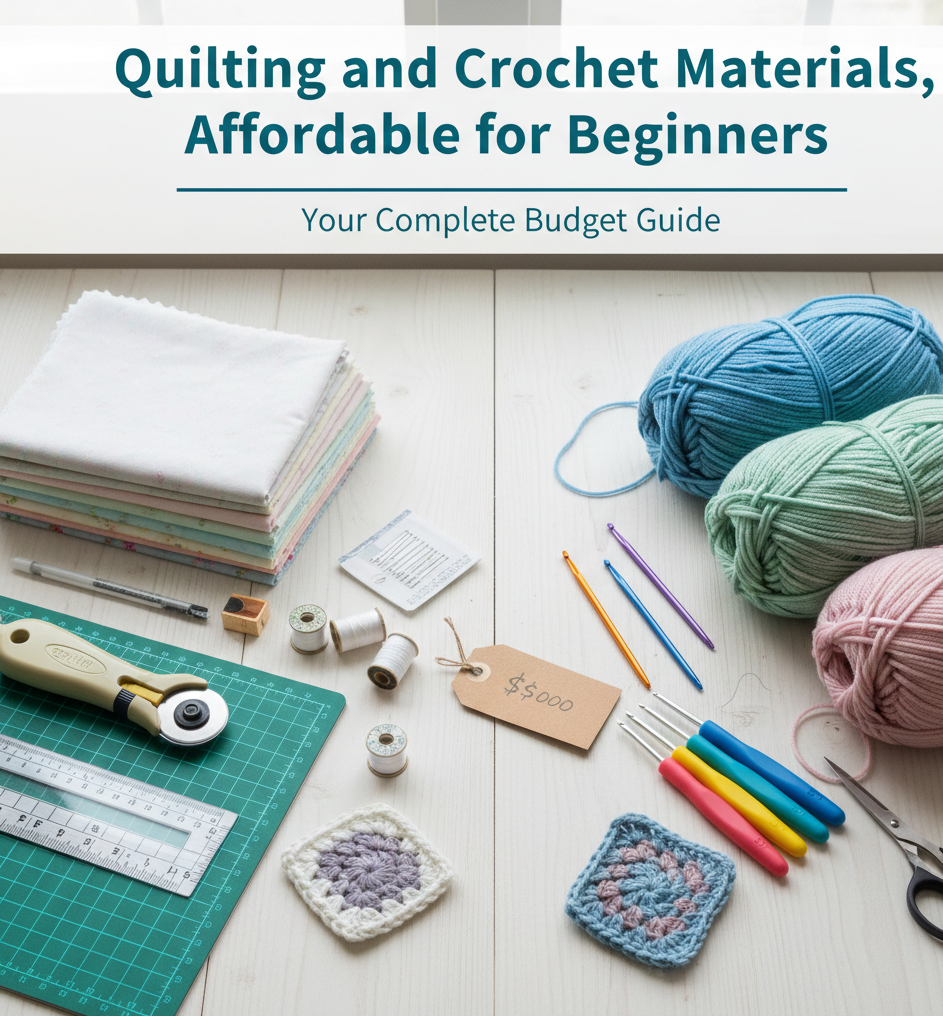
You’ve decided to start quilting or crocheting (or maybe both!), and you’re excited to dive in. But then reality hits: craft supplies can be expensive. When you start researching what you need, you encounter lists of specialty tools, premium fabrics, luxury yarns, and accessories that quickly add up to hundreds of dollars. Suddenly, your enthusiasm is dampened by sticker shock, and you’re wondering if you can even afford to start.
Here’s the encouraging truth: You absolutely can begin both quilting and crocheting on a budget. Thousands of beautiful quilts and crochet projects have been made with affordable, accessible materials. The key is knowing which supplies are truly essential, where to find the best deals, and which expensive items you can skip entirely as a beginner.
In this comprehensive guide, we’ll break down exactly what you need to start quilting and crocheting without financial stress. Whether you’re interested in one craft or both, you’ll learn how to build your supply collection strategically, find budget-friendly alternatives, and make the most of every dollar you invest. Plus, we’ll explore the remarkable mental health benefits of these crafts – making even a modest investment in supplies an excellent choice for your overall wellbeing.
Why Quilting and Crochet? The Mental Health Benefits
Before we talk about supplies, let’s discuss why investing even a small amount in craft materials is worthwhile. Recent scientific research reveals powerful mental health benefits associated with both quilting and crocheting.
The Science of Crafting for Wellness
Research published in the Journal of Public Health found that quilters experienced significant cognitive, emotional, and social benefits. The study identified quilting’s therapeutic elements: concentration requirements, skill development, creative expression, and the experience of “flow” – that absorbed state where time disappears and worries fade.
For crochet, a 2025 study published in PMC (PubMed Central) found that even a single crochet session significantly improves attention and concentration. The research showed increased brain connectivity and better communication between different brain areas, functioning almost like cognitive training.
According to the Lancet Commission (2024), 45% of dementia cases could be prevented by controlling modifiable risk factors, including engaging in cognitively stimulating activities during mid-life. Both quilting and crocheting fit perfectly into this protective category.
An international study published in Perspectives in Public Health analyzed over 8,000 people who crochet in 87 countries. The results were remarkable: 89.5% reported feeling calmer after crocheting, and 82% felt happier. Many actively use these crafts to manage mental health conditions, difficult life events, chronic illness, and pain.
Research published in Issues in Mental Health Nursing (2024) analyzed 25 studies on needlecraft and concluded that these activities have overwhelmingly positive effects on mental health and general wellbeing, including reduced stress, improved mood, sense of purpose and accomplishment, social connection, and relief from chronic pain.
The 2025 Crafting Wellness Movement
In 2025, there’s been an extraordinary surge in what researchers call “emotional support crafts.” Activities like quilting, crocheting, and embroidery have become recognized methods for managing stress and anxiety. Craft activities are now explicitly linked to wellness practices, with 65% of consumers actively seeking products and activities to improve their mental well-being – a 33% increase from just three years ago.
The crafting industry in 2025 is characterized by its focus on mental wellness, social connectivity, and personalized creativity. Online communities on TikTok, Instagram, and specialized platforms create supportive spaces where beginners can learn and share their creative journeys.
In short: Starting quilting or crocheting isn’t just about making beautiful things. It’s about investing in your mental health, exercising your brain, reducing stress, and finding moments of peace and accomplishment. These benefits are available regardless of whether you use budget or premium supplies.
Essential Quilting Materials for Beginners on a Budget
Let’s start with quilting supplies. Here’s what you truly need, what it costs, and where to find the best deals.
The Absolute Essentials (Total: $100-150)
1. Rotary Cutter ($10-20)
A rotary cutter is like a pizza cutter with an extremely sharp circular blade. This tool revolutionized quilting by enabling fast, accurate cutting through multiple fabric layers.
Budget options:
- OLFA 45mm Rotary Cutter ($12-18) – Industry standard, reliable, widely available
- Fiskars 45mm Rotary Cutter ($10-15) – Good quality at accessible price
- Generic brands from craft stores during 40-50% off sales
Pro tip: Always wait for sales. Rotary cutters regularly go on sale at Michaels, Joann, and Hobby Lobby. Use the 40-50% off coupons these stores send weekly.
2. Self-Healing Cutting Mat ($15-30)
This specialized surface protects your table and extends blade life. The mat’s grid lines help with measuring and squaring fabric.
Budget options:
- 18″ x 24″ mat ($15-20) – Adequate for beginners, fits on most tables
- 24″ x 36″ mat ($25-35) – Better size if you have space
Where to save: Wait for Black Friday, holiday sales, or use 40-50% off coupons. Never pay full price for cutting mats.
Storage tip: Store flat (never rolled or leaned) away from heat to prevent warping.
3. Quilting Rulers ($10-25)
Clear acrylic rulers with grid markings designed for rotary cutting.
Essential rulers for beginners:
- 6″ x 24″ ruler ($10-15) – Your primary cutting ruler for strips and yardage
- 12.5″ x 12.5″ square ruler ($12-18) – For squaring blocks
Budget tip: Buy rulers one at a time as needed rather than expensive sets. Start with just the 6″ x 24″ ruler and add the square ruler when you’re ready to make blocks.
Recommended brands (budget-friendly):
- Omnigrid – Clear markings, durable
- Fiskars – Good quality at lower prices
- Creative Grids – Non-slip surface, slightly pricier but worth it
4. Sewing Machine ($0-500)
You need a machine that sews a straight stitch reliably. That’s it.
Budget options:
- Use what you have – If you inherited a machine or have an old one, take it to a repair shop for servicing ($50-100). Many vintage machines work beautifully for quilting.
- Janome 2212 ($200-250) – Highly recommended entry-level machine
- Brother CS7000X ($300-400) – Great features for the price
- Singer 4423 ($250-350) – Durable, fast straight stitching
Money-saving strategies:
- Buy used from Craigslist, Facebook Marketplace, or local sewing machine dealers
- Check thrift stores (occasionally find working machines for $20-50)
- Ask family if anyone has an unused machine
- Look for dealer trade-in sales (dealers sell serviced trade-ins at reduced prices)
According to quilting expert recommendations, beginners spent an average of $100-150 on their first machines and created beautiful quilts. You don’t need computerized features, decorative stitches, or expensive add-ons.
5. Quarter-Inch Presser Foot ($10-30)
Standard quilting uses 1/4″ seams. This specialty foot helps maintain accurate seam allowances.
Budget tip: Check if your machine came with one. Many machines include a 1/4″ foot in the accessory box. If not, buy one specifically for your machine model (they’re machine-specific).
6. Thread ($15-30 for starter collection)
Quality thread prevents frustration and ensures seams hold.
What to buy:
- 50-weight cotton thread in neutral colors (white, cream, light grey, dark grey)
- Start with 3-4 spools covering light to dark
Budget-friendly quality brands:
- Aurifil 50wt – Industry favorite, buy large spools/cones for better value
- Gütermann – Excellent quality, widely available
- Coats & Clark – Good budget option
Where to save: Buy larger spools or cones (more yardage per dollar) rather than small spools.
7. Fabric Scissors ($10-25)
Even with a rotary cutter, you need scissors for detail work and thread trimming.
What to buy:
- Small embroidery scissors ($5-10) for thread snipping
- 8″ fabric shears ($10-20) for fabric cutting
Budget options:
- Fiskars – Reliable quality at reasonable prices
- Gingher – More expensive but last decades (wait for sales)
CRITICAL RULE: Use fabric scissors ONLY for fabric. One cut through paper ruins the blade.
8. Seam Ripper ($2-5)
Every quilter makes mistakes. A seam ripper lets you remove stitches and try again.
Budget tip: Most sewing machines include one. If not, they cost $2-5 at any craft store. Buy 2-3 to keep at different work stations.
9. Iron and Ironing Board ($0-50)
Pressing is essential in quilting for accurate seams and flat blocks.
Budget option: Use the iron and ironing board you already have. Any iron that gets hot and has steam works fine.
If buying new:
- Basic Sunbeam or Black & Decker iron ($15-25)
- Sturdy ironing board ($20-40)
Pro tip: Many quilters use a spray bottle with water and a dry iron (no steam) for more control.
10. Straight Pins ($3-8)
Pins hold fabric layers together while sewing.
What to buy:
- Glass or plastic-headed pins (100-250 count, $5-8)
- Flat-headed quilting pins work but glass heads won’t melt if you accidentally iron over them
Budget tip: Dollar stores often carry adequate pins for $1-3.
Total Cost for Essential Quilting Kit: $100-150
This assumes you already have an iron and can find a used or inherited sewing machine. If buying everything new including a machine, budget $300-400.
Fabric: The Ongoing Cost
Fabric is your main ongoing expense in quilting. Here’s how to manage fabric costs:
Budget Fabric Strategies
1. Start with affordable quilting cotton ($6-10 per yard) Don’t buy $2/yard fabric (usually poor quality) or $20/yard designer fabric (unnecessary for learning). Quality quilting cotton at $8-10/yard is the sweet spot.
2. Shop sales and use coupons
- Joann – Weekly 40-60% off sales, stack coupons
- Hobby Lobby – 40-50% off one item coupon, weekly fabric sales
- Walmart – Basic quilting cotton at lower prices
- Online clearance – Fabric.com, Fat Quarter Shop clearance sections
3. Buy smart quantities
- Fat quarters (18″ x 22″ pieces, $3-5 each) – Perfect for trying colors without big commitment
- Quarter-yard and half-yard cuts – Better than full yards when starting
- Pre-cut bundles – Charm packs (5″ squares), jelly rolls (2.5″ strips), layer cakes (10″ squares) coordinate beautifully and eliminate cutting time
4. Use alternative sources
- Thrift stores – 100% cotton sheets for $3-5 make excellent quilt backs and even quilt tops
- Thrift store clothing – Large cotton shirts or dresses for $2-3 provide quality fabric
- Remnant bins – Craft stores sell fabric remnants at 50-75% off
- Garage sales and estate sales – Sometimes find entire fabric stashes
5. Avoid beginner fabric mistakes
- Don’t buy fabric “just in case” – buy for specific projects
- Don’t overbuy (most patterns specify exact yardage needed)
- Don’t use low-quality fabric that will pill or fade quickly
Your First Quilt Fabric Budget: $30-60
A baby quilt or lap quilt typically requires:
- Quilt top: 2-4 yards various fabrics ($20-40)
- Backing: 2-3 yards ($12-20)
- Binding: 1/2 yard ($4-6)
- Batting: $10-15 (discussed below)
Total: $45-80 for your first small quilt
Batting (The Quilt’s Middle Layer): $10-25
Batting goes between your quilt top and backing.
Budget options:
- Warm & Natural Cotton Batting ($12-18 for crib/baby size)
- Pellon Polyester Batting ($8-15 for throw size)
- Hobbs Heirloom Cotton ($15-25 for throw)
Money-saving tips:
- Buy during 40-50% off sales at craft stores
- Check for coupons before buying
- Start with smaller quilt sizes requiring less batting
Essential Crochet Materials for Beginners on a Budget
Now let’s cover crochet supplies. The great news? Crochet requires fewer tools and lower startup costs than quilting.
The Absolute Essentials (Total: $20-40)
1. Crochet Hooks ($5-15)
Crochet hooks come in different sizes, materials, and shapes.
What to buy for beginners: Start with one or two medium-sized hooks:
- Size H/8 (5mm) or I/9 (5.5mm) – Perfect for worsted weight yarn (the most versatile yarn weight)
Material options:
- Aluminum ($2-4 per hook) – Smooth, fast, budget-friendly
- Plastic ($1-3 per hook) – Lightweight, very affordable
- Bamboo ($4-6 per hook) – Warm feel, good grip
Budget tip: Start with ONE hook in size H/8 or I/9. Don’t buy sets of 10-20 hooks initially. Add sizes as you need them for specific projects.
Where to buy:
- Craft stores during sales
- Amazon – Multi-packs often good deals
- Walmart – Boye and Susan Bates hooks at low prices
- Dollar stores – Sometimes carry basic hooks for $1-3
2. Yarn ($10-20 for starter collection)
Yarn is your main material. Here’s how to start affordably.
Best beginner yarn:
- Weight 4 (Worsted weight) – Not too thin, not too thick, easiest to see stitches
- Acrylic – Affordable, durable, machine washable, widely available
- Light or bright colors – Dark yarn (black, navy, dark brown) makes it impossible to see stitches when learning
Top budget-friendly yarns for 2025:
Red Heart Super Saver ($4-5 per skein, 364 yards)
- Most recommended beginner yarn
- 100+ color options
- Available everywhere (Michaels, Walmart, Joann, online)
- Durable but not the softest (better for blankets, bags than wearables)
Caron Simply Soft ($4-6 per skein, 315 yards)
- Very soft, great for wearables
- 40+ colors
- Available at Walmart, craft stores
- Slight shine that some people love
I Love This Yarn (Hobby Lobby, $3-4 per skein, 355 yards)
- Excellent value
- 80+ beautiful colors
- Very soft
- Only available at Hobby Lobby
Mainstays (Walmart Brand) ($2.50-4 per skein)
- Best budget option
- Decent quality for the price
- Limited but adequate color range
- Perfect for practice and learning
Knit Picks Brava ($2-3 per skein, 218 yards)
- Highly rated by crocheters
- Soft and durable
- Great for garments
- Only available online at KnitPicks.com
Budget tip: Start with 2-3 skeins in colors you love. One skein makes multiple dishcloths, a small toy, or half a scarf – enough to practice basic stitches and decide if you enjoy crochet.
3. Scissors ($2-8)
Small, sharp scissors for cutting yarn.
Budget options:
- Embroidery scissors ($3-6)
- Fiskars detail scissors ($5-8)
- Dollar store scissors ($1-2) – Work fine for yarn
4. Yarn Needle ($1-3)
A large, blunt needle with a big eye for weaving in yarn ends.
What to buy:
- Pack of assorted tapestry needles ($2-3)
- Available at any craft store or dollar store
Budget tip: Buy a multi-pack with different sizes (you’ll use them all eventually).
Total Cost for Essential Crochet Kit: $20-40
That’s significantly less than quilting! With $30, you have everything needed to start crocheting immediately.
Optional but Helpful Crochet Supplies ($10-20)
Stitch Markers ($2-5)
Small clips or rings that mark specific stitches (especially useful for working in rounds).
Budget alternatives:
- Safety pins
- Paper clips
- Pieces of contrasting yarn
Row Counter ($3-8)
Tracks which row you’re on in patterns.
Budget alternative:
- Use a notepad or phone notes app (FREE)
Measuring Tape ($2-5)
For checking project dimensions.
Budget tip: You probably have one already for household use.
Where to Shop: Best Budget Sources for Both Crafts
1. Dollar Stores ($1-3 per item)
What to buy:
- Scissors
- Pins
- Yarn needles
- Storage containers
- Sometimes yarn and crochet hooks
- Occasionally cutting mats or basic sewing notions
Best chains: Dollar Tree, Dollar General, Family Dollar
2. Walmart ($2-20 per item)
What to buy:
- Crochet: Mainstays yarn, Caron Simply Soft, Red Heart Super Saver, basic hooks
- Quilting: Basic fabric, thread, scissors, pins
- Both: Storage, organizational supplies
Why it’s great: Convenient, can order online for pickup, consistently low prices
3. Craft Store Sales (Michaels, Joann, Hobby Lobby)
How to maximize savings:
- Sign up for email lists – Get weekly 40-50% off coupons
- Download apps – Mobile-only coupons
- Shop sales – Weekly rotating sales on specific items
- Stack savings – Use sale prices + coupons when possible
- Holiday sales – Black Friday, Memorial Day, Labor Day have deep discounts
What to buy with coupons:
- Higher-priced single items (rotary cutters, cutting mats, rulers)
- Quality tools you’ll use for years
What to buy on sale:
- Fabric (50% off sales)
- Yarn (40-50% off sales)
- Batting
- Thread
4. Thrift Stores ($1-10 per item)
What to look for:
- 100% cotton sheets (quilt backs, even cut up for quilt tops)
- 100% cotton clothing (fabric source)
- Quilting and sewing supplies (sometimes entire stashes donated)
- Yarn (check for moth damage, but often find new skeins)
- Scissors, rulers, cutting mats
- Sewing machines (occasional treasures for $20-50)
Average savings: 75-90% off retail
5. Online Retailers
Amazon
- Compare prices on tools and supplies
- Read reviews before buying
- Prime shipping saves on costs
- Subscribe & Save discounts on recurring items
Fabric.com & Fat Quarter Shop
- Large fabric selections
- Clearance sections (50-75% off)
- Free shipping over certain amounts
KnitPicks.com & WeCrochet.com
- Excellent yarn values
- Frequent sales
- Bulk buying discounts
LoveCrafts.com
- Budget yarn sections
- Regular promotions
- International selection
6. Facebook Marketplace, Craigslist, Estate Sales
What to find:
- Complete craft supply stashes ($50-200 for collections worth $500+)
- Sewing machines ($50-150)
- Fabric collections
- Yarn stashes
- Tools and notions
Pro tip: People downsizing, moving, or handling estates often sell entire craft rooms for a fraction of value.
Budget Comparison: Quilting vs. Crochet Startup Costs
Quilting startup: $100-400
- With inherited/used machine: $100-150
- Buying everything new: $300-400
- First project materials: $45-80
Crochet startup: $20-40
- Essential tools: $20-40
- First project materials: $10-20
Ongoing costs:
Quilting:
- Fabric: $30-100 per quilt
- Batting: $10-25 per quilt
- Thread: $5-10 per project
- Total per quilt: $45-135
Crochet:
- Yarn: $15-50 per project (varies widely by size)
- Total per project: $15-50
Winner for tightest budget: Crochet has lower startup and ongoing costs.
Best value long-term: Quilting tools last decades; initial investment pays off over time.
Combining Both Crafts: Smart Overlap
Many crafters enjoy both quilting and crocheting. Some supplies overlap:
Shared supplies:
- Scissors
- Measuring tape
- Pins (can use for blocking crochet)
- Storage containers
- Iron (for blocking crochet and pressing quilts)
Complementary skills:
- Crochet blanket borders or edging for quilts
- Quilt-inspired crochet patterns (granny squares resemble quilt blocks)
- Crochet amigurumi to embellish quilts
Budget benefit: Learning both doesn’t double costs since some tools serve both crafts.
Making Your Budget Work: Practical Strategies
Start with ONE Craft
Don’t try to start both simultaneously. Choose one, get the essential supplies, complete 2-3 projects, then add the other craft if desired.
If choosing one:
- Crochet – Lower startup cost, portable, requires less space
- Quilting – Produces larger finished items faster, more variety in techniques
Build Your Stash Gradually
Month 1: Buy absolute essentials only ($20-150 depending on craft) Month 2: Add one or two convenience items ($10-20) Month 3: Expand color/variety options ($20-30) Ongoing: Add specialty items only as specific projects require them
Practice with Cheap Materials First
Quilting: Use thrift store sheets or clearance fabric for your first 1-2 projects. Don’t invest in expensive fabric until you’ve completed a quilt and know you enjoy it.
Crochet: Use Red Heart Super Saver or Mainstays yarn for practicing stitches. Once you’re confident, invest in softer yarns for wearables.
Take Advantage of Free Resources
Learning resources (FREE):
- YouTube tutorials (thousands available)
- Pinterest patterns and ideas
- Facebook groups for support and tips
- Library books on quilting and crochet
- Free patterns from yarn and fabric manufacturers
Community resources:
- Local quilting guilds ($25-35 annual membership = year of learning and support)
- Crochet-alongs (free online group projects)
- Craft store classes (often free when buying supplies)
- Online communities (Reddit’s r/quilting and r/crochet)
Share and Swap
Join local groups where crafters:
- Swap excess supplies
- Share expensive tools (rotary cutters, specialty rulers)
- Donate materials they no longer need
- Organize group buys for bulk discounts
Set a Monthly Craft Budget
Allocate a specific amount ($20-50) monthly for craft supplies. This:
- Prevents overspending
- Encourages thoughtful purchases
- Makes the hobby sustainable long-term
- Builds your collection gradually
What NOT to Buy as a Beginner
Save money by avoiding these common mistakes:
For Quilting:
DON’T buy:
- Complete beginner kits (often include unnecessary items)
- Specialty rulers you don’t need yet
- Expensive cutting machines (Cricut, AccuQuilt) – wait until you’re experienced
- Tons of fabric without specific projects in mind
- Premium thread in every color
- Embellishments and fancy notions before mastering basics
For Crochet:
DON’T buy:
- Complete hook sets (20+ hooks you won’t use for years)
- Expensive luxury yarn for practice
- Fuzzy or textured novelty yarn as a beginner
- Elaborate organization systems before you have supplies to organize
- Every single gadget and tool marketed to crocheters
Sample Budget Scenarios
Let’s look at realistic budgets for different situations:
Scenario 1: Super Tight Budget ($50 total)
Choose crochet:
- 2 crochet hooks, size H/8 and I/9: $6
- 3 skeins Mainstays or Red Heart yarn: $12
- Scissors (dollar store): $2
- Yarn needle (dollar store): $2
- Learn from free YouTube tutorials
- Total: $22
- Remaining: $28 for additional yarn as you progress
Scenario 2: Modest Budget ($150 total)
Quilting startup:
- Service inherited/used machine: $75
- Rotary cutter (on sale with coupon): $10
- 18″ x 24″ cutting mat (on sale): $15
- 6″ x 24″ ruler: $12
- Fabric scissors: $10
- Thread (2-3 spools): $10
- Seam ripper, pins: $8
- Total: $140
- Remaining: $10 toward first project fabric
OR Crochet startup with generous yarn stash:
- 2 hooks: $8
- 8-10 skeins various budget yarns: $35
- Scissors: $3
- Yarn needles: $2
- Stitch markers: $3
- Total: $51
- Remaining: $99 for ongoing yarn purchases
Scenario 3: Comfortable Budget ($400 total)
Start BOTH crafts:
Quilting ($250):
- Basic sewing machine (new): $150
- Rotary cutter: $15
- 24″ x 36″ cutting mat: $25
- Two rulers (6″ x 24″ and 12.5″ square): $25
- Scissors, thread, pins, seam ripper: $25
- 1/4″ foot: $10
Crochet ($50):
- Small hook set (6-8 hooks): $15
- 8 skeins various yarns: $25
- Scissors, needles, markers: $10
Remaining ($100): Materials for first projects in both crafts
The Mental Health ROI: Why Even Budget Supplies Are Worth It
Let’s revisit why investing in craft supplies – even modest amounts – offers exceptional value from a wellness perspective.
Mental health services cost:
- Therapy: $100-300 per session
- Meditation apps: $70-100 annual subscription
- Gym membership: $360-1,200 annually
- Prescription medications: $120-1,200+ annually
Craft supplies offering similar mental health benefits:
- Crochet startup: $30
- Quilting startup: $150
- Ongoing monthly: $20-50
The cognitive benefits, stress reduction, and sense of accomplishment from crafting are available at a fraction of the cost of other wellness interventions.
According to 2025 mental wellness research, 65% of consumers actively seek products to improve mental wellbeing, with 94% believing mental health care is crucial for overall wellness. Crafting provides an accessible, affordable entry point into mental health self-care.
The benefits compound:
- Each crafting session provides therapeutic value
- Completed projects boost self-esteem
- Skills improve with practice
- Social connections form through crafting communities
- Ongoing stress relief without recurring costs
Conclusion: Start Creating Without Financial Stress
Starting quilting or crocheting doesn’t require a huge financial investment. With as little as $20 (for crochet) or $100-150 (for quilting), you can begin your crafting journey and experience all the mental health, cognitive, and creative benefits these activities provide.
Your action plan:
✓ Choose your craft – Start with one (crochet if budget is very tight, quilting if you have a bit more to invest)
✓ Buy only essentials – Resist the urge to buy everything at once
✓ Shop smart – Use sales, coupons, thrift stores, and budget retailers
✓ Start small – Make 2-3 small projects before investing in more supplies
✓ Use free resources – YouTube, Pinterest, library books for learning
✓ Join communities – Online and local groups for support and tips
✓ Build gradually – Add to your collection month by month
✓ Focus on the process – Remember that the mental health benefits come from creating, not from having expensive supplies
Remember: creativity doesn’t depend on premium supplies or perfect tools. Some of the most beautiful quilts and crochet projects have been made with budget materials, thrift store finds, and basic tools. What matters is your willingness to learn, practice, and create.
The therapeutic benefits, cognitive stimulation, and joy of making something with your hands are available to everyone, regardless of budget. Your crafting journey starts now – not when you have the “perfect” setup, but with whatever supplies you can afford today.
Pick up that rotary cutter, that crochet hook, that budget fabric, that affordable yarn, and create something. The mental health benefits, sense of accomplishment, and creative fulfillment are waiting for you.
Happy crafting!
Sources and References
Quilting Resources:
- Mrs. Quilty. (2025). Best Beginner Quilt Kits, Budget Quilting Supplies. https://mrsquilty.com/