You’ve decided to learn crochet, and you’re ready to start. But when you search “crochet supplies” online or walk into a craft store, you’re bombarded with options: hundreds of different hooks in various materials, fancy organizers, specialty gadgets, and tools you’ve never heard of. Suddenly, what seemed like a simple hobby feels overwhelming and expensive.
Here’s the good news: You need surprisingly few tools to start crocheting. In fact, with just two essential items – a hook and some yarn – you can begin creating beautiful projects today. Everything else is optional, at least initially.
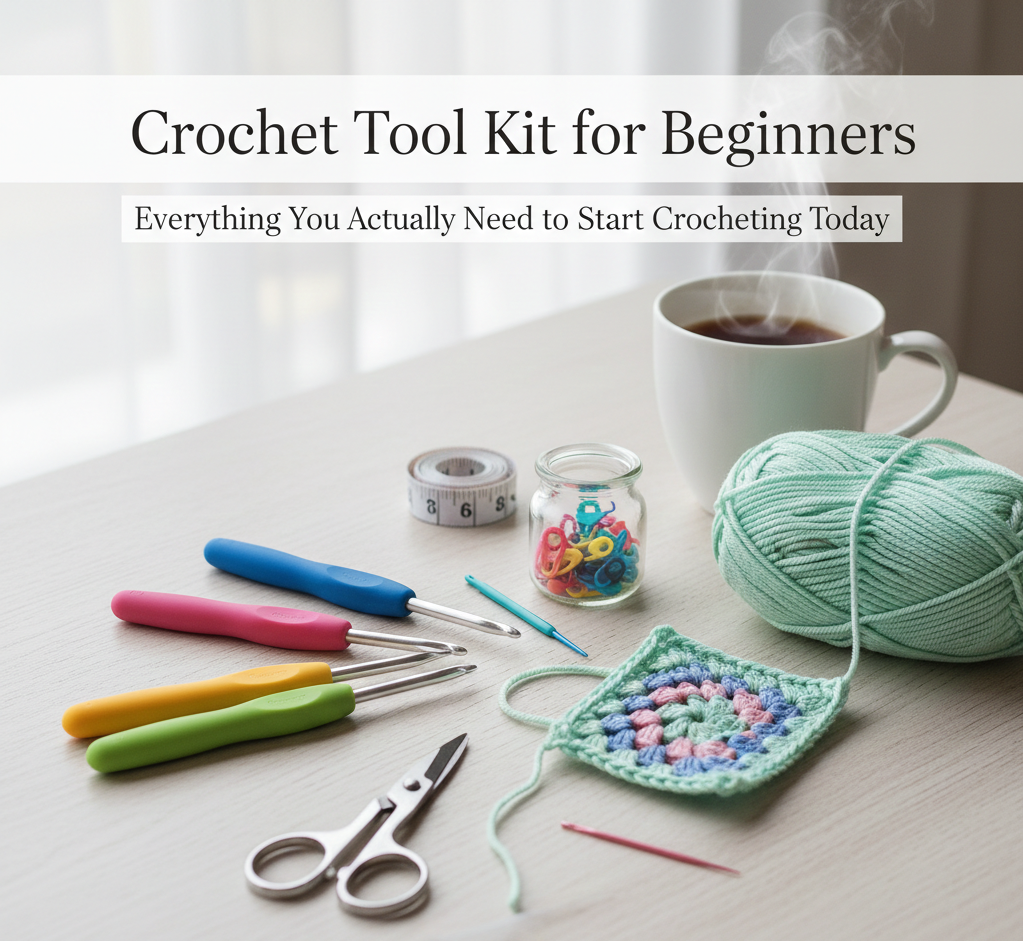
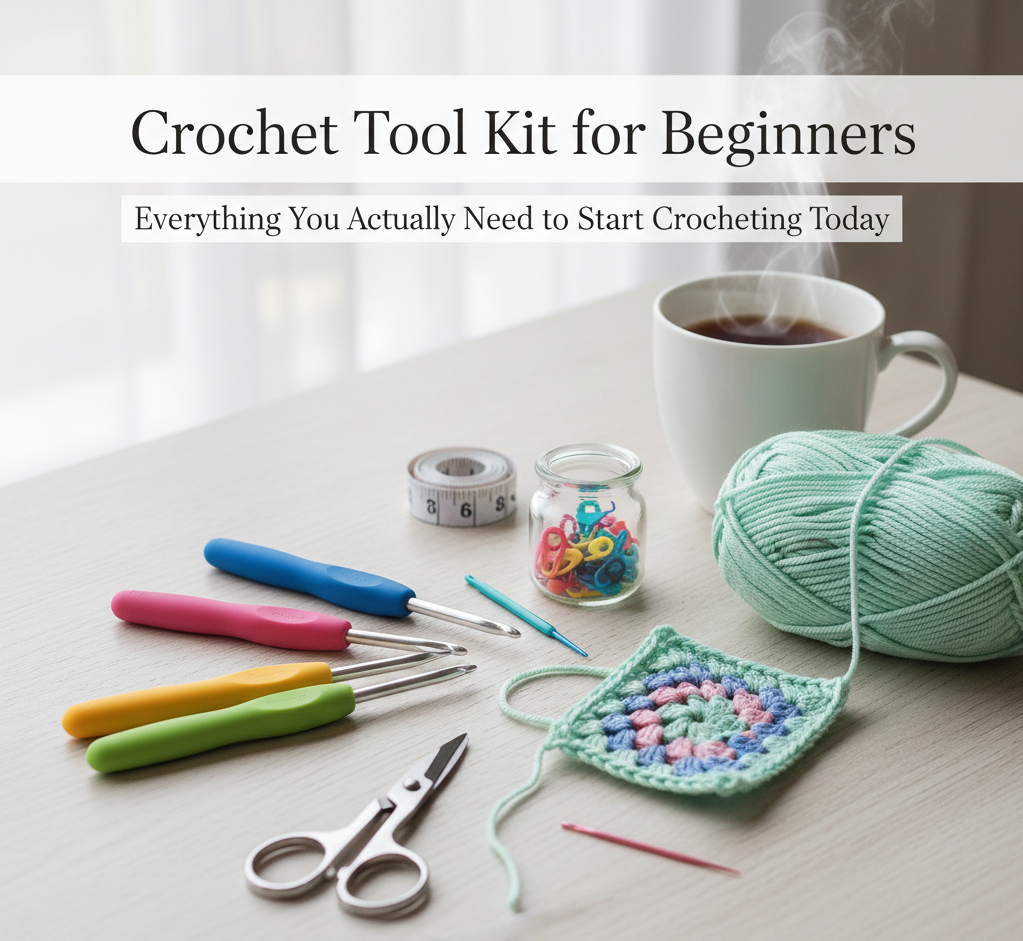
In this comprehensive guide, we’ll walk you through exactly what belongs in a beginner’s crochet tool kit. You’ll learn which tools are truly essential, which ones are helpful but not necessary, and which expensive items you can skip entirely. We’ll also cover budget-friendly shopping strategies, brand recommendations, and how to build your collection gradually without wasting money.
Whether you have $20 or $200 to spend, this guide will help you create the perfect beginner crochet kit that sets you up for success without unnecessary expenses.
The Absolute Essentials: What You Must Have
Let’s start with the non-negotiables. These are the only two things you absolutely must have to begin crocheting:
1. Crochet Hook ($3-25)
The crochet hook is your primary tool. It’s the instrument you use to pull loops of yarn through other loops, creating the stitches that form your crochet fabric.
What size hook for beginners?
For absolute beginners, start with one of these sizes:
- 5mm (H/8) – Most recommended for beginners
- 5.5mm (I/9) – Also excellent for learning
- 4mm (G/6) – Good if you prefer slightly smaller stitches
Why these sizes?
- They pair perfectly with medium-weight yarn (most common and easiest to find)
- Stitches are large enough to see clearly while learning
- Not so small that they’re fiddly, not so large that they’re unwieldy
- Most beginner patterns use these hook sizes
Hook Materials: Pros and Cons
Aluminum/Metal Hooks ($3-8 per hook)
- Pros: Inexpensive, smooth (yarn glides easily), durable, widely available
- Cons: Can feel cold, may be slippery in sweaty hands, less cushioning
- Best for: Most beginners, especially those on a budget
Plastic Hooks ($2-5 per hook)
- Pros: Very affordable, lightweight, warm to touch
- Cons: Less durable, can break with pressure, yarn doesn’t glide as smoothly
- Best for: Ultra-budget starts, kids learning crochet
Bamboo/Wooden Hooks ($5-12 per hook)
- Pros: Warm, natural feel, some grip (prevents slipping), gentle on hands
- Cons: Yarn doesn’t glide as easily, can splinter over time, more expensive
- Best for: Those who prefer natural materials, people with sweaty hands
Ergonomic Hooks ($8-25 per hook)
- Pros: Cushioned handles reduce hand strain, very comfortable for long sessions, excellent for arthritis or carpal tunnel
- Cons: More expensive, bulkier to store
- Best for: Anyone with hand/wrist issues, or those planning to crochet frequently
Budget recommendation: Start with ONE aluminum hook in size 5mm (H/8). This costs $3-8 and is all you need to learn. Add more sizes later as specific projects require them.
Popular beginner-friendly hook brands:
- Susan Bates – Inline hook style, very popular in the US
- Boye – Tapered hook style, also popular
- Clover Amour – Ergonomic with cushioned grip, beloved by many crocheters
- Furls – Premium ergonomic hooks (save for later when you’re sure you love crochet)
2. Yarn ($5-15 to start)
The second essential is yarn. You can’t crochet without something to crochet with!
Best yarn for beginners:
Weight: Medium/Worsted Weight (#4)
- Perfect thickness for beginners
- Easy to see stitches
- Works with 5mm-5.5mm hooks
- Most versatile weight
Fiber: Acrylic
- Most affordable option ($3-5 per skein)
- Easy to care for (machine washable)
- Available everywhere
- Comes in hundreds of colors
- Forgiving for beginners
Color: Light to Medium Shades
- White, cream, beige, light grey
- Pastels (pink, blue, yellow, mint)
- Bright colors (orange, lime green, hot pink)
Avoid: Dark colors (black, navy, dark brown, burgundy) make it impossible to see your stitches while learning.
How much yarn to start?
- 1-2 skeins (200-400 meters total)
- One skein makes: Several dishcloths, a small toy, or half a scarf
- Enough to practice all basic stitches and complete first projects
Budget-friendly yarn recommendations:
United States:
- Red Heart Super Saver ($4-5, 364 yards) – Most recommended beginner yarn, available everywhere
- Caron Simply Soft ($4-6, 315 yards) – Softer than Red Heart, great for wearables
- I Love This Yarn (Hobby Lobby, $3-4, 355 yards) – Excellent value, many colors
- Michaels’ Loops & Threads Impeccable ($3-4) – Decent quality, budget price
- Walmart’s Mainstays ($2.50-4) – Best budget option
What NOT to buy as a beginner:
- Fuzzy/novelty yarns (can’t see stitches)
- Very thin yarns (lace, fingering weight)
- Very thick yarns (super bulky, jumbo)
- Expensive luxury yarns ($15+ per skein) – save for later!
Total Cost for Absolute Essentials: $8-25
- One hook: $3-8
- 1-2 skeins yarn: $5-15
- Total: $8-23
That’s it! With less than $25, you can start crocheting today.
The Highly Recommended Additions ($10-20 more)
These aren’t absolutely essential on day one, but you’ll want them very quickly. They make the crochet experience significantly better.
3. Scissors ($2-15)
You’ll need to cut yarn constantly – when finishing projects, changing colors, or fixing mistakes.
What to buy:
- Small, sharp scissors (4-5 inches)
- Embroidery scissors work perfectly
- Fold-up or safety scissors great for portability
Budget options:
- Dollar store scissors: $1-2 (work fine!)
- Fiskars detail scissors: $5-8 (excellent quality)
- Embroidery stork scissors: $8-15 (cute and functional)
What you DON’T need: Expensive specialty “yarn scissors” – any sharp scissors work!
4. Yarn/Tapestry Needle ($1-5)
Also called darning needles, these large, blunt-tipped needles are used to weave in loose yarn ends and sew pieces together.
What to buy:
- Pack of assorted sizes ($2-5)
- Metal needles with large eyes
- Blunt tips (won’t split yarn)
Where to buy:
- Any craft store
- Dollar stores (often have them!)
- Amazon (multi-packs)
Pro tip: Buy a pack with different sizes. You’ll use different sizes for different yarn weights.
5. Stitch Markers ($3-8)
Small rings or clips that mark specific stitches in your work. Especially helpful when crocheting in rounds (like hats or amigurumi).
What to buy:
- Locking stitch markers (look like small safety pins)
- Split ring markers (can remove and replace easily)
- Pack of 20-50 markers
Budget alternatives (FREE!):
- Safety pins
- Paper clips
- Bobby pins
- Scrap yarn in contrasting color
Very Helpful Tools ($15-30 more)
These tools enhance your crochet experience but aren’t necessary right away. Add them as you progress.
6. Tape Measure ($2-5)
For checking project dimensions, measuring gauge, and ensuring proper sizing.
What to buy:
- Soft, flexible tape measure
- Retractable style convenient
- Shows both inches and centimeters
Where to find:
- Craft stores: $2-5
- Dollar stores: $1
- You might already have one at home!
7. Row Counter ($3-10)
Helps track which row you’re on, especially useful for large projects with many rows.
Options:
- Finger ring style: $3-5
- Click counter: $3-5
- Digital apps: FREE!
Budget alternative: Use a notepad, phone notes app, or make tally marks on paper (FREE!).
8. Hook Organizer/Case ($5-15)
Keeps your hooks organized and protected, especially once you’ve accumulated several sizes.
Options:
- Zippered pencil case: $3-5
- Dedicated hook roll: $10-15
- Small cosmetics bag: $5-8
Budget alternative: Use a ziplock bag, empty jar, or cup (FREE!).
Optional But Nice to Have (Add Later)
Once you’re committed to crochet and have completed several projects, these tools become more valuable:
9. Additional Hook Sizes ($20-100 depending on how many)
As you tackle different projects, you’ll need different hook sizes. But don’t buy a complete set initially!
Smart strategy:
- Start with 5mm (H/8)
- Add 4mm (G/6) and 5.5mm (I/9) next
- Buy other sizes only as specific patterns require them
When to buy a set:
- After making 5-10 projects
- If you find yourself buying hooks individually frequently
- During Black Friday sales (sets often 50% off)
Good hook sets for later:
- Clover Amour set: $60-80 (8-10 hooks, ergonomic)
- Amazon Basics set: $15-25 (12-14 hooks, aluminum)
- Boye or Susan Bates set: $20-40 (multiple hooks)
10. Yarn Bowl ($15-40)
A bowl with a slot or spiral design that holds your yarn ball while you work, preventing it from rolling away.
When it’s useful:
- You have cats (they won’t steal your yarn!)
- Working on large projects
- Want to keep yarn clean
Budget alternative: Any bowl or container works fine (FREE!).
11. Blocking Supplies ($10-30)
Blocking is a finishing technique that shapes and straightens your crochet work using moisture and pins.
What you need:
- Blocking mats: $10-20
- Rust-proof pins: $5-15
- Spray bottle: $2-5
When to buy: After completing several projects and wanting more professional results.
12. Pattern Holder ($5-20)
Stands or clips that hold patterns at eye level while you work.
Options:
- Cookbook stand: $10-15
- Magnetic board: $15-20
- Tablet stand: $10-20
Budget alternative: Lean pattern against a jar, use phone/tablet, or print and highlight (CHEAP!).
Complete Beginner Kit Options: By Budget
Let’s break down exactly what to buy based on how much you want to spend.
Ultra-Budget Kit: $15-25
What to buy:
- 1 aluminum hook (5mm): $5
- 2 skeins budget acrylic yarn: $6-8
- Small scissors (dollar store): $1
- Pack of yarn needles: $2
- Paper clips for stitch markers: FREE
- Total: $14-16
What you can make: Dishcloths, small toys, scarves, practice swatches
Standard Beginner Kit: $30-50
What to buy:
- 1 ergonomic hook (5mm): $10-12
- 3-4 skeins good quality acrylic yarn: $12-20
- Decent scissors: $5-8
- Yarn needles pack: $3
- Stitch markers pack: $4-6
- Small tape measure: $3
- Total: $37-52
What you can make: Multiple dishcloths, small blankets, toys, accessories
Comfortable Starter Kit: $60-100
What to buy:
- 3 ergonomic hooks (4mm, 5mm, 5.5mm): $30-36
- 6-8 skeins various colors: $24-40
- Quality scissors: $10
- Yarn needles: $5
- Stitch markers: $6
- Tape measure: $5
- Row counter: $5
- Hook organizer: $10
- Total: $95-117
What you can make: Blankets, garments, accessories, toys – most beginner patterns
Deluxe Beginner Kit: $150-200
What to buy:
- Hook set (8-10 hooks): $60-80
- 10-15 skeins varied colors/weights: $40-75
- Premium scissors: $15
- Complete notions set: $20
- Tape measure: $5
- Row counter: $8
- Hook organizer: $15
- Yarn bowl: $25
- Blocking supplies: $25
- Total: $213-268 (okay, slightly over $200!)
What you can make: Virtually any beginner to intermediate pattern
Pre-Made Crochet Kits: Worth It?
Many companies sell complete “beginner crochet kits” with all tools included. Are they worth buying?
Pros of pre-made kits:
- Everything in one purchase (convenient)
- Often include beginner instructions
- Sometimes include a starter project pattern
- Good as gifts
- Can be cost-effective
Cons of pre-made kits:
- May include tools you don’t need yet
- Hook quality varies
- Yarn quality often mediocre
- Sometimes more expensive than buying separately
- Less control over colors/materials
Verdict: Pre-made kits can be good for:
- Absolute beginners who want simplicity
- Gifts for someone interested in trying crochet
- Anyone who values convenience over customization
Skip kits if:
- You want to choose your own colors
- You want better quality tools
- You prefer building collection gradually
- You’re on tight budget (buying individually often cheaper)
Recommended pre-made kits:
- Luxebell Crochet Starter Kit ($20-25, Amazon) – 11 hooks, multiple accessories, good value
- Stitching Me Softly Set ($40-50, Etsy) – Bamboo hooks, quality scissors, beautiful presentation
- Learn to Crochet Kit by Beacon Crafts ($30-40) – Includes online tutorials and support
Where to Shop: Best Sources for Beginners
For Budget Tools:
Dollar Stores
- Scissors: $1
- Yarn needles: $1
- Stitch markers: $1
- Measuring tape: $1
- Sometimes basic hooks and yarn!
Walmart
- Hooks: $3-6
- Yarn: $2.50-5 per skein
- Basic notions: $2-5
- Convenient one-stop shopping
For Better Selection:
Michaels
- Wide variety of hooks and yarn
- Weekly 40% off coupons
- Sales frequently
- Helpful staff
Joann Fabric
- Excellent selection
- Weekly 50-60% off sales
- Mobile app coupons
- Education center with classes
Hobby Lobby
- Good yarn selection (especially I Love This Yarn)
- 40% off one item coupon weekly
- Rotating 50% off sales
For Convenience:
Amazon
- Read reviews before buying
- Compare prices easily
- Prime shipping
- Great for hook sets
For Support:
Local Yarn Stores (LYS)
- Expert advice
- Quality products
- Often offer classes
- Support local business
- Usually more expensive but worth it for guidance
Building Your Collection Over Time
Don’t buy everything at once! Here’s a smart timeline:
Week 1: Absolute Basics ($15-25)
- 1 hook (5mm)
- 2 skeins yarn
- Scissors (or use what you have)
- Start learning basic stitches!
Week 2-4: First Additions ($10-15)
- Yarn needles
- Stitch markers
- 2-3 more skeins yarn in colors you love
Month 2-3: Expanding Options ($20-40)
- 2 more hook sizes (4mm and 5.5mm)
- More yarn in varied colors
- Tape measure
- Row counter
Month 4-6: Improving Quality ($30-60)
- Better quality hooks if started with cheap ones
- Better quality yarn for special projects
- Hook organizer
- More notions
Month 6-12: Specializing ($50-100)
- Additional hooks for specific projects
- Specialty yarns (cotton, wool, fancy acrylics)
- Yarn bowl
- Blocking supplies
Year 2+: Advanced Tools ($100+)
- Complete hook set if desired
- Premium ergonomic hooks
- Yarn swift and ball winder
- Extensive yarn stash
- Specialty notions
What NOT to Buy as a Beginner
Save money by avoiding these common beginner mistakes:
1. Expensive Hook Sets Don’t buy a $100 hook set before you know if you like crochet. Start with 1-3 hooks.
2. Tons of Yarn Without Projects Don’t build a huge stash immediately. Buy yarn for specific projects to avoid waste.
3. Fuzzy or Novelty Yarns These are difficult to work with and hide your stitches. Wait until you’re experienced.
4. Very Thin or Very Thick Yarns Stick with medium weight (worsted/aran) until you master basics.
5. Expensive Luxury Yarns Save cashmere, silk, and $20+ skeins for after you’ve made several successful projects.
6. Every Gadget Available You don’t need every organizing system, counter, and accessory. Start simple!
7. Project-Specific Tools Before You Need Them Don’t buy amigurumi eyes, blocking supplies, or specialty hooks until you have a project requiring them.
Your Action Plan: Get Started Today
Here’s your step-by-step plan to build your beginner crochet kit and start creating:
This Week: ✓ Buy 1 hook (5mm/H-8) and 2 skeins light-colored worsted weight yarn ✓ Watch a beginner tutorial on YouTube (free!) ✓ Practice chain stitch and single crochet ✓ Make your first project (dishcloth or small swatch)
Next 2 Weeks: ✓ Add scissors, yarn needles, stitch markers ✓ Learn more stitches (half double crochet, double crochet) ✓ Complete 2-3 small projects ✓ Join online crochet community for support
First Month: ✓ Add 1-2 more hook sizes as needed ✓ Buy more yarn in colors you love ✓ Attempt first “real” project (scarf, small blanket, toy) ✓ Assess what additional tools would help you
Remember: Every expert crocheter started exactly where you are now – with a hook, some yarn, and curiosity. You don’t need expensive tools or a huge collection to create beautiful things. You just need to start.
Conclusion: You Have Everything You Need
The most important insight about building a beginner crochet tool kit is this: simplicity is your friend. While it’s tempting to buy every tool and accessory available, starting with just the basics allows you to:
- Learn without financial stress
- Discover what you actually need versus what’s just nice to have
- Build your collection intentionally based on your specific interests
- Save money for quality yarn (which matters more than fancy tools)
With a $20-50 investment, you can have everything needed to learn crochet, complete multiple projects, and discover whether this craft becomes a lifelong passion. That’s an incredibly affordable entry into a hobby that offers endless creative possibilities, proven mental health benefits, and the satisfaction of making beautiful things with your own hands.
So pick up that hook, grab that yarn, and start your crochet journey. Your first project is waiting to be created, and you already have everything you need to begin.
Happy crocheting!
Sources and References
- Gathered. (2025). 19 Best Crochet Kits & Crochet Tools for Beginners. https://www.gathered.how/