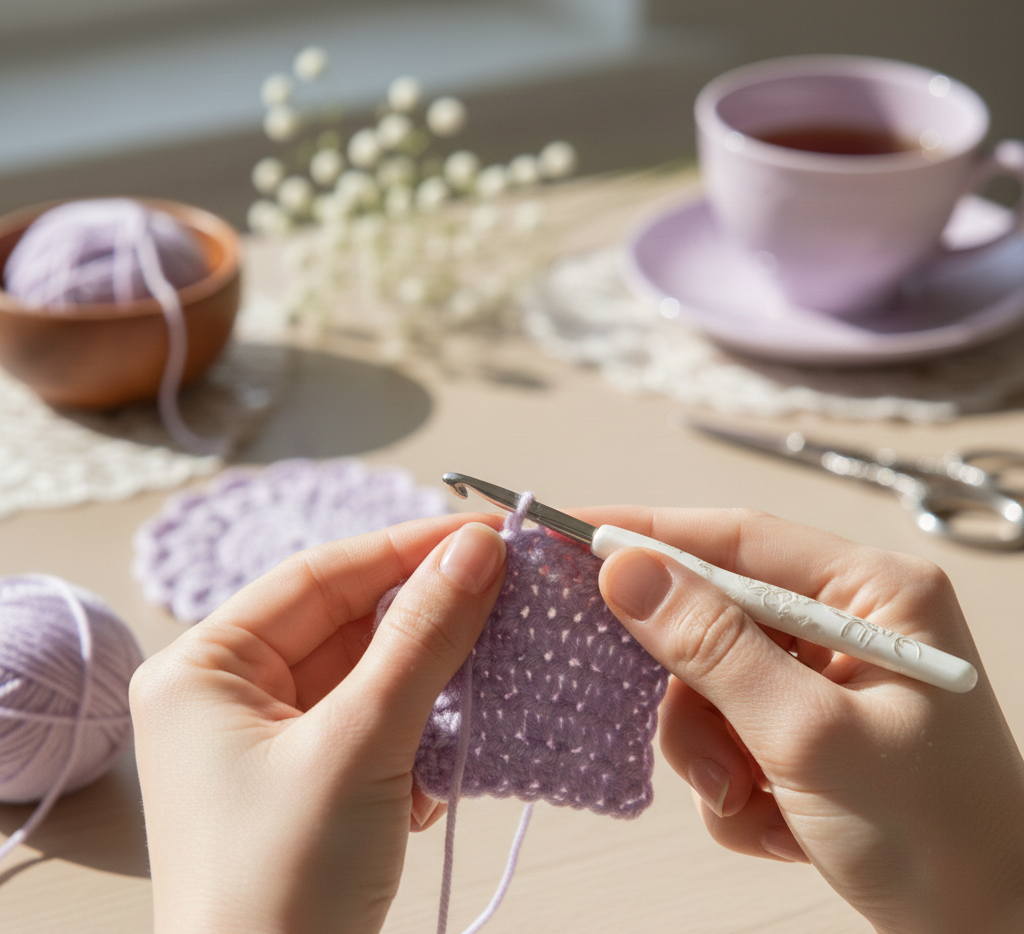
Crochet may look complicated at first, but it is much easier than it seems. By learning a few basic techniques, beginners can create beautiful handmade items and enjoy a relaxing hobby. This guide will take you step by step through the essential crochet skills, from yarn control to finishing a project.
Whether you want to make simple dishcloths, scarves, or blankets, mastering these techniques will give you the confidence to explore more complex projects in the future.
Yarn Control and Tension
One of the first things beginners need to learn is how to control the yarn. Tension refers to how tight or loose your stitches are. Proper tension creates even stitches, smooth edges, and a professional-looking project.
Tips for controlling tension:
- Hold the yarn gently: Don’t pull too tightly. Relaxed hands create smoother stitches.
- Wrap the yarn consistently: How you wrap the yarn around your fingers affects tension.
- Practice daily: The more you crochet, the more natural consistent tension will become.
- Check your stitches: Make sure they aren’t too tight or too loose. Tight stitches are hard to work into, while loose stitches can look uneven.
Remember, tension may feel awkward at first, but it improves quickly with practice.
Reading Crochet Patterns
Crochet patterns are like instructions for building your project. They include abbreviations, stitch counts, and sometimes diagrams. Understanding patterns is an essential skill for beginners.
Common crochet abbreviations:
- ch: chain
- sc: single crochet
- hdc: half double crochet
- dc: double crochet
- sl st: slip stitch
Tips for reading patterns:
- Count stitches at the end of each row.
- Use stitch markers to keep track of first and last stitches.
- Follow instructions carefully and don’t rush.
- Learn symbols if you want to read diagram-style patterns.
By learning to read patterns early, you’ll be able to tackle more complex projects later.
Working in Rows
Most beginner projects are worked in rows. Turning your work correctly is essential to avoid uneven edges or twisting your fabric.
Steps for working in rows:
- Complete the first row of stitches.
- Chain the required turning stitches (1 for single crochet, 2 for half double crochet, 3 for double crochet).
- Turn your work so the next row starts in the correct direction.
- Continue crocheting across the row, counting your stitches carefully.
Tip: Always check the first and last stitches of each row to maintain a straight edge. If your edges start to curve, it usually means a stitch was missed or added.
Finishing a Project
Once your project reaches the desired size, it’s important to finish it neatly. This involves fastening off and weaving in the yarn ends.
How to fasten off:
- Cut the yarn, leaving a tail of about 6 inches (15 cm).
- Pull the tail through the last loop on your hook.
- Pull it tight to secure.
Weaving in ends:
- Use a yarn needle to thread the tail through several stitches inside the fabric.
- Hide the tail along the stitches to prevent unraveling.
- Trim any excess yarn.
A neat finish makes your project look professional and ensures it lasts longer.
Beginner-Friendly Projects
Once you master basic techniques, it’s time to try simple projects. Here are a few beginner-friendly ideas:
Dishcloths
- Why: Small, quick, and practical.
- Techniques practiced: Single crochet, tension control, turning chains.
- Tip: Use cotton yarn for absorbency.
Scarves
- Why: Long rows help practice consistency and stitch counting.
- Techniques practiced: Single crochet, half double crochet, double crochet, reading patterns.
- Tip: Stick to simple stitches and patterns at first.
Blankets
- Why: Great for learning repeat patterns.
- Techniques practiced: Working in rows, counting stitches, tension control.
- Tip: Start with small baby blankets to keep projects manageable.
By starting with these projects, beginners can practice techniques while creating useful items.
Conclusion
Learning simple crochet techniques builds confidence and creativity. By practicing yarn control, reading patterns, working in rows, and finishing projects properly, beginners can progress quickly and enjoy every stitch.
Start small, practice regularly, and don’t worry about mistakes—they are part of learning. Crochet is a journey of creativity, relaxation, and handmade joy. Once you master these basics, the possibilities are endless.
FAQ
What are the easiest crochet techniques for beginners?
Beginners should start with yarn control, reading simple patterns, working in rows, and finishing projects correctly.
How can beginners control crochet tension?
Hold the yarn gently, wrap it consistently around your fingers, and practice daily for smooth, even stitches.
Why is reading crochet patterns important?
Reading patterns allows beginners to follow instructions, count stitches correctly, and complete projects successfully.
What beginner projects are best to practice crochet techniques?
Dishcloths, scarves, and small blankets are perfect beginner-friendly projects.
How do you finish a crochet project neatly?
Fasten off by pulling the yarn through the last loop, then weave in ends using a yarn needle for a clean, durable finish.