Learning how to crochet from scratch can feel intimidating at first, but it does not have to be. Crochet is a relaxing, creative, and rewarding skill that anyone can learn with the right guidance. Whether your goal is to make handmade gifts, decorate your home, sell crochet items, or simply enjoy a calming hobby, starting with the basics is the key to success.
This complete beginner’s guide will teach you how to crochet step by step, from understanding tools and yarn to mastering basic stitches and finishing your first projects with confidence. No prior experience is required.
What Is Crochet?
Crochet is a handmade craft that uses a single hook to create fabric from yarn or thread. Unlike knitting, which uses two needles, crochet relies on one hook to form loops and stitches. This makes crochet easier for many beginners to learn and control.
Crochet can be used to create a wide variety of items, including scarves, blankets, coasters, dishcloths, bags, home decor, and clothing.
Why Learn Crochet from Scratch?
Learning crochet from the very beginning allows you to build strong foundational skills. Instead of memorizing patterns without understanding them, you learn how stitches work, how tension affects fabric, and how to fix mistakes.
Benefits of learning crochet include:
- Stress relief and relaxation
- Improved focus and creativity
- A productive screen-free hobby
- The ability to create handmade gifts
- Opportunities to sell handmade items
- Support for sustainable and slow living
Crochet is not about perfection. It is about progress and enjoyment.
Crochet Tools Every Beginner Needs
Before you start crocheting, it is important to understand the basic tools.
Crochet Hooks
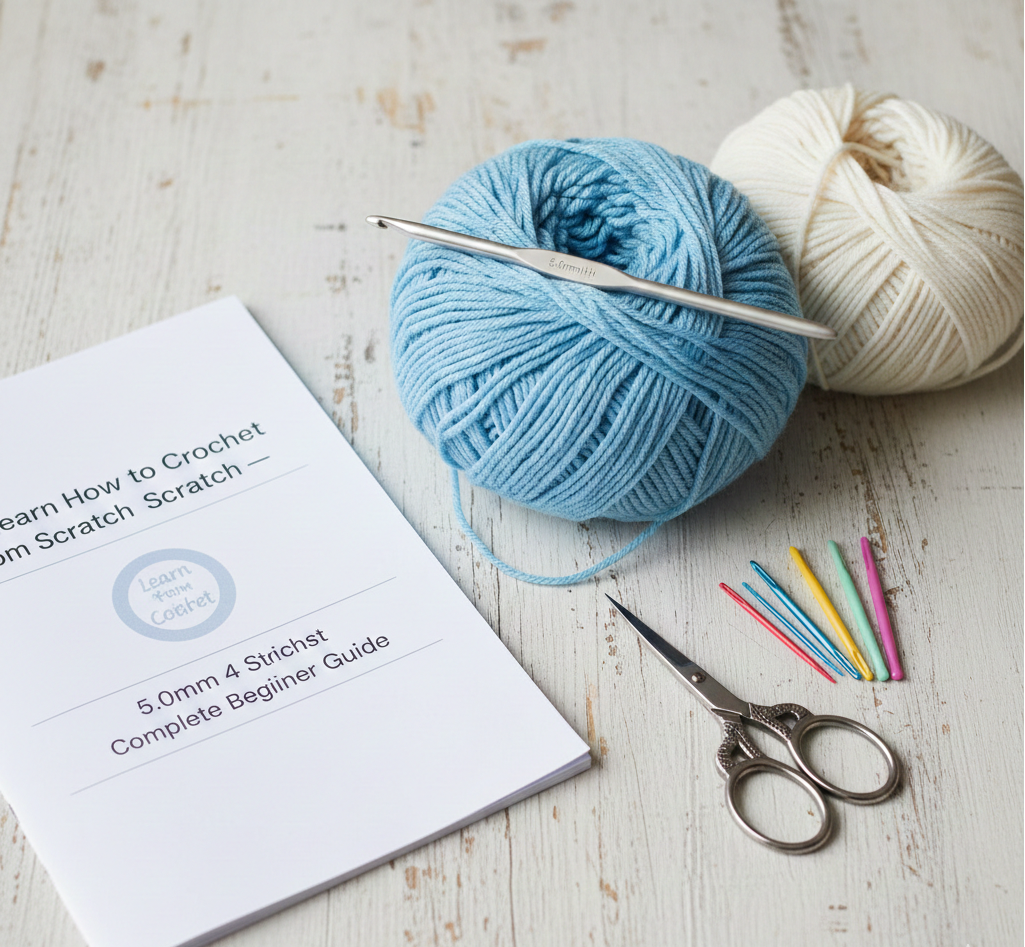
Crochet hooks come in different sizes and materials. For beginners, aluminum or ergonomic hooks are recommended.
Best hook size for beginners:
- Size H (5.0 mm)
- Size I (5.5 mm) if you crochet tightly
These sizes are easy to handle and work well with beginner-friendly yarn.
Yarn for Beginners
Choosing the right yarn makes learning much easier.
Best yarn for beginners:
- Medium weight yarn (Worsted weight / Size 4)
- Smooth texture (avoid fuzzy or novelty yarns)
- Light or medium colors (easier to see stitches)
Recommended fiber:
- Acrylic or cotton blends for practice
- 100% cotton for dishcloths and home decor
Avoid dark colors when starting, as they make stitches harder to see.
Additional Supplies
You will also need:
- Scissors
- Yarn needle (for weaving in ends)
- Stitch markers (optional but helpful)
How to Hold a Crochet Hook and Yarn
There is no single “correct” way to hold a crochet hook. Comfort is what matters most.
Common Crochet Hook Holds
- Pencil grip: Hold the hook like a pencil
- Knife grip: Hold the hook like a knife
Try both and choose what feels natural.
Yarn Tension
Yarn tension refers to how tightly you hold the yarn. Beginners often crochet too tightly. Relax your hands and allow the yarn to flow smoothly.
Basic Crochet Terms Beginners Should Know
Understanding crochet terminology makes tutorials and patterns easier to follow.
- Chain (ch): Foundation stitches
- Slip stitch (sl st): Used to join or finish
- Single crochet (sc): Short, dense stitch
- Half double crochet (hdc): Medium height stitch
- Double crochet (dc): Taller stitch
- Stitch (st): One loop on the hook
- Turn: Flip your work at the end of a row
How to Make a Slip Knot
The slip knot is the first step in almost every crochet project.
Steps:
- Create a loop with your yarn
- Pull a strand through the loop
- Tighten gently around the hook
The slip knot should be snug but able to slide easily.
How to Crochet a Chain Stitch (ch)
The chain stitch creates the foundation for your project.
Steps:
- Hold the hook with the slip knot
- Yarn over (wrap yarn around the hook)
- Pull through the loop
Repeat until you reach the desired number of chains.
Beginner Tip:
Keep chains loose and even. Tight chains make projects harder to work into.
How to Single Crochet (sc)
Single crochet is one of the most important stitches to learn.
Steps:
- Insert hook into the stitch
- Yarn over
- Pull through (2 loops on hook)
- Yarn over again
- Pull through both loops
Single crochet creates a strong and durable fabric.
How to Half Double Crochet (hdc)
The half double crochet adds height and texture.
Steps:
- Yarn over
- Insert hook into stitch
- Yarn over and pull through (3 loops on hook)
- Yarn over and pull through all loops
How to Double Crochet (dc)
Double crochet works up faster and creates an open fabric.
Steps:
- Yarn over
- Insert hook into stitch
- Yarn over and pull through (3 loops)
- Yarn over, pull through 2 loops
- Yarn over, pull through remaining 2 loops
Turning Your Work
At the end of a row:
- Chain one (or more depending on stitch)
- Turn your work
- Continue crocheting into the next row
Turning chains help maintain proper height.
Easy Beginner Crochet Projects to Start With
Once you learn basic stitches, try small projects.
Best Beginner Crochet Projects
- Crochet dishcloths
- Crochet coasters
- Crochet mug rugs
- Crochet bookmarks
- Simple scarves
These projects build confidence without overwhelming beginners.
Common Beginner Crochet Mistakes (And Fixes)
Stitches Too Tight
- Use a larger hook
- Relax your hands
Uneven Edges
- Count stitches every row
- Use stitch markers
Skipping Stitches
- Slow down
- Learn to identify the top “V” of each stitch
Mistakes are part of learning. Every crocheter makes them.
How to Read Crochet Patterns (Beginner Basics)
Crochet patterns use abbreviations.
Example:
- ch 10
- sc in second ch from hook
- sc across
Always read the pattern completely before starting.
Crochet Tips for Beginners
- Practice daily for short sessions
- Use video tutorials alongside written guides
- Start with light-colored yarn
- Focus on consistency, not speed
- Celebrate small progress
Crochet improves with practice, not perfection.
Crochet as a Sustainable and Mindful Hobby
Crochet supports slow living and sustainability by:
- Reducing disposable products
- Encouraging handmade items
- Promoting reuse of yarn scraps
- Supporting mindful creativity
Many beginners enjoy crochet as a calming alternative to screen time.
Can Beginners Sell Crochet Items?
Yes. Many crocheters start selling simple items such as:
- Coasters
- Dishcloths
- Mug rugs
- Bookmarks
Start small, focus on quality, and grow with experience.
Conclusion
Learning how to crochet from scratch is a rewarding journey that anyone can enjoy. With the right tools, basic stitches, and beginner-friendly projects, crochet becomes a relaxing and creative skill that grows with time.
This complete beginner’s guide gives you everything you need to start crocheting with confidence. Take your time, enjoy the process, and remember that every stitch brings you closer to mastering crochet.
Your crochet journey starts with a single loop — and endless possibilities follow