Learning how to quilt can feel intimidating at first, especially when you see complex patterns, multiple fabric layers, and unfamiliar tools. The good news is that quilting does not have to be complicated. With the right guidance and a simple approach, beginner quilting projects can be enjoyable, relaxing, and incredibly rewarding.
This step-by-step guide is designed specifically for beginners who want to make their first quilt with confidence. You will learn what quilting is, which supplies you need, how to choose fabrics, and how to complete a simple quilt from start to finish—without feeling overwhelmed.
Whether you are quilting for fun, home décor, or as a potential handmade business, this guide will help you take your first steps successfully.
What Is Quilting?
Quilting is the process of sewing together three layers:
- The quilt top (decorative fabric layer)
- The batting (middle layer for warmth and thickness)
- The backing fabric (bottom layer)
These layers are stitched together using straight lines or simple patterns to create a finished quilt. Quilts can be used as blankets, wall hangings, table runners, baby gifts, or home décor accents.
For beginners, the goal is not perfection—it is learning the basics and enjoying the creative process.
Why Quilting Is a Great Hobby for Beginners
Quilting is one of the most beginner-friendly fiber arts because:
- You can start with simple shapes
- Straight stitching is enough for many projects
- Mistakes are easy to fix
- Projects can be completed in small steps
- Quilting is relaxing and stress-reducing
Many beginners find quilting therapeutic and empowering, especially when they complete their very first quilt.
Beginner Quilting Projects You Can Start With
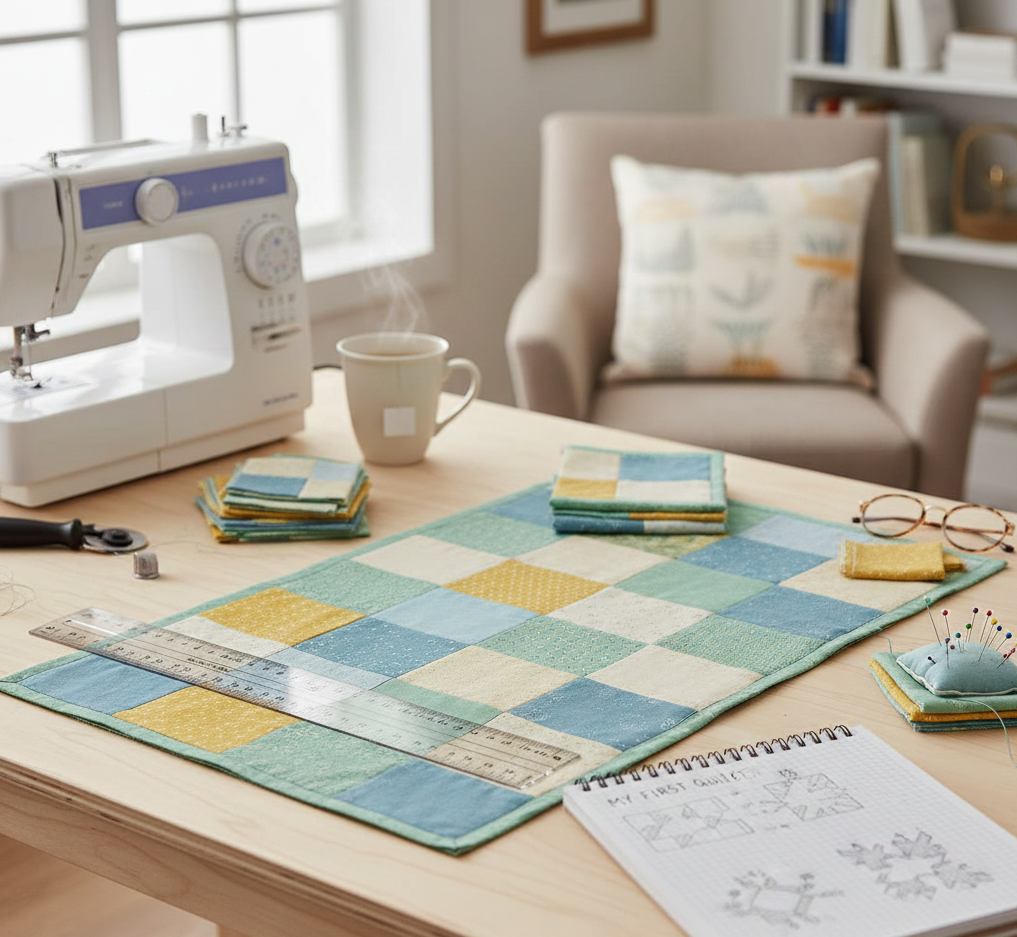
Before jumping into a full-size bed quilt, it’s best to begin with small quilting projects, such as:
- Mini quilts
- Table runners
- Baby quilts
- Lap quilts
- Wall hangings
These projects help beginners practice cutting, piecing, and quilting without feeling overwhelmed by size.
Essential Quilting Supplies for Beginners
You do not need an expensive setup to begin quilting. Here are the basic supplies you need.
Fabric
For beginners, 100% cotton fabric is highly recommended because it:
- Is easy to cut and sew
- Presses well with an iron
- Holds shape accurately
Choose quilting cotton labeled specifically for quilting.
Rotary Cutter, Ruler, and Cutting Mat
These tools make cutting fabric easier and more accurate than scissors.
- Rotary cutter: for clean, straight cuts
- Acrylic ruler: helps measure accurately
- Cutting mat: protects your surface
Sewing Machine (Optional)
While quilting can be done by hand, beginners usually find a sewing machine easier for piecing.
A basic sewing machine with a straight stitch is more than enough.
Thread
Use cotton or polyester thread designed for quilting. Neutral colors work best for beginners.
Batting
Batting is the soft layer inside the quilt. Beginner-friendly options include:
- Cotton batting
- Cotton/polyester blend batting
These are easy to quilt and not too thick.
Choosing the Right Fabric for Your First Quilt
Fabric choice can make or break a beginner project.
Tips for Beginners:
- Choose high-contrast fabrics so blocks are easy to see
- Avoid slippery or stretchy fabrics
- Stick to 2–4 coordinating colors
- Pre-wash fabric to prevent shrinking later
Pre-cut fabric bundles like fat quarters are excellent for beginners.
Understanding Basic Quilting Terms
Before starting, it helps to understand a few common quilting terms:
- Piecing: Sewing fabric pieces together to create the quilt top
- Quilt sandwich: The three layers (top, batting, backing)
- Basting: Temporarily holding layers together
- Binding: Fabric strip that finishes the quilt edges
These terms will appear often in quilting tutorials.
Step-by-Step Beginner Quilting Project: Your First Simple Quilt
This project focuses on a basic patchwork quilt, one of the easiest beginner quilting styles.
Step 1: Choose a Simple Quilt Design
For your first quilt, stick to:
- Squares or rectangles
- Straight-line sewing
- Repetitive patterns
A simple patchwork square quilt is perfect for beginners.
Step 2: Cut Your Fabric
Cut your fabric into equal-sized squares. A beginner-friendly size is 5-inch squares.
For a small quilt:
- Cut 25 squares (5 x 5 layout)
Use your rotary cutter and ruler for accuracy.
Step 3: Arrange the Quilt Top
Lay out your squares on a flat surface and arrange them until you like the color balance.
💡 Tip: Take a photo before sewing to remember the layout.
Step 4: Sew the Quilt Top
Sew squares together row by row, using a ¼-inch seam allowance.
- Sew squares into rows
- Press seams flat with an iron
- Sew rows together to complete the quilt top
Pressing seams as you go makes a huge difference.
Step 5: Make the Quilt Sandwich
Layer your quilt like this:
- Backing fabric (wrong side up)
- Batting (centered)
- Quilt top (right side up)
Smooth out wrinkles and baste layers together using safety pins or spray basting.
Step 6: Quilt the Layers Together
For beginners, straight-line quilting is the easiest option.
You can:
- Quilt along seams (“stitch in the ditch”)
- Quilt straight lines across the quilt
There is no need for fancy patterns.
Step 7: Add the Binding
Binding finishes the raw edges of the quilt.
- Cut binding strips
- Sew strips together
- Attach binding to quilt edges
- Fold over and stitch down
Binding may feel tricky at first, but it gets easier with practice.
Common Beginner Quilting Mistakes (And How to Avoid Them)
Uneven Blocks
Caused by inconsistent seam allowance. Use a ¼-inch foot if possible.
Fabric Shifting
Always press seams and pin pieces before sewing.
Wavy Edges
Avoid stretching fabric while sewing and quilting.
Mistakes are part of learning—every quilter has made them.
Beginner Quilting Tips for Success
- Start small
- Read instructions fully before sewing
- Press fabric often
- Take breaks to avoid frustration
- Enjoy progress, not perfection
Your first quilt does not need to be flawless—it just needs to be finished.
Sustainable Benefits of Quilting
Quilting supports sustainable crafting by:
- Using fabric scraps
- Reducing textile waste
- Creating long-lasting handmade items
- Encouraging mindful creativity
Many beginners enjoy quilting as part of a slow-living and eco-friendly lifestyle.
Can Beginners Sell Quilted Items?
Yes! Many beginners sell:
- Mini quilts
- Table runners
- Wall hangings
- Baby quilts
Once your skills improve, quilting can become a profitable handmade business.
Final Thoughts
Beginner quilting projects do not need to be complicated. With simple tools, basic fabrics, and step-by-step guidance, anyone can make their first quilt. Quilting is a skill built over time, one stitch at a time.
Your first quilt is more than fabric—it is confidence, creativity, and a beautiful reminder that everyone starts somewhere.
So take a deep breath, thread your needle, and enjoy the journey.