You’ve decided to start quilting, and now you’re trying to figure out which tools you actually need. A quick search online or a walk through a quilt shop reveals hundreds of specialty gadgets, each claiming to be “essential” for quilters. There are specialty rulers for every conceivable shape, high-tech cutting systems costing hundreds of dollars, computerized sewing machines with touch screens, and organizational systems that cost more than your monthly grocery budget.
It’s overwhelming, expensive, and honestly, unnecessary – especially when you’re just starting out.
Here’s the liberating truth: You can begin quilting with a surprisingly small collection of basic, affordable tools. Many beautiful quilts have been made with equipment costing less than $150. The key is knowing which tools are truly essential, where to find quality at budget prices, and which expensive specialty items you can skip entirely (or at least postpone until you’re sure quilting is your passion).
In this comprehensive guide, we’ll break down exactly what you need to start quilting without financial stress. You’ll learn the must-have tools, smart shopping strategies, budget-friendly alternatives, and how to build your collection gradually. Whether you have $50 or $500 to spend, this guide will help you make informed choices that set you up for quilting success.
Why Affordable Tools Work Just Fine for Beginners
Let’s address the elephant in the room: “Will cheap tools make learning harder?”
The answer: Not if you choose wisely.
The truth about beginner tools:
Research from quilting educators and experienced quilters shows that the majority of quilting frustrations come from technique issues, not tool quality. A $15 rotary cutter from Fiskars works just as well as a $40 specialty cutter for basic straight cuts. A $200 sewing machine can piece quilt tops beautifully – you don’t need a $2,000 computerized model.
What actually matters:
- Sharp blades (not expensive brands)
- Accurate rulers (not fancy ones)
- A machine that sews straight stitches consistently (not one with 500 decorative stitches)
- Quality fabric and thread (this is where you should invest)
According to quilting experts, most specialty tools and expensive gadgets become useful only after you’ve made 5-10 quilts and identified specific techniques you love. Starting with basics lets you discover your quilting style before investing in specialized equipment.
The financial wisdom:
Starting with affordable tools means you can invest more in quality fabric (which directly impacts your finished quilt) while keeping tool costs manageable. Many quilters report using their first budget tools for years – only upgrading when specific needs arise, not because the original tools stopped working.
The Essential Affordable Tool Kit ($100-200)
Here’s everything you truly need to start quilting, with realistic budget prices and smart shopping tips.
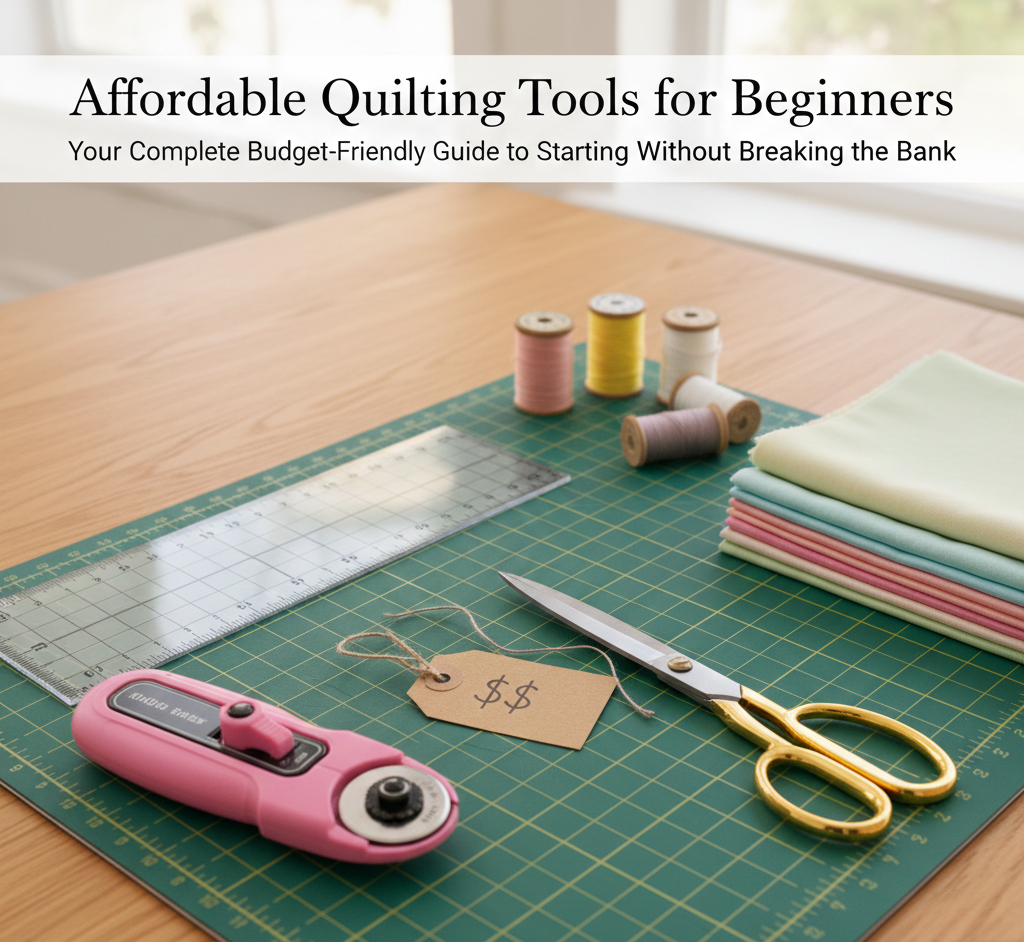
1. Rotary Cutter: $10-20
A rotary cutter looks like a pizza cutter with an extremely sharp circular blade. This tool revolutionized quilting by making it possible to cut fabric quickly, accurately, and through multiple layers at once.
What to buy:
- 45mm rotary cutter – The most versatile size for beginners
- Works for cutting strips, squares, and most quilt pieces
- Not too small (like 28mm) or too large (like 60mm)
Budget-friendly brands:
- Fiskars 45mm Rotary Cutter ($10-15) – Reliable, widely available, comfortable grip
- OLFA 45mm Rotary Cutter ($12-18) – Industry standard, durable, replacement blades readily available
- Generic brands from Walmart or Amazon ($8-12) – Work fine for beginners
Where to save money:
- Wait for 40-50% off sales at Joann or Hobby Lobby (happens weekly)
- Use store coupons (download apps for Michaels, Joann, Hobby Lobby)
- Buy online during Amazon Prime Day or Black Friday
- Check dollar stores (sometimes carry basic rotary cutters for $3-5)
What to avoid:
- Expensive specialty cutters with interchangeable blades (unnecessary for beginners)
- Sets with multiple sizes (start with one 45mm cutter)
- Left-handed specific models (unless you’re left-handed)
Pro tip: Buy extra replacement blades when on sale. Dull blades make cutting frustrating – having backups means you can swap immediately when needed.
2. Self-Healing Cutting Mat: $15-30
This specialized mat protects your work surface and extends your rotary cutter blade life. The mat’s printed grid lines help with measuring and squaring fabric.
What to buy:
- 18″ x 24″ mat ($15-20) – Adequate for beginners, fits on most tables
- 24″ x 36″ mat ($25-35) – Better if you have space, less repositioning needed
Budget-friendly brands:
- Fiskars ($15-25) – Clear markings, durable
- OLFA ($20-30) – Long-lasting, precise grid
- Generic brands from craft stores ($12-20) – Work well if properly cared for
Where to save money:
- Black Friday sales (50-70% off common)
- Use 40-50% off coupons at craft stores
- Buy “blemished” or “seconds” mats (minor cosmetic flaws, full functionality)
- Amazon frequently has deals on lesser-known brands
Critical care tips (extends mat life = saves money):
- Store FLAT (never rolled, never leaned against wall)
- Keep away from heat (car trunks, sunny windowsills)
- Clean with mild soap and water only
- Never iron or place hot items on mat
What to avoid:
- Mats smaller than 18″ x 24″ (too small for efficient quilting)
- Non-self-healing mats (develop grooves that ruin cuts)
- Mats without clear grid markings
3. Quilting Rulers: $10-30
Clear acrylic rulers with specialized markings designed for rotary cutting.
Essential rulers for beginners:
6″ x 24″ Ruler ($10-15)
- This is your workhorse ruler
- Use for cutting strips, squaring yardage, most measurements
- Buy this one FIRST
12.5″ x 12.5″ Square Ruler ($12-18)
- Essential for squaring blocks before assembly
- Use for cutting large squares
- Buy this one SECOND (after you’ve made a few blocks)
Budget-friendly brands:
- Omnigrid ($10-15 each) – Clear markings, good visibility, durable
- Fiskars ($8-12 each) – Budget-friendly, adequate for beginners
- Creative Grids ($12-18 each) – Non-slip backing, worth slight premium
Where to save money:
- Buy rulers individually as needed (not expensive sets)
- Use 40-50% off coupons on single rulers
- Amazon often cheaper than craft stores
- Some dollar stores carry basic rulers (check for accuracy first)
What to avoid:
- Ruler sets with 10+ rulers (you won’t use most of them)
- Specialty shaped rulers (triangles, hexagons, etc.) until you need them
- Rulers without clear, easy-to-read markings
Smart strategy: Buy only the 6″ x 24″ ruler initially. Make your first quilt or two. Then assess what additional rulers would actually help your projects.
4. Sewing Machine: $0-400
The most expensive item, but many options exist for budget-conscious quilters.
Budget options from best to most expensive:
Option 1: Use What You Have ($0)
- Inherited machine from relative
- Machine you already own
- Any machine that sews straight stitches can piece quilt tops
Action: Take it to a sewing machine repair shop for servicing ($50-100). A cleaned, oiled, and tuned vintage machine often outperforms cheap new machines.
Option 2: Buy Used ($50-200)
- Facebook Marketplace, Craigslist, estate sales
- Local sewing machine dealers (sell serviced trade-ins)
- Thrift stores (occasionally find gems for $20-50)
What to look for in used machines:
- Sews straight stitch smoothly
- All parts present
- Dealer serviced (if buying from shop)
- Test before buying (if possible)
Option 3: Buy New Entry-Level ($150-400)
Best budget new machines for quilting:
Singer 4423 Heavy Duty ($250-300)
- Strong motor
- Fast stitching (1,100 spm)
- Metal frame (durable)
- Simple, reliable
Brother CS7000X ($300-400)
- 70 built-in stitches (more than you need, but nice)
- Wide table included
- Good for beginners
Janome 2212 ($200-250)
- Simple, reliable
- Strong reputation for durability
- Easy to learn
Where to save money on new machines:
- Black Friday deals (save $100-200)
- Dealer floor models (save 20-30%)
- Previous year models (save 30-50%)
- Amazon, Walmart, or Costco (often cheaper than specialty stores)
What you DON’T need:
- Computerized screens and settings
- 500+ decorative stitches
- Embroidery capabilities
- Automatic thread cutting (nice, not necessary)
What you DO need:
- Straight stitch
- Adjustable stitch length
- Reverse stitch (for backstitching)
- Ability to use 1/4″ foot
5. Quarter-Inch Presser Foot: $10-30
Standard quilting uses 1/4″ seam allowances. This specialty foot helps maintain accuracy.
What to buy:
- 1/4″ foot compatible with YOUR specific machine brand/model
- Most machines have brand-specific feet
Where to buy:
- Check if your machine came with one (many do)
- Amazon (search your machine model + “1/4 inch foot”)
- Sewing machine dealers
- Online (sewingpartsonline.com, etc.)
Cost: $10-30 depending on machine brand
Alternative: Use masking tape on machine throat plate to mark 1/4″ from needle. Free, but less accurate.
6. Thread: $15-30 for Starter Collection
Quality thread matters more than you might think. Poor thread breaks, creates lint, and weakens seams.
What to buy:
- 50-weight cotton thread (perfect for quilting)
- Start with 3-4 spools in neutral colors:
- White or cream
- Light grey
- Medium grey or tan
- Black or dark grey
Budget-friendly quality brands:
- Aurifil 50wt ($10-12 for large spool) – Top choice, long-lasting
- Gütermann ($4-6 per spool) – Excellent quality, widely available
- Coats & Clark Dual Duty Plus ($3-4 per spool) – Budget option that works well
Where to save money:
- Buy larger spools/cones (better value per yard)
- Shop sales at Joann (frequent 50% off thread sales)
- Amazon often has multi-packs at good prices
What to avoid:
- Ultra-cheap thread ($1-2 per spool) – breaks easily, creates lint
- Very old thread (loses strength over time)
- Polyester thread for piecing (use cotton)
7. Fabric Scissors: $10-25
Even with a rotary cutter, you need scissors for detail work and thread trimming.
What to buy:
- 8″ fabric shears ($10-20) for cutting fabric
- Small embroidery scissors (4-5″, $5-8) for snipping threads
Budget-friendly brands:
- Fiskars ($10-15) – Excellent value, very sharp, comfortable
- Gingher ($25-40) – Premium brand, lasts decades (watch for sales)
- Amazon Basics ($8-12) – Surprisingly decent for the price
Where to save money:
- Buy during back-to-school sales
- Use coupons at craft stores
- Amazon frequently discounts scissors
CRITICAL RULE: Use fabric scissors ONLY for fabric. One cut through paper permanently dulls the blade. Label them “FABRIC ONLY” if others might use them.
What to avoid:
- Scissor sets with 10 different sizes (just buy what you need)
- Decorative scissors with patterns (unnecessary)
8. Seam Ripper: $2-5
You WILL make mistakes. A seam ripper lets you remove stitches and try again without damaging fabric.
What to buy:
- Any basic seam ripper ($2-5)
- Most sewing machines include one
Where to buy:
- Included with most machines
- Any craft store ($2-3)
- Dollar stores ($1)
- Buy 2-3 to keep at different work stations
Pro tip: Despite being cheap, seam rippers are crucial. Having multiple prevents hunting for it when you need it urgently.
9. Iron and Ironing Board: $0-50
Pressing is absolutely essential in quilting. You’ll press after every step.
Budget options:
Use What You Have ($0)
- Your current iron and ironing board work fine
- Any iron that gets hot and has steam is adequate
If Buying New:
- Basic Sunbeam or Black & Decker iron ($15-25)
- Sturdy ironing board ($20-40)
What you DON’T need:
- Steam generator systems ($200+)
- Specialty quilting irons (nice, not necessary)
- Enormous industrial ironing boards
What you DO need:
- Iron that gets very hot
- Steam function (or spray bottle + dry iron)
- Stable ironing board
Money-saving tip: Many quilters prefer a spray bottle ($2) with water and a dry iron (no steam) for more control. This prevents water spots and gives precise moisture control.
10. Straight Pins: $3-8
Pins hold fabric layers together while you sew, preventing shifting.
What to buy:
- Glass-head or plastic-head pins
- 100-250 count box
- Look for “quilting pins” (slightly longer)
Budget-friendly options:
- Dritz Quilting Pins ($5-7)
- Singer Quilting Pins ($4-6)
- Dollar store pins ($1-3) – Work adequately for beginners
Where to save money:
- Dollar stores often have decent pins
- Buy during sales at craft stores
- Amazon multi-packs
What to avoid:
- Rusty or bent pins (check used pins carefully)
- Extra-long pins (3″+) – unwieldy for most projects
- Decorative pins (pay for looks, not function)
Storage tip: Magnetic pin dish or cushion ($3-5) keeps pins accessible and prevents spills.
11. Fabric: Budget Strategies
Fabric is your main ongoing expense. Here’s how to afford quality fabric on a budget:
Smart Fabric Shopping:
1. Shop Sales (50-70% off possible)
- Joann: Weekly 50-60% off fabric sales
- Hobby Lobby: Rotating 50% off fabric categories
- Michaels: Frequent fabric sales
2. Use Coupons
- 40-50% off single item coupons (save for premium fabrics)
- Download store apps for mobile coupons
- Sign up for email lists
3. Buy from Budget Sources
- Walmart – Quilting cotton $4-7/yard
- Thrift stores – 100% cotton sheets for quilt backs ($3-5)
- Thrift clothing – Large cotton items for fabric ($2-4)
4. Choose Wisely
- Mid-range quilting cotton ($8-10/yard) – Sweet spot for quality
- Pre-cut bundles – Coordinated fabrics, no waste
- Quilt kits – All fabric included, often on sale
5. Start Small
- Baby quilt (36″ x 45″) requires less fabric than king size
- Lap quilt (50″ x 60″) – Satisfying size, manageable cost
Budget for first quilt:
- Quilt top fabric: $20-40 (depending on size and quality)
- Backing: $10-15
- Binding: $4-6
- Batting: $10-15
- Total: $45-75
12. Batting: $10-25 per Quilt
Batting is the middle layer providing warmth and loft.
Budget-friendly options:
Warm & Natural Cotton Batting
- Crib/Baby size: $12-15
- Throw size: $18-25
- Queen size: $30-40
Pellon Polyester Batting
- Generally $3-5 cheaper than cotton
- Lighter weight
- Good for beginners
Where to save money:
- Buy during 40-50% off sales
- Use coupons at craft stores
- Amazon often has deals
- Buy by-the-yard batting from rolls (sometimes cheaper)
Total Startup Cost Breakdown
If You Have a Machine Already: $100-150
- Rotary cutter: $15
- Cutting mat: $20
- Rulers (2): $25
- 1/4″ foot: $15
- Thread: $20
- Scissors: $15
- Seam ripper: $3
- Pins: $5
- Iron/board: $0 (use existing)
- Total tools: $118
- Plus first project materials: $45-75
If Buying Everything New: $300-500
- All tools above: $118
- Sewing machine: $200-300
- Total: $318-418
- Plus first project materials: $45-75
Ultra-Budget Option: $50-75
- Borrowed or inherited machine: $0
- Basic tools only: $50-75
- Use thrift store fabrics initially
Where to Shop: Best Budget Sources
1. Joann Fabric and Crafts
Pros:
- Huge selection
- Weekly 50-60% off sales
- 40-50% off coupons
- Quilting cotton in all price ranges
How to maximize savings:
- Download app for mobile coupons
- Sign up for text alerts (exclusive deals)
- Shop during Quilter’s Showcase sales (multiple times yearly)
- Use coupons on regular-priced items during sales
Average savings: 40-60% off regular prices
2. Hobby Lobby
Pros:
- Quality fabric at moderate prices
- Always has some category 50% off
- 40% off one item coupon weekly
How to maximize savings:
- Check weekly ad for what’s on sale
- Time purchases for when category you need is 50% off
- Use 40% coupon on highest-priced single item
3. Walmart
Pros:
- Consistently low prices ($4-7/yard quilting cotton)
- No coupons needed
- Convenient locations
Cons:
- Limited selection
- Variable quality
Best for: Backing fabric, budget quilting cotton for practice projects
4. Online Retailers
Fat Quarter Shop
- Huge selection
- Pre-cut bundles
- Clearance section (50-75% off)
- Free shipping over $80
Fabric.com
- Extensive inventory
- Good prices
- Frequent sales
- Free shipping over $49
Amazon
- Compare prices on tools
- Prime shipping
- User reviews helpful
Missouri Star Quilt Company
- Beginner-friendly
- Tutorial videos
- Kits and bundles
- Frequent sales
5. Thrift Stores and Estate Sales
What to buy:
- 100% cotton sheets (quilt backs, cut up for quilt tops)
- Sewing machines ($20-100)
- Tools and notions
- Vintage fabrics
- Complete fabric stashes
Average savings: 75-90% off retail
Pro tip: Join local quilting groups on Facebook. Members often sell or give away excess supplies.
6. Dollar Stores
What to buy:
- Pins
- Basic scissors (for cutting paper patterns)
- Seam rippers
- Small rulers
- Storage containers
What NOT to buy:
- Rotary cutters (usually poor quality)
- Thread (too cheap, breaks easily)
Tools You DON’T Need Yet (Save Your Money!)
Skip These Initially:
1. Cutting Machines ($200-600)
- Cricut, AccuQuilt, Sizzix
- Expensive initial cost + ongoing material costs
- Learn hand cutting first
- Add later if you love quilting and make many projects
2. Specialty Rulers ($15-50 each)
- Triangle rulers, hexagon rulers, specialty shapes
- Only buy when pattern specifically requires
- Most patterns work with basic rulers
3. Design Walls ($50-200)
- For auditioning fabric layouts
- Use floor or bed initially (free)
- Make DIY version with flannel ($10-20) if needed
4. Thread Snips ($15-30)
- Spring-loaded thread cutters
- Convenient but unnecessary
- Scissors work fine
5. Fancy Pin Cushions ($20-50)
- Basic pin holder works just as well
- Magnetic dish ($3-5) is adequate
6. Quilting Gloves ($15-25)
- For machine quilting large projects
- Only needed if you machine quilt
- Not necessary for first quilts
7. Expensive Walking Feet ($50-100)
- Helpful for machine quilting
- Can hand-quilt or send to longarm initially
- Add later if you want to machine quilt
8. Label Makers ($30-50)
- For labeling quilts
- Can hand-write or embroider labels (free)
- Add later if desired
9. Extensive Thread Collections
- Beginners need 4-5 neutral colors
- Buy additional colors as projects require them
10. Elaborate Storage Systems ($100-500)
- Start with basic plastic bins ($5-10 each)
- Upgrade storage after you know your needs
Building Your Collection Over Time
Don’t buy everything at once. Build gradually as you identify needs.
Month 1: Essentials Only ($100-150)
- Core tools listed above
- One project’s worth of fabric
Month 2-3: First Upgrades ($20-40)
- Additional ruler if needed
- More thread colors
- Better scissors (if started with cheap ones)
Month 4-6: Quality Improvements ($50-100)
- Better rotary cutter if first one was budget
- Larger cutting mat
- Quality fabric for special project
Month 6-12: Specialty Items ($50-150)
- Specialty rulers for techniques you love
- Walking foot (if machine quilting)
- Better storage solutions
Year 2+: Advanced Tools ($100-500)
- Cutting machine (if you make many quilts)
- Machine upgrade (if needed)
- Specialty feet and accessories
Maintenance Tips: Make Tools Last Longer
Proper care extends tool life = saves money long-term.
Rotary Cutters:
- Change blade when it starts skipping (don’t wait until it’s completely dull)
- Clean lint from mechanism monthly
- Store with safety lock engaged
- Buy replacement blades in bulk when on sale
Cutting Mats:
- Clean with mild soap and water when sticky or dirty
- Store flat away from heat
- Never place hot items on mat
- Expect 3-5 year lifespan with proper care
Scissors:
- Use ONLY for intended material (fabric scissors for fabric, paper scissors for paper)
- Clean residue with rubbing alcohol
- Have professionally sharpened ($5-10) when dull
- Store in protective sheath
Sewing Machine:
- Remove lint from bobbin area after every project
- Oil according to manual (if required)
- Professional service every 12-24 months ($50-100)
- Cover when not in use (prevents dust)
Rulers:
- Clean sticky residue with rubbing alcohol
- Store flat or hanging (not leaning)
- Check corners for chips (can snag fabric)
Iron:
- Empty water reservoir after each use
- Clean bottom plate monthly
- Descale if using tap water
- Use distilled water to extend life
Conclusion: Start Quilting Today Without Financial Stress
Starting quilting doesn’t require a huge financial investment. With $100-150 in tools (or $300-500 if buying a machine), you have everything needed to make beautiful quilts.
Your action plan:
✓ Assess what you have – Machine, iron, scissors you can use?
✓ Buy core essentials – Rotary cutter, mat, rulers ($50-75)
✓ Add machine solution – Service old machine, buy used, or save for new
✓ Choose first project – Baby quilt or lap quilt (manageable size)
✓ Shop smart – Use sales, coupons, thrift stores
✓ Start simple – Quilt kit or pre-cut bundle for first project
✓ Build gradually – Add tools as you discover specific needs
Remember: Your first quilt doesn’t need to be perfect. It just needs to be made. Thousands of beautiful quilts have been created with basic, affordable tools by quilters who simply started with what they had and learned as they went.
The pride you’ll feel when you finish your first quilt – made with budget-friendly tools and your own hands – is priceless. That feeling is available to you right now, regardless of your budget.
So gather your tools, choose your fabric, and start making that quilt. The quilting community is waiting to welcome you, and your budget-friendly tool collection is exactly what you need to begin.
Happy quilting!
Sources and References
- National Quilters Circle. Beginner’s Guide to Quilting Tools and Supplies.
- The Seasoned Homemaker. Essential Quilting Tools for Beginners on a Budget.