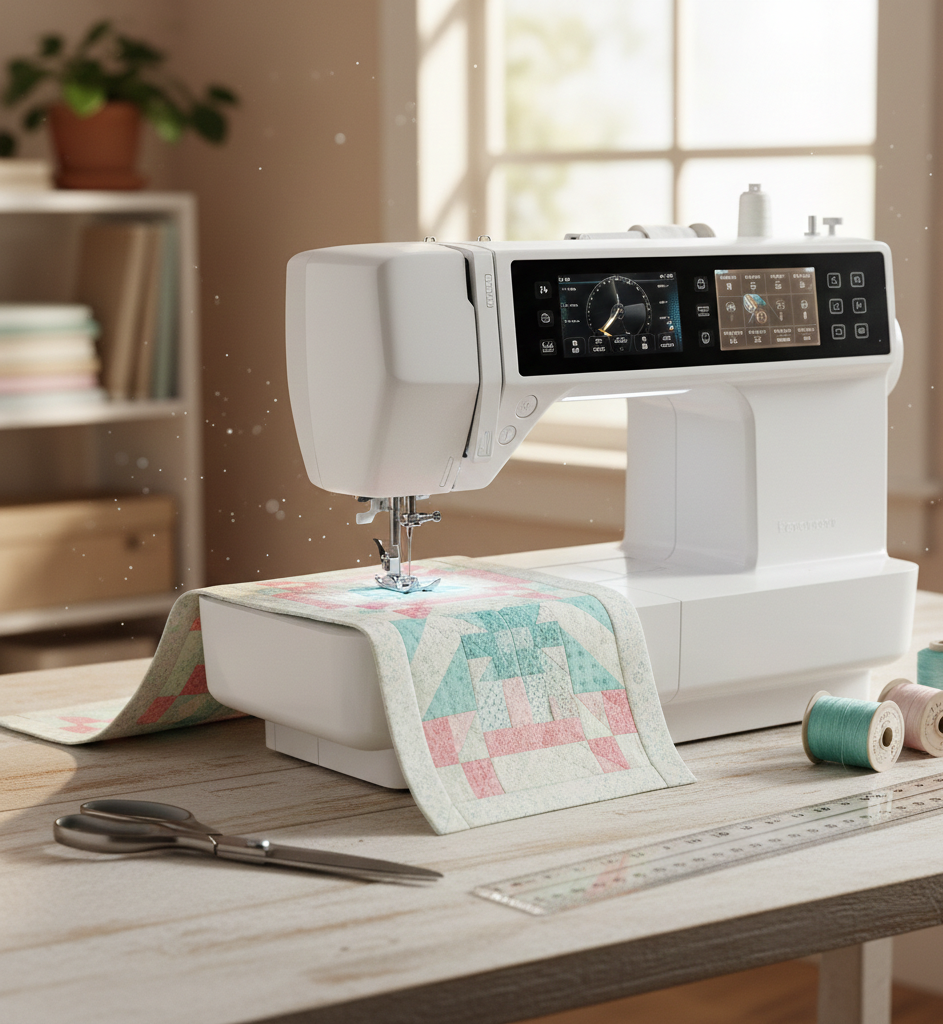
Standing in front of a wall of sewing machines at your local dealer or scrolling through endless options online can feel completely overwhelming. With prices ranging from under $300 to over $10,000 and features you’ve never heard of, how are you supposed to know which sewing machine is right for your quilting journey?
Here’s the truth that might surprise you: You don’t need the most expensive machine to make beautiful quilts. Some of the world’s most stunning quilts have been pieced on basic machines costing a few hundred dollars. What matters most is finding a machine that fits your specific needs, skill level, and budget.
In this comprehensive guide, we’ll break down everything you need to know about choosing a quilting sewing machine. We’ll explore the key features that actually matter, which ones are just nice extras, and how to make a smart investment that will serve you for years to come. Whether you’re a complete beginner or an experienced quilter ready to upgrade, this guide will help you make an informed decision with confidence.
Understanding the Basics: What Makes a Machine Good for Quilting?
Before we dive into specific features and recommendations, let’s clear up a common misconception: There’s no such thing as a machine that can “only” quilt or one that “can’t” be used for quilting.
The reality: Quilting is fundamentally just sewing fabric pieces together with a straight stitch. This means technically any sewing machine with a straight stitch function can be used to piece a quilt top.
However, certain features make the quilting process significantly easier, more enjoyable, and more successful – especially as your skills develop and your projects become more ambitious. A machine marketed as a “quilting machine” typically includes features specifically designed to handle the unique demands of quilting, such as maneuvering larger fabric pieces and maintaining consistent stitch quality through multiple layers.
According to quilting experts and independent testing from sources like Good Housekeeping Institute’s Textiles Lab and TechGearLab, the machines that perform best for quilting share several key characteristics – but they don’t all need to be high-end or expensive to deliver excellent results.
The Most Important Features for Quilting Machines
When selecting a sewing machine for quilting, certain features significantly enhance your experience. Let’s break down what actually matters and why.
1. Throat Space: The #1 Feature for Quilters
Throat space (also called harp space) is the distance between the needle and the body of the machine on the right side. This is universally agreed upon as the single most important feature for quilting.
Why it matters: When you’re quilting, you need to maneuver fabric under the machine’s needle and through the throat. With a small throat space of 6 inches or less, handling anything larger than a baby quilt becomes challenging. Larger quilts bunch up, fight for space, and make the quilting process frustrating.
Ideal measurements:
- Standard domestic machines: 6-7 inches (adequate for beginners and smaller projects)
- Extended throat machines: 8-10 inches (comfortable for most quilting projects)
- Large throat machines: 11-13.5 inches (ideal for serious quilters and large projects)
- Mid-arm machines: 15+ inches (professional-level, often mounted on frames)
According to expert reviews and quilter feedback, a throat space of at least 8 inches makes a noticeable difference in comfort and capability when quilting. The Janome Continental M8, currently featuring the largest throat space at 13.5 inches among home machines under $10,000, exemplifies how this feature has become a priority for serious quilters.
However, beginners working on their first few quilts can absolutely succeed with standard 6-7 inch throat spaces. Many quilters piece their quilt tops on standard machines and then either hand quilt or send their tops to longarm quilters for finishing.
2. Stitch Quality: Consistency is King
High-quality, consistent stitches are crucial for creating professional-looking quilts. Skipped stitches, uneven tension, or thread breaks can ruin hours of work.
What to look for:
- Consistent stitch formation across different fabric weights
- Smooth tension adjustment that holds settings
- Clean, even stitches when sewing through multiple layers
- No skipping when sewing at different speeds
According to testing by TechGearLab and Good Housekeeping, machines like the Juki HZL-F300 and Brother HC1850 consistently score highest for stitch quality across various fabrics and layer thicknesses. These machines maintain even stitching whether you’re piecing delicate cotton or quilting through batting and backing layers.
Pro tip: When testing machines in-store, bring various fabric scraps including quilting cotton and try sewing through 2-3 layers. This real-world test reveals far more than just sewing a single layer.
3. Speed Control: Precision at Your Pace
Being able to control your sewing speed is essential, especially when learning or working on intricate piecing.
Key speed features:
- Speed slider: Lets you cap maximum speed regardless of foot pedal pressure
- Start/stop button: Allows sewing without a foot pedal
- Needle up/down button: Lets you program whether the needle stops in the up or down position
These features are particularly helpful if you struggle with maintaining consistent pressure on the foot pedal or if you have mobility issues. According to Good Housekeeping testing, machines like the Singer Quantum Stylist and Brother CS7000X excel in user-friendly speed control for beginners.
For quilters working on large projects, faster maximum speeds (1,000+ stitches per minute) can significantly reduce piecing time. Professional-grade machines like the Juki TL-2010Q can reach 1,500 stitches per minute, though this speed isn’t necessary for beginners.
4. 1/4-Inch Seam Capability
Standard quilting uses a 1/4-inch seam allowance. Your machine needs to be able to sew accurate, consistent 1/4-inch seams.
Options for achieving this:
- Machines with marked 1/4-inch guidelines on the throat plate
- 1/4-inch presser feet (available for most machines)
- Adjustable needle position that can move precisely
- Some advanced machines have automatic 1/4-inch positioning
Machines specifically marketed for quilting often include a 1/4-inch foot or have built-in guides. The Janome Continental M8, for example, features automatic 1/4-inch positioning and includes a specialized 1/4-inch foot.
If a machine doesn’t come with these features, you can usually purchase a 1/4-inch foot separately for $10-30 or use masking tape to mark the correct seam allowance on your machine.
5. Extension Table: Room to Work
An extension table (also called a wide table) provides a flat surface around your machine, offering crucial support for large quilt pieces.
Why it matters: Without an extension table, the weight of your quilt pulls down and creates drag as you sew. This can cause uneven stitching, distorted seams, and physical fatigue.
What to look for:
- Machines that include an extension table
- Compatibility with aftermarket tables if not included
- Tables that sit flush with the machine bed (no gaps)
Many entry-level machines include small extension tables, while higher-end models come with larger, more substantial tables. Brands like Brother, Janome, and Singer frequently include extension tables with their quilting-oriented models.
If your machine doesn’t include one, aftermarket tables from companies like Sew Steady or Sew Station can transform your quilting experience.
6. Additional Helpful Features
Automatic Needle Threader: Saves time and eyestrain, especially valuable as we age. Testing by Good Housekeeping found this feature particularly appreciated by sewers and quilters of all skill levels.
Automatic Thread Cutter: Cuts both top and bobbin threads with a button push or knee press. This feature significantly speeds up the piecing process when you’re making blocks with many pieces.
Drop Feed Dogs: Allows you to lower the feed dogs for free-motion quilting. Essential if you plan to do your own machine quilting rather than hand quilting or using a longarm quilter.
Walking Foot/Dual Feed: Helps feed multiple layers evenly, preventing shifting and puckering. The Janome AcuFeed and Pfaff IDT systems are built-in dual feed mechanisms highly praised by quilters.
Knee Lift: Raises the presser foot with your knee, keeping your hands free to guide fabric. Professional and mid-range machines often include this feature.
Stitch Regulator: For free-motion quilting, this maintains consistent stitch length regardless of how fast you move the fabric. A game-changer for machine quilting but not necessary for piecing quilt tops.
Understanding Different Price Ranges
Let’s break down what you can expect at different price points in 2025, based on current market research and expert reviews.
Budget-Friendly Options: Under $500
What you can expect: Basic features adequate for learning and piecing quilt tops, smaller throat spaces (6-7 inches), fewer built-in stitches, mostly plastic construction, and limited accessories.
Best machines in this range:
- Brother CS7000X (~$400): 70 built-in stitches, extensive sewing area, excellent for beginners
- Singer C5980Q Patchwork Plus (~$450): Generous sewing surface, designed specifically for quilting
- Brother XR9550 (~$500): 165 built-in stitches, supports free-motion quilting
Who these are perfect for: Absolute beginners who want to try quilting without major investment, occasional quilters who primarily hand-quilt or use longarm services, and budget-conscious crafters making smaller projects.
According to quilting educator Mel from The Quilting Room, many successful quilters have made beautiful quilts on machines in this price range. The key is managing expectations – these machines work wonderfully for piecing but may struggle with very thick layers or heavy-duty use.
Mid-Range Options: $500-$1,500
What you can expect: Improved throat space (7-9 inches), better construction quality with more metal components, more consistent stitch quality, additional accessories included, and longer warranties.
Best machines in this range:
- Janome 4120QDC-G (~$699): Thread cutter, alphabet stitches, memory function, better power for heavy fabrics
- Juki TL-2010Q (~$900): Generous throat space, professional-quality straight stitching, beloved by quilters
- Juki HZL-F400 (~$900): Advanced features including knee lifter, excellent invisible thread handling
- Brother HC1850 (~$700): Rated “best overall” by Good Housekeeping, excellent quilting capabilities
Who these are perfect for: Committed quilters who make multiple projects per year, those ready to invest in better quality and features, and quilters who want to do their own machine quilting.
This price range offers the best value according to multiple expert sources. You get significantly better features and durability than budget machines without entering the high-end pricing territory.
High-End Options: $1,500-$5,000
What you can expect: Large throat spaces (9-11+ inches), superior build quality with metal frames, extensive built-in stitch libraries, advanced features like programmable functions and touch screens, and comprehensive accessory packages.
Best machines in this range:
- Janome Memory Craft Horizon 8200 (~$3,000): Wide range of features, exceptional AccuFeed system
- Pfaff Performance Icon (~$7,299): 12.5-inch throat space, IDT dual feed, 10.1-inch touchscreen
- Bernina 770 QE Plus (~$8,000): Premium features, jumbo bobbin, built-in stitch regulator
- Viking Designer Epic 2 (~$6,000): High-resolution screen, automatic tension adjustment
Who these are perfect for: Serious quilters who quilt regularly and want professional results, those planning to do extensive machine quilting, and quilters who value premium features and long-term reliability.
While these machines offer outstanding performance, multiple quilting experts emphasize that they’re not necessary for making beautiful quilts. However, if quilting is your primary hobby and you have the budget, these machines offer superior comfort, features, and longevity.
Premium/Professional Options: $5,000+
What you can expect: The largest throat spaces (11-15+ inches), industrial-grade motors and construction, advanced computerized features, compatibility with quilting frames, and machines that blur the line between domestic and professional equipment.
Best machines in this range:
- Janome Continental M8 (~$8,000+): 13.5-inch throat space (largest for home machines), industrial brushless servo motor, comprehensive features
- Bernina 880 Plus (~$17,000): 12-inch throat space, 1,764 built-in stitches, jumbo embroidery capability
- Handi Quilter Moxie (~$5,995): Mid-arm quilting machine, 15-inch throat space, frame-compatible
Who these are perfect for: Professional quilters or serious hobbyists who quilt daily, those who want a single machine to handle everything from piecing to extensive machine quilting, and quilters with specific needs like ruler work or large-format projects.
Choosing Based on Your Quilting Style
Your quilting approach should heavily influence your machine choice.
If You’re Primarily a Hand Quilter
What you need: A machine that excels at piecing quilt tops with accurate 1/4-inch seams and good stitch quality. You don’t need a large throat space, walking foot, or stitch regulator since you’ll be quilting by hand.
Recommended features:
- Accurate 1/4-inch seam capability
- Consistent straight stitch
- Extension table for supporting fabric
- Good lighting
Budget recommendation: $300-$700 range is perfect. The Brother CS7000X or Janome 4120QDC-G would serve you well.
If You Send Quilts to a Longarm Quilter
What you need: Similar to hand quilters – focus on piecing quality rather than quilting features.
Recommended features:
- Excellent stitch quality for seams
- Speed control for precision piecing
- Extension table
- 1/4-inch foot
Budget recommendation: $400-$1,000 range. The Singer C5980Q or Juki TL-2010Q (if you can stretch the budget) are excellent choices.
If You Machine Quilt Your Own Quilts
What you need: This is where throat space, walking feet, and free-motion capabilities become crucial.
Essential features:
- Large throat space (at least 8-9 inches, preferably 10+)
- Drop feed dogs
- Walking foot or built-in dual feed
- Stitch regulator (highly recommended)
- Extension table
- Good lighting
Budget recommendation: $900-$3,000+ range. The Juki TL-2010Q, Janome Horizon 8200, or Pfaff machines with IDT systems are popular among machine quilters.
If You Make Quilted Garments or Small Projects
What you need: Versatility and decorative stitch options become more important than large throat space.
Recommended features:
- Variety of decorative stitches
- Good buttonhole function
- Adjustable presser foot pressure
- Standard throat space is fine
Budget recommendation: $500-$1,500 range. The Brother HC1850 or Janome machines with extensive stitch libraries work well.
Top Brands for Quilting: What to Know
Based on quilter reviews, expert testing, and industry reputation, here are the standout brands for quilting in 2025.
Juki
Reputation: Known for industrial-quality straight stitching and durability Best for: Quilters who prioritize stitch quality above all else Popular models: TL-2010Q, HZL-F300, HZL-F600 Price range: $600-$2,000
Juki machines consistently score highest in independent testing for stitch quality and speed. Many professional quilters choose Juki for their primary piecing machine even if they own other machines for different tasks.
Janome
Reputation: Reliable, well-built machines with excellent customer service Best for: Quilters wanting a good all-around machine Popular models: 4120QDC-G, Horizon 8200, Continental M8 Price range: $400-$9,000+
Janome’s AcuFeed walking foot system is considered among the best in the industry. Their machines are known for longevity – many quilters report using the same Janome for 10-20+ years.
Brother
Reputation: Excellent value for money, user-friendly features Best for: Beginners and budget-conscious quilters Popular models: CS7000X, HC1850, XR9550 Price range: $200-$1,500
Brother offers impressive features at accessible price points. While they may not have the long-term durability of premium brands, they provide excellent performance for the cost.
Bernina
Reputation: Swiss precision, premium quality, excellent specialty feet Best for: Serious quilters with higher budgets Popular models: 770 QE Plus, 880 Plus, 535 Price range: $2,000-$17,000+
Bernina machines can sew through virtually anything and come with comprehensive specialty foot collections. They’re an investment but known for decades-long reliability.
Pfaff
Reputation: Innovative technology, especially their IDT dual feed system Best for: Quilters who sew with varied fabrics and techniques Popular models: Performance Icon, Creative Icon, Quilt Expression 720 Price range: $1,500-$9,000+
Pfaff’s IDT (Integrated Dual Feed) system feeds fabric from both top and bottom, preventing shifting – a huge advantage for quilting.
Singer
Reputation: Historic brand with good entry-level options Best for: Beginners wanting a recognized name Popular models: Quantum Stylist 9960, C5980Q, Confidence Quilter 7469Q Price range: $300-$1,000
Singer offers solid machines at competitive prices. Their Quantum Stylist series is particularly popular among quilters for its stitch variety and ease of use.
New vs. Used: Making the Choice
Many quilters successfully start with used machines, while others prefer the security of buying new. Here’s what to consider.
Benefits of Buying New
- Full manufacturer warranty (typically 25 years limited)
- Latest features and technology
- No unknown history or hidden problems
- Dealer support and classes often included
- Ability to finance the purchase
Benefits of Buying Used
- Significant cost savings (often 30-60% off retail)
- Access to higher-end models for less money
- Vintage machines can be incredibly durable
- Environmental benefits of reuse
Expert advice from quilter Suzy Quilts: She successfully purchased a used Bernina 535 from a local dealer at a reduced price. The original owner barely used it before trading up, giving her essentially a new machine at used pricing.
If buying used, look for:
- Machines from reputable dealers (who service and guarantee them)
- Recent service records
- Test operation before purchasing
- Included accessories and feet
- Evidence of good care (clean, no rust or damage)
Avoid:
- Online purchases from individuals without seeing/testing the machine
- Machines without service history
- Models so old that parts are unavailable
- Any machine with electrical issues or unusual noises
Testing Before You Buy: Essential Steps
Never buy a sewing machine without testing it first, whether in-store or through a generous return policy online.
What to Test In-Store
- Thread the machine – Is it intuitive or frustratingly complex?
- Wind and insert a bobbin – Can you do this easily?
- Sew straight seams – Check stitch quality and consistency
- Sew through multiple layers – Bring fabric scraps and batting
- Try different speeds – Test speed control features
- Check the lighting – Is the work area well-lit?
- Navigate the interface – Can you change settings easily?
- Test noise levels – Some machines are significantly louder than others
Questions to Ask Dealers
- What’s included with purchase? (feet, accessories, extension table)
- What’s the warranty coverage?
- Do you offer classes or training?
- What’s your service/repair policy?
- Can I exchange if this doesn’t work for my needs?
- Are there current promotions or upcoming sales?
Online Buying Considerations
If you can’t test in person:
- Buy from retailers with excellent return policies (Amazon, major sewing retailers)
- Read multiple reviews from verified purchasers
- Watch video reviews showing the machine in action
- Confirm exact model numbers (manufacturers release similar-looking models with different features)
- Factor in return shipping costs if the machine doesn’t work for you
Common Mistakes to Avoid
1. Buying Based Only on Price
The cheapest machine isn’t always the best value, nor is the most expensive necessarily worth it for your needs. Focus on features you’ll actually use.
2. Falling for “All the Bells and Whistles”
According to experienced quilters, most people use a fraction of their machine’s features. Don’t pay for 1,000 decorative stitches if you only ever use straight stitch and occasional zigzag.
3. Not Considering Long-Term Costs
Factor in:
- Replacement feet and accessories
- Service and maintenance costs
- Availability and cost of repairs
- Thread and needle consumption
Some brands (like Bernina) have expensive accessories but infrequent need for service. Others may have cheaper initial costs but higher long-term expenses.
4. Ignoring the Importance of Local Support
A dealer who offers classes, maintenance, and support can be invaluable, especially for beginners. This is sometimes worth paying slightly more than the lowest online price.
5. Buying Too Much Machine Too Soon
You can always upgrade later. Starting with a mid-range machine and learning on it may be smarter than investing $5,000+ before you know your preferences.
6. Not Reading Reviews from Actual Quilters
Manufacturer descriptions sound great for every machine. Read reviews from people who actually quilt regularly on the machine you’re considering.
Making Your Final Decision: A Practical Approach
Here’s a step-by-step process to narrow down your choice:
Step 1: Set Your Budget Be realistic about what you can comfortably afford, including accessories.
Step 2: Determine Your Must-Have Features Based on your quilting style, list 3-5 features you absolutely need.
Step 3: Create a Short List Research machines in your budget with your must-have features. Narrow to 3-5 models.
Step 4: Read Reviews and Watch Videos Look for reviews from quilters with similar needs to yours.
Step 5: Test If Possible Visit dealers or order with good return policies.
Step 6: Consider Total Cost Include any accessories you’ll need to purchase separately.
Step 7: Make Your Decision Trust your research and your hands-on experience.
Conclusion: The Best Machine is the One You’ll Use
After reviewing hundreds of machines and talking to countless quilters, here’s the most important truth: The best quilting machine is the one that you’ll actually use regularly to create the quilts you love.
A $400 Brother that you use joyfully three times a week is a better investment than a $5,000 Bernina that intimidates you or sits unused. Conversely, if you’re a dedicated quilter who makes multiple quilts yearly, investing in a high-quality machine with the features you’ll use constantly is money well spent.
Quick decision guide:
If you’re brand new to quilting: Start with a reliable budget to mid-range machine ($400-$700). The Brother CS7000X, Singer C5980Q, or Janome 4120QDC-G will serve you well as you learn.
If you’re a committed hobby quilter: Invest in the mid to upper-mid range ($700-$1,500). The Juki TL-2010Q, Brother HC1850, or similar machines offer excellent performance and durability.
If you’re a serious quilter who quilts regularly: Consider premium options ($1,500-$5,000+). The Janome Horizon series, Pfaff Performance Icon, or Bernina 770 QE Plus provide professional-level features.
If you’re a professional or daily quilter: Invest in top-tier machines ($5,000+) with large throat spaces like the Janome Continental M8 or even consider mid-arm machines.
Remember that thousands of beautiful, award-winning quilts have been made on basic machines. Your creativity, practice, and dedication matter far more than having the most expensive equipment.
Take your time, do your research, test machines when possible, and choose the machine that makes you excited to sit down and quilt. That’s the right machine for you.
Happy quilting!
Scientific and Industry Sources
Good Housekeeping Institute Textiles Lab. (2025). Best Sewing Machines for Quilting. Independent lab testing of sewing machines for quilting performance. https://www.goodhousekeeping.com/home-products/g65077005/best-sewing-machines-for-quilting