Learning how to crochet can feel magical at first. With just yarn and a hook, you can create scarves, blankets, clothing, and beautiful handmade gifts. But for many beginners, that excitement quickly turns into confusion and frustration when things don’t look right.
If your crochet projects look uneven, smaller than expected, or completely different from the pattern photo, you’re not alone. These problems are incredibly common — and they do not mean you’re bad at crochet.
The truth is simple: every crocheter makes mistakes at the beginning.
This guide breaks down the most common crochet mistakes beginners make, explains why they happen, and shows you exactly how to fix them, so you can stop feeling stuck and start crocheting with confidence.
1. Choosing the Wrong Yarn for the Project
Why This Happens
Beginners often choose yarn based on color or softness instead of function. While that beautiful fuzzy yarn may look tempting, it can be extremely difficult to work with when you’re still learning.
Using the wrong yarn can cause:
- Difficulty seeing stitches
- Incorrect project size
- Uneven texture
How to Fix It
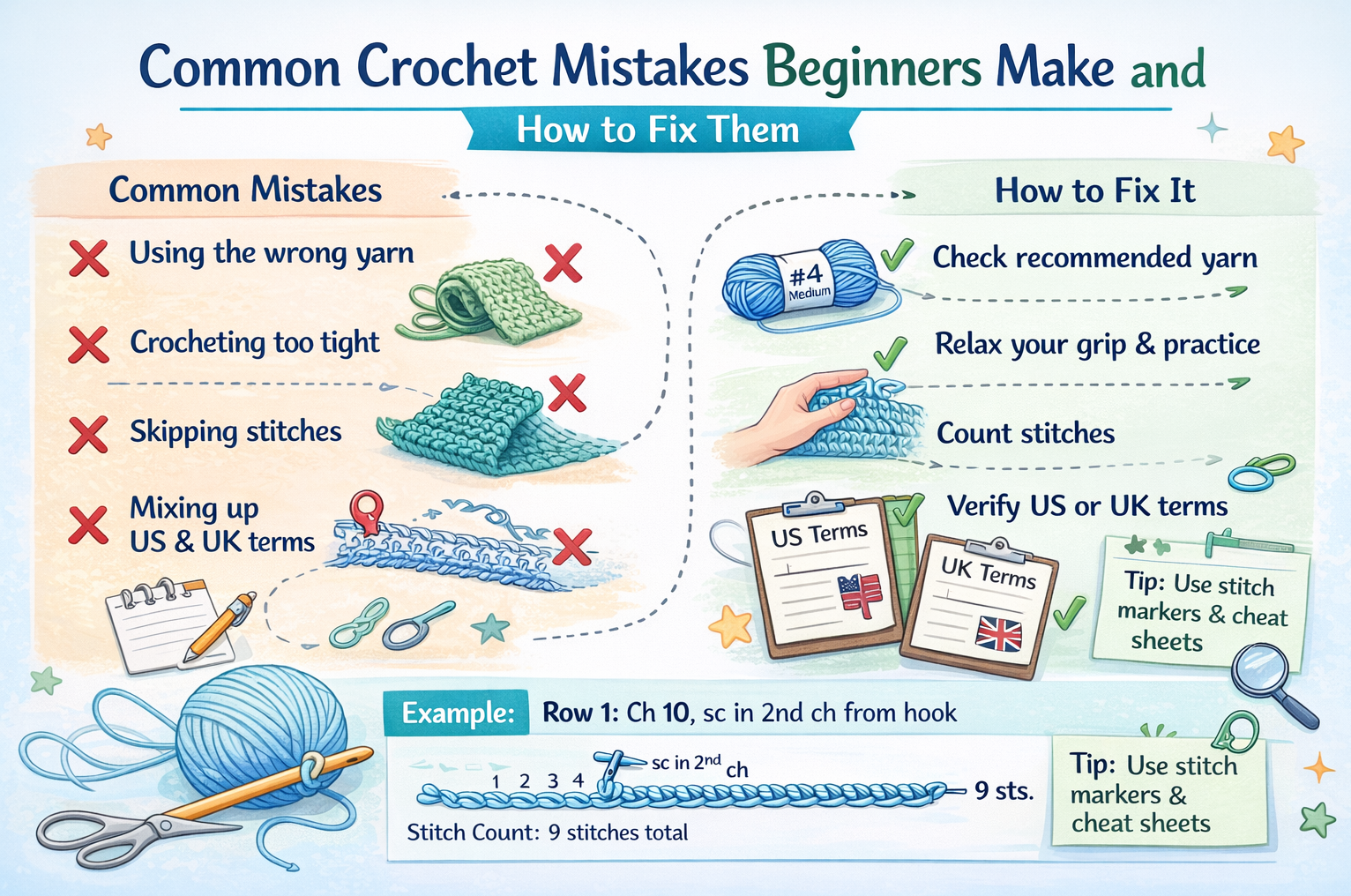
Always check the yarn recommendation in the pattern.
For beginners, the best choice is:
- Worsted weight yarn (#4)
- Light or medium colors
- Smooth acrylic or cotton yarn
Avoid:
- Fuzzy yarn
- Very thin yarn
- Novelty or textured yarn
Starting with the right yarn makes learning much easier and less frustrating.
2. Crocheting Too Tight or Too Loose
Why This Happens
Tension control is one of the hardest skills for beginners to master. Many people hold the yarn too tightly because they’re afraid of making mistakes.
Tight tension causes:
- Stiff fabric
- Sore hands
- Difficulty inserting the hook
Loose tension causes:
- Holes in the fabric
- Uneven stitches
- Weak structure
How to Fix It
Relax your grip.
Helpful tips:
- Hold the hook gently, not tightly
- Let the yarn slide naturally
- Practice slow, even movements
Your tension doesn’t need to be perfect — it just needs to be consistent.
3. Skipping Stitches at the Ends of Rows
Why This Happens
The first and last stitches of a row are easy to miss, especially for beginners who are still learning to identify stitches.
This mistake leads to:
- Projects getting narrower
- Uneven edges
- Incorrect stitch count
How to Fix It
Count your stitches after every row.
Best practices:
- Use stitch markers on the first and last stitch
- Learn whether the turning chain counts as a stitch
- Slow down at row ends
Counting stitches may feel tedious, but it’s one of the most powerful habits you can develop.
4. Misreading Crochet Abbreviations
Why This Happens
Crochet patterns use abbreviations to stay short and clear, but for beginners, they can feel like a foreign language.
Common abbreviations include:
- ch – chain
- sc – single crochet
- hdc – half double crochet
- dc – double crochet
- sl st – slip stitch
How to Fix It
You don’t need to memorize everything.
Instead:
- Learn the most common abbreviations
- Keep a crochet cheat sheet nearby
- Always read the abbreviation section of the pattern
Over time, these abbreviations will become second nature.
5. Confusing US and UK Crochet Terms
Why This Happens
US and UK crochet terms use different names for the same stitches. A “double crochet” in the US is not the same stitch as a “double crochet” in the UK.
This mistake can completely change the look of your project.
How to Fix It
Always check the pattern notes.
- Most American patterns use US terms
- If the pattern says “UK terms,” convert them before starting
Never assume — always confirm.
6. Skipping the Gauge Swatch
Why This Happens
Many beginners skip the gauge swatch because it seems unnecessary or time-consuming.
However, incorrect gauge leads to:
- Clothing that doesn’t fit
- Blankets that are much larger or smaller than expected
- Wasted yarn
How to Fix It
For wearable items, always make a gauge swatch.
Steps:
- Crochet a small square using the recommended hook
- Measure stitches per inch
- Adjust hook size if needed
For scarves and blankets, gauge is less critical — but still helpful.
7. Choosing Patterns That Are Too Advanced
Why This Happens
Beautiful crochet photos online can make advanced patterns look easy. Beginners often jump into complex projects too soon.
This leads to:
- Confusion
- Frustration
- Abandoned projects
How to Fix It
Start with beginner-friendly patterns.
Great beginner projects include:
- Dishcloths
- Simple scarves
- Granny squares
- Basic blankets
Master the basics first — progress comes faster than you think.
8. Losing Track of Rows and Rounds
Why This Happens
Crochet patterns often repeat rows, which makes it easy to lose count.
This can result in:
- Incorrect shaping
- Uneven size
- Pattern mistakes
How to Fix It
Use tracking tools:
- Row counters
- Stitch markers
- Written notes
Marking the beginning of rounds is especially important for hats and amigurumi.
9. Not Understanding Pattern Instructions Fully
Why This Happens
Beginners often start crocheting before fully reading the pattern, leading to surprises later.
This can cause:
- Missed stitch changes
- Incorrect repeats
- Confusion halfway through the project
How to Fix It
Before starting:
- Read the entire pattern
- Review materials and abbreviations
- Identify special stitches
This simple step prevents many common mistakes.
10. Expecting Perfect Results Too Soon
Why This Happens
Social media shows polished, professional crochet work — not beginner projects.
This creates unrealistic expectations and discouragement.
How to Fix It
Change your mindset.
- Your first projects are learning tools
- Mistakes are normal
- Progress matters more than perfection
Every crocheter started exactly where you are now.
How to Fix Crochet Mistakes Without Giving Up
Mistakes are not failures — they’re part of the process.
When something goes wrong:
- Pause
- Identify the issue
- Frog (undo) if necessary
- Try again calmly
Each correction improves your skill and confidence.
Why Crochet Gets Easier Over Time
As you practice:
- Your tension improves
- Patterns make more sense
- Your speed increases
- Confidence grows
What feels confusing today will feel automatic tomorrow.
Final Thoughts: Mistakes Mean You’re Learning
If you’ve made these crochet mistakes, that’s a good sign — it means you’re learning something new.
Crochet is not about perfection. It’s about creativity, patience, and enjoyment.
Take your time. Be kind to yourself. Keep practicing.
Soon, those beginner mistakes will turn into skills you’re proud of.