Have you ever felt the urge to create something with your own hands, only to give up because you thought crafting was too complex? Crochet is one of the most accessible and rewarding manual arts in existence. If you are an absolute beginner, the basic square (the famous “Granny Square”) is the perfect point of entry.
In this article, we will transform the confusion of yarn and hooks into a relaxing and productive activity, based on scientifically proven benefits and simple steps to follow.
The Science Behind the Needles: Why Learn to Crochet?
Before we pick up the hook, it is worth understanding that crochet is not just a hobby; it is a mental health tool. Studies conducted by institutions such as the Mayo Clinic and the University of Wollongong (Australia) show that repetitive manual activities promote a state of “flow,” similar to meditation.
Scientifically Proven Benefits:
- Cortisol Reduction: The repetition of movements helps lower stress levels.
- Cognitive Health: A study published in the journal Neurology suggests that activities like crochet can reduce the risk of cognitive decline by 30% to 50%.
- Dopamine Release: Completing a project—even a small square—activates the brain’s reward system, combating symptoms of anxiety and depression.
What You Need to Get Started (The Basic Kit)
For a layperson, walking into a craft store can be intimidating. However, to make your first square, you only need three items:
- Yarn: For beginners, I recommend medium-weight cotton yarn (often called “DK” or “Worsted”). Light colors make it easier to see your stitches.
- Crochet Hook: Choose one that matches the yarn. Generally, a 4.0mm or 5.0mm hook is ideal for starting.
- Scissors and a Tape Measure: Basic support items.
Step-by-Step: How to Crochet Your First Square
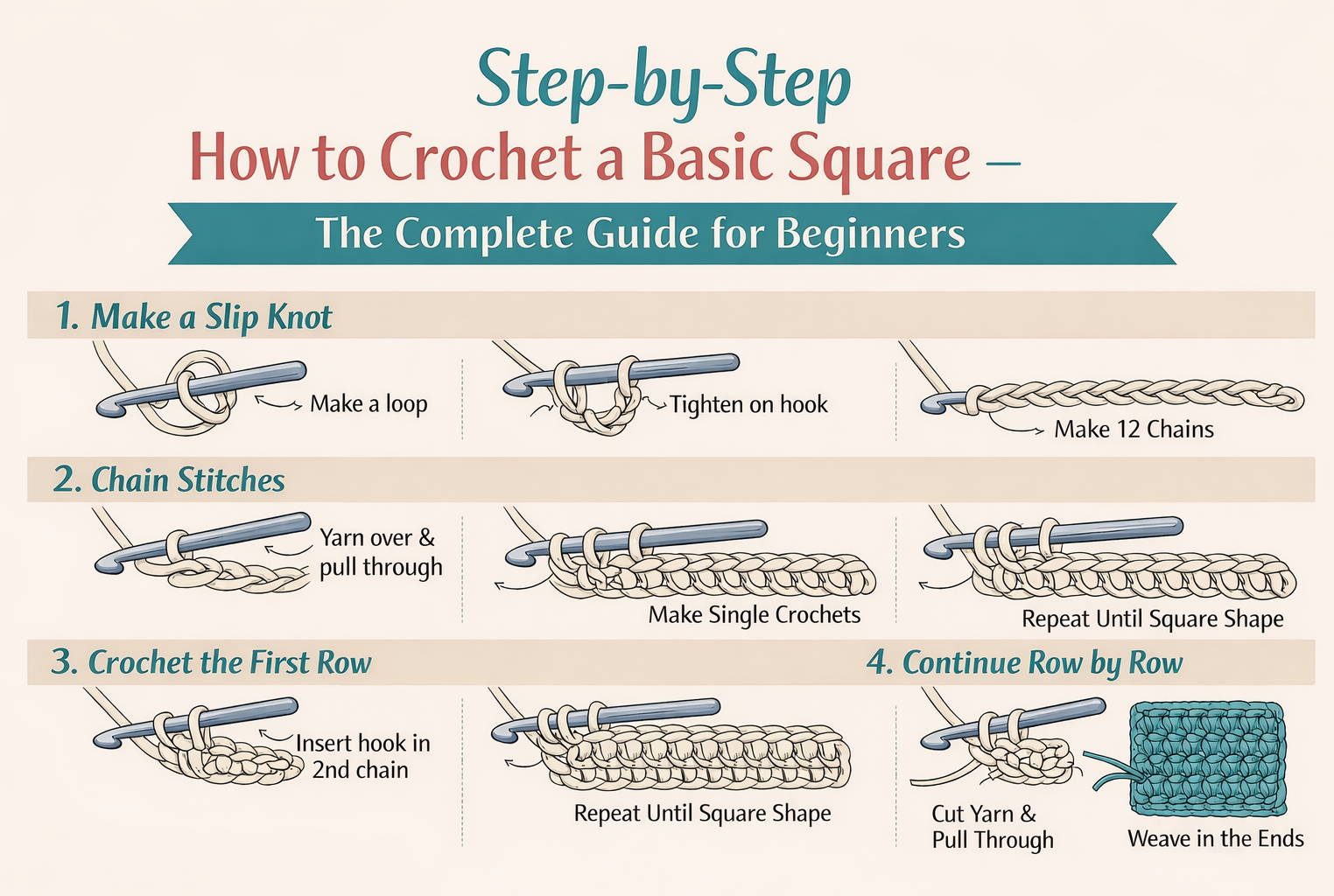
There are several ways to make a square, but the Granny Square technique is the most traditional and educational. Let’s break the process into clear stages.
Step 1: The Foundation Ring
To start the center of the square, you can make 4 chain stitches and close them into a circle with a “slip stitch.” This will be the central “hole” where we will work.
Step 2: The First Round
- Chain 3 (this counts as your first “double crochet”).
- Make 2 more double crochets into the center ring. You now have a block of 3 stitches.
- Chain 2 (this will form your first corner).
- Repeat the process (3 double crochets + 2 chains) three more times.
- Close the round with a slip stitch into the third initial chain.
Step 3: Expanding the Square
The logic of the square is simple: in the corners, you always make two blocks separated by chains to create the 90° angle. On the straight sides, you simply fill the spaces.
Pro Tip: Do not pull the yarn too tight. The secret to beautiful crochet is constant, yet relaxed, tension.
Main Difficulties and Factors Involved
Many people give up in the first hour because they feel their “fingers won’t obey.” This is perfectly normal and has a physiological explanation: muscle memory.
- Yarn Tension: In the beginning, it’s common for the square to look crooked or “puckered.” This happens because you are holding the yarn with too much force.
- Counting Errors: The most common mistake is forgetting to make the chains in the corners, which turns your square into a circle or a hexagon.
- Posture: Ergonomics is vital. Keep your shoulders relaxed and take breaks every 20 minutes to stretch your wrists, avoiding repetitive strain injuries (RSI).
Practical Evidence-Based Tips for Success
- Lighting is Everything: Ergonomic studies suggest that working in poorly lit environments causes eye fatigue and precision errors. Use bright, direct light over your hands.
- Start with Swatches: Don’t try to make a blanket immediately. Focus on finishing a 4×4 inch square. Neuroscience explains that short-term goals increase motivation through small dopamine spikes.
- Use Visual Aids: The human brain processes images 60,000 times faster than text. Complement this reading with diagrams of basic stitches.
What to Avoid (Common Beginner Mistakes)
- Buying dark or fuzzy yarns: It’s nearly impossible to see where to insert the hook. Stick to the basics (smooth cotton).
- Using hooks that are too small: These require fine motor coordination that you are still developing.
- Ignoring the “Gauge”: If you want the square to be a specific size, always do a test run first.
When Does the Hobby Need Professional Attention?
While crochet is therapeutic, if you feel persistent pain in your wrists, fingers, or neck, it is important to consult a physiotherapist or occupational therapist. The practice should be pleasurable, not painful. Using ergonomic hooks (with rubber handles) can prevent many of these issues.
Conclusion: The Power of Creating
Learning to crochet a square is more than learning a sewing technique; it is an investment in your mental health and a new way of personal expression. Every stitch you make is a victory over the rush of daily life.
Don’t worry if your first square looks a little “wonky.” In craft, perfection comes with practice, and every imperfection tells the story of your learning journey. Grab your hook, pick a color you love, and start today.
Reliable Sources and Scientific References:
- Mayo Clinic: The benefits of crafting for mental health and cognitive function.
- American Journal of Public Health: The Connection Between Art, Healing, and Public Health: A Review of Current Literature.