If you want to learn crochet but do not know where to start, you are in the right place. Crochet is one of the most beginner-friendly crafts you can learn. It is affordable, relaxing, and incredibly rewarding. With just a hook and some yarn, you can create beautiful handmade items while learning a new skill at your own pace.
In this complete beginner guide, you will learn everything you need to start crocheting with confidence. We will cover essential tools, yarn and hook sizes, basic crochet stitches, easy techniques, and a simple practice project. Each section is written in clear, simple language, making this article perfect for absolute beginners.
Why Crochet Is Ideal for Beginners
Crochet is an excellent craft for beginners for many reasons. First of all, it uses only one hook, unlike knitting, which requires two needles. This makes crochet easier to control and simpler to learn.
Another great advantage is that crochet is easy to undo. If you make a mistake, you can pull the yarn back and fix it without damaging your project. This makes learning much less stressful.
Additionally, crochet allows quick progress. Even beginners can see results after just a short practice session. This sense of accomplishment helps you stay motivated and enjoy the learning process.
Most importantly, crochet is flexible. You can start with simple stitches and gradually move on to more advanced techniques when you feel ready.
Essential Crochet Supplies
Before you begin crocheting, it is important to have the right supplies. The good news is that crochet does not require many tools, especially for beginners.
Yarn (Medium Weight)
For beginners, medium-weight yarn (also called Category 4 yarn) is the best choice. It is easy to handle, not too thin, and not too thick. Light-colored yarn is strongly recommended because it makes stitches easier to see.
Avoid fuzzy or dark yarn at the beginning, as these can hide stitches and make learning harder.
Crochet Hook
A medium-sized crochet hook works best for beginners. A 5.0 mm (H-8) hook is a popular and beginner-friendly choice. It pairs well with medium-weight yarn and helps create even stitches.
Hooks come in different materials such as aluminum, plastic, and wood. Any of these are fine for beginners, so choose what feels comfortable in your hand.
Scissors
You will need scissors to cut yarn when finishing a project or changing colors. Any regular scissors will work.
Understanding Yarn and Hook Sizes
Choosing the correct yarn and hook size is very important for beginner success. Yarn labels usually include a recommended hook size. Following this recommendation helps you maintain even stitches and prevents hand strain.
Using a hook that is too small can cause tight stitches and sore hands. On the other hand, a hook that is too large may create loose and uneven fabric.
As a beginner, always start with:
- Medium-weight yarn
- A 5.0 mm crochet hook
This combination provides the best balance of control and comfort.
How to Hold the Crochet Hook and Yarn
Before learning stitches, it helps to understand how to hold your hook and yarn.
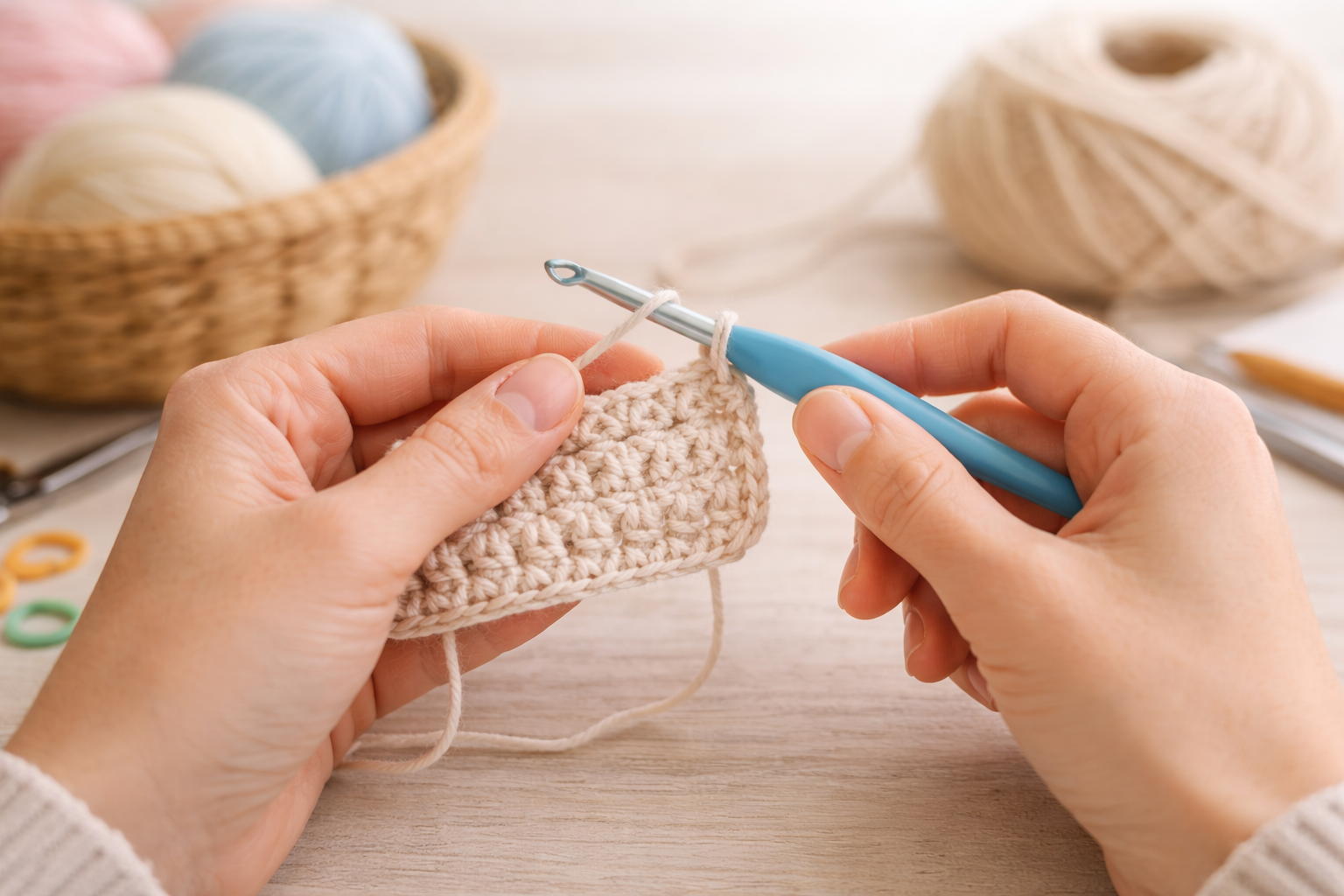
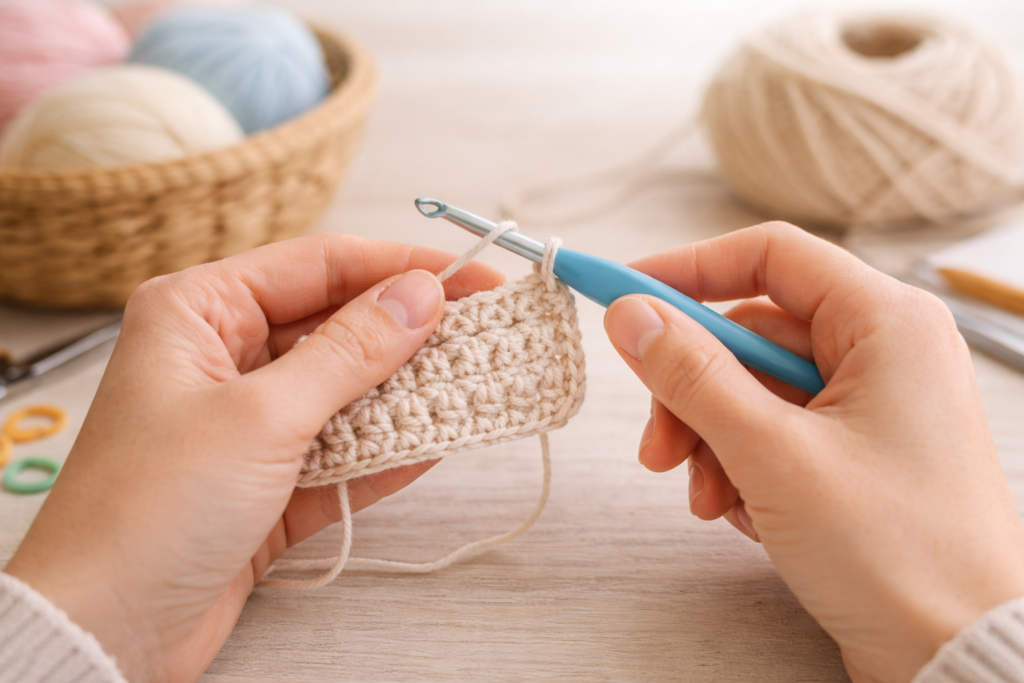
Hold the crochet hook in your dominant hand. You can use a pencil grip or a knife grip—both are correct. Choose the one that feels most natural to you.
With your other hand, guide the yarn through your fingers to create gentle tension. Try not to pull the yarn too tightly. Relaxed hands lead to smoother stitches and a better learning experience.
At first, this may feel awkward. However, with practice, your hands will quickly adjust.
Basic Crochet Stitches Explained
Learning basic crochet stitches is the foundation of every crochet project. Each stitch builds on the previous one, so take your time and practice each step.
Slip Knot
Every crochet project begins with a slip knot. This knot secures the yarn onto your hook.
How to Make a Slip Knot:
- Create a loop with the yarn.
- Insert the hook into the loop.
- Pull the working yarn gently to tighten the knot.
The slip knot should be snug but able to slide easily on the hook.
Chain Stitch (ch)
The chain stitch forms the foundation of most crochet projects.
How to Make a Chain Stitch:
- Start with a slip knot on your hook.
- Yarn over (wrap the yarn over the hook).
- Pull the yarn through the loop on the hook.
- Repeat these steps to create a chain.
Try to keep your chains even and not too tight. This makes it easier to work into them later.
Single Crochet (sc)
Single crochet is one of the most basic and commonly used stitches. It creates a dense and sturdy fabric.
How to Make a Single Crochet:
- Insert the hook into the second chain from the hook.
- Yarn over and pull up a loop (two loops on the hook).
- Yarn over again and pull through both loops.
Repeat this stitch across the row.
Half Double Crochet (hdc)
The half double crochet stitch is slightly taller than single crochet and works up faster.
How to Make a Half Double Crochet:
- Yarn over before inserting the hook.
- Insert the hook into the stitch.
- Yarn over and pull up a loop (three loops on the hook).
- Yarn over and pull through all three loops.
This stitch creates a soft and balanced texture.
Double Crochet (dc)
Double crochet is taller and creates a lighter fabric.
How to Make a Double Crochet:
- Yarn over and insert the hook into the stitch.
- Yarn over and pull up a loop (three loops on the hook).
- Yarn over and pull through the first two loops.
- Yarn over again and pull through the remaining two loops.
Double crochet is great for beginners who want faster progress.
Step-by-Step Practice Square
Practicing is essential when learning crochet. A simple practice square helps you improve tension, stitch counting, and consistency.
Beginner Practice Square Instructions
- Chain 20
- Row 1: Single crochet across
- Row 2: Chain 1, turn, single crochet across
- Repeat Row 2 until you form a square
This project is perfect for building confidence and muscle memory.
Common Beginner Mistakes
Every beginner makes mistakes, and that is completely normal. Understanding common issues helps you improve faster.
Tight Tension
Crocheting too tightly makes stitches hard to work into. Try to relax your hands and use a slightly larger hook if needed.
Skipping Stitches
Skipping stitches can make your project smaller or uneven. Count your stitches at the end of each row.
Uneven Edges
Uneven edges often happen when beginners miss the last stitch of the row. Always check the first and last stitches carefully.
Learning Faster Tips
If you want to improve your crochet skills more quickly, keep these tips in mind:
- Use stitch markers to mark the first and last stitch
- Practice with light-colored yarn
- Follow simple patterns designed for beginners
- Crochet a little every day, even for short periods
- Focus on consistency, not perfection
With regular practice, your stitches will become smoother and more even.
Conclusion
Crochet is a skill anyone can learn, regardless of age or experience. With the right tools, simple stitches, and a little patience, beginners can create beautiful handmade pieces and enjoy a relaxing creative hobby.
Start slow, practice often, and enjoy the process. Every stitch you make brings you closer to confidence and creativity. Crochet is not about being perfect—it is about learning, relaxing, and having fun with yarn.