Learning how to make a quilt for beginners can feel intimidating at first. With so many fabrics, tools, measurements, and techniques involved, it’s easy to think quilting is only for experienced crafters. The truth is, quilting is very beginner-friendly when broken down into clear, manageable steps.
This complete start-to-finish guide will walk you through the entire quilting process—from choosing fabric to binding the final edges. By the end, you will understand the basics of quilting and feel confident enough to create your very first quilt.
What Is Quilting?
Quilting is the process of sewing together three layers of fabric:
- The quilt top
- The batting (middle layer)
- The backing fabric
These layers are stitched together to create a warm, durable, and decorative textile. Quilts are commonly used as blankets, bed covers, wall hangings, or gifts.
For beginners, quilting is best approached step by step, focusing on simple designs and basic techniques.
Why Quilting Is a Great Craft for Beginners
Quilting offers many benefits for beginners:
- It teaches basic sewing skills
- Projects can be customized in size and style
- Mistakes are part of the learning process
- Quilting is relaxing and creative
- Finished quilts are practical and meaningful
Starting with a beginner-friendly quilt helps build confidence and foundational skills.
Essential Quilting Supplies for Beginners
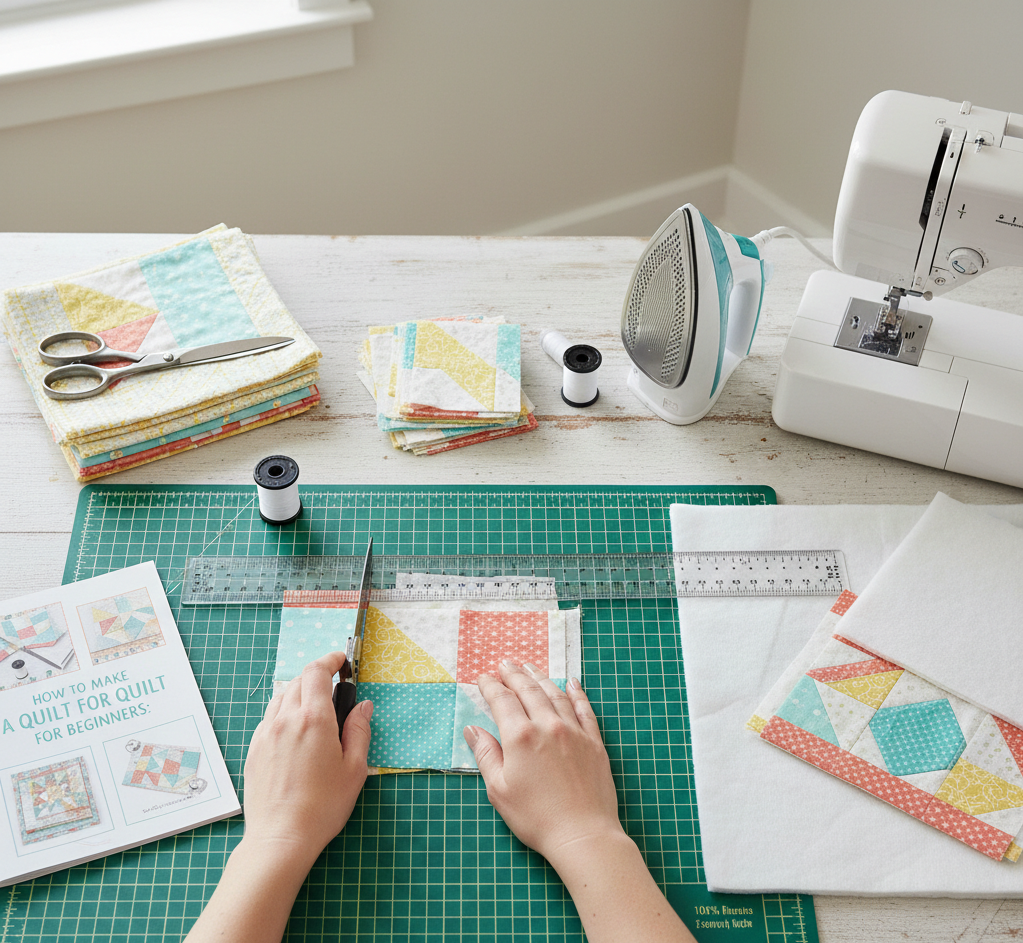
Before starting your first quilt, gather the basic tools you’ll need.
Fabric
- 100% cotton quilting fabric
- Pre-cut fabric (optional, but beginner-friendly)
Tools
- Sewing machine (or needle for hand quilting)
- Rotary cutter
- Cutting mat
- Quilting ruler
- Scissors
- Pins or fabric clips
- Iron and ironing board
Other Materials
- Cotton thread
- Batting
- Backing fabric
- Binding fabric
Tip: Quality tools make learning easier and improve results.
Choosing the Right Fabric for Your First Quilt
Fabric selection plays a big role in beginner success.
Best Fabric for Beginners
- Quilting cotton (easy to cut and sew)
- Medium-weight fabric
- Pre-washed fabric to prevent shrinkage
Fabric Tips
- Avoid stretchy or slippery fabrics
- Choose simple color palettes
- Start with larger prints or solids
Keeping fabric choices simple reduces mistakes and frustration.
Choosing a Beginner Quilt Pattern
When learning how to make a quilt for beginners, the pattern matters.
What to Look for in a Beginner Quilt Pattern
- Straight seams only
- Large blocks (squares or rectangles)
- Minimal cutting
- Clear instructions
Popular beginner quilt patterns include:
- Patchwork quilts
- Strip quilts
- Checkerboard quilts
- Rail fence quilts
These patterns focus on repetition and accuracy rather than complexity.
Step-by-Step: How to Make a Quilt for Beginners
This section walks you through the complete quilting process from start to finish.
Step 1: Cut the Fabric
Accurate cutting is essential in quilting.
- Use a rotary cutter, ruler, and cutting mat
- Measure carefully before cutting
- Cut fabric into squares or strips according to your pattern
Take your time—precision here makes everything easier later.
Step 2: Sew the Quilt Top
The quilt top is created by sewing fabric pieces together.
- Use a ¼-inch seam allowance
- Sew pieces into rows
- Press seams after each row
Pressing (not ironing back and forth) helps keep seams flat and aligned.
Step 3: Assemble the Quilt Sandwich
Once the quilt top is complete, layer the quilt.
Layer order:
- Backing fabric (right side down)
- Batting
- Quilt top (right side up)
Smooth all layers and secure them using pins, clips, or spray basting.
Step 4: Quilt the Layers Together
Quilting means stitching through all three layers.
Beginner-friendly quilting methods:
- Straight-line quilting
- Stitching along seams
- Evenly spaced lines
Use a walking foot if available—it helps feed layers evenly.
Step 5: Trim the Edges
After quilting:
- Trim excess batting and backing
- Square the quilt edges
This step prepares the quilt for binding.
Step 6: Bind the Quilt
Binding finishes the edges of your quilt.
Basic binding steps:
- Cut fabric strips
- Sew strips together
- Attach binding to the quilt front
- Fold binding to the back and stitch
Binding may feel tricky at first, but it improves with practice.
Common Beginner Quilting Mistakes (And How to Avoid Them)
Mistakes are normal when learning quilting.
Cutting Inaccurately
Solution: Measure carefully and use a sharp rotary cutter.
Skipping Pressing
Solution: Press seams frequently to maintain alignment.
Inconsistent Seam Allowances
Solution: Use seam guides or markings on your machine.
Starting Too Large
Solution: Begin with small quilts like baby quilts or lap quilts.
Beginner Quilting Tips for Success
- Start with simple patterns
- Practice sewing straight lines
- Don’t rush the process
- Accept imperfections
- Learn from each project
Every quilt teaches new skills—even imperfect ones.
How Long Does It Take to Make a Beginner Quilt?
Time depends on size and complexity.
Approximate timelines:
- Small quilt: 1–2 days
- Baby quilt: 2–4 days
- Lap quilt: Several days to a week
Working at your own pace is part of the joy of quilting.
Sustainable Benefits of Quilting
Quilting supports sustainable and mindful crafting by:
- Using fabric scraps
- Reducing textile waste
- Creating long-lasting handmade items
Many beginners enjoy quilting as an eco-friendly hobby.
Can Beginners Sell Quilts?
Yes, many beginners eventually sell quilts or quilted items.
Popular beginner-friendly items to sell:
- Baby quilts
- Table runners
- Wall hangings
- Quilt covers
Selling can help recover material costs and grow a creative business.
Final Thoughts
Learning how to make a quilt for beginners is a rewarding journey that combines creativity, patience, and skill-building. By starting with simple patterns, using the right tools, and following a clear step-by-step process, anyone can successfully complete their first quilt.
Remember, quilting is not about perfection—it’s about learning, enjoying the process, and creating something meaningful with your own hands. Each quilt you make brings confidence and opens the door to more creative possibilities.